Veterinary student searches for lost Quaker parrot Blue, beloved family companion
Linda Alvarenga’s teal-and-blue Quaker parrot, Blue, vanished near Lake Harney Woods Boulevard, and his bent left toe and talking tricks could still be the key to finding him.
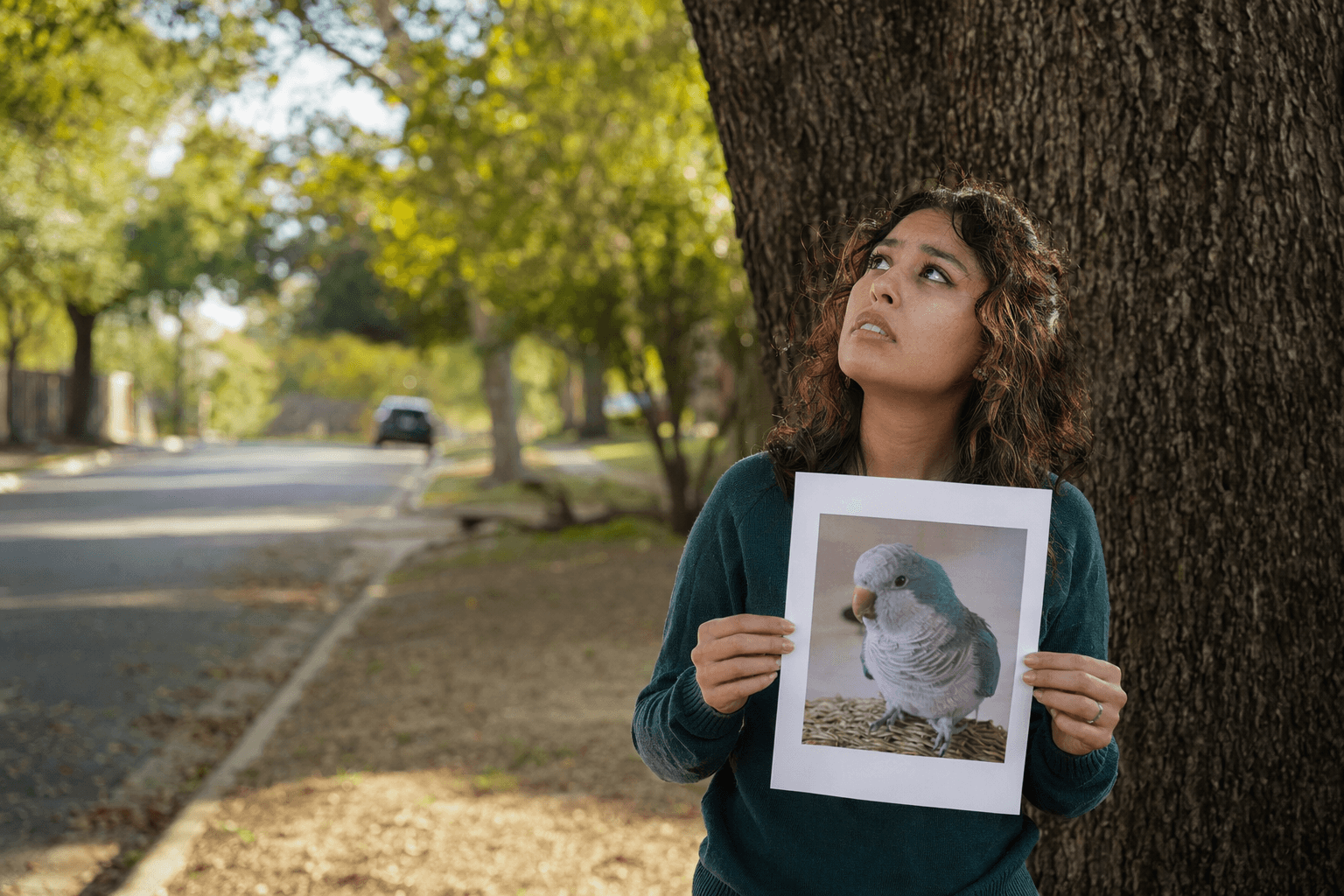
Linda Alvarenga is searching for Blue, a teal-and-blue Quaker parrot with green eyes and a bent toe on his left foot, after he flew out of a garage door near Bromeliad Road and Lake Harney Woods Boulevard around 9:15 a.m. on March 2. The loss hit hard because Alvarenga hand-raised Blue from just 3 weeks old, and she says caring for him helped push her toward veterinary medicine with a focus on birds and exotic animals.
Blue was not a silent pet that could disappear into the background. He knew how to say “kisses” and “Que Kiko,” and he could imitate a microwave beep, the kind of sound that can give a missing parrot away even when a sighting is brief. Those details matter in the first 24 hours after an escape: post flyers right away within at least a one-mile radius, make the bird’s vocal cues part of every search, and keep pushing the exact identifiers, including color, eye color, and unusual marks like Blue’s bent toe, in neighborhood groups and lost-pet networks.
Alvarenga has walked miles, put up flyers, contacted local groups, and shared Blue’s story online while offering a reward for his safe return, though she has not disclosed the amount after receiving scam texts. She has had no confirmed sightings, but two leads stood out: one social media post that looked like Blue was for sale, and another about a found Quaker parrot near Geneva Oaks Animal Hospital. In a case like this, every sighting needs quick follow-up, because a bird that looks familiar in one photo can vanish again before a rescuer gets the details checked.
The search also lands in a bigger Florida reality. The Florida Fish and Wildlife Conservation Commission says monk parakeets are the species commonly called Quaker parrots, and Florida already has established feral populations, with the largest in Miami, West Palm Beach and Tampa. The agency also says these birds often nest on power poles and can affect utilities and power equipment, which is one reason escaped or released parrots are treated as more than a private-household problem.
FWC classifies exotic birds such as parrots and parakeets as Class III wildlife, and its captive-wildlife guidance says a permit or license is generally required to possess wildlife in captivity in Florida. The agency also says exhibition of wildlife requires a permit, and taking a personal pet into a public place counts as exhibition. For bird owners, Blue’s case is a blunt reminder that a door left open for seconds can turn into a long, technical, and emotional search, and that the fastest path home is usually the simplest one: precise flyers, loud neighborhood outreach, and fast reporting the moment a bird is seen again.
This article was produced by Prism’s automated news system from verified source data, official records, and press releases, then run through automated quality and moderation checks before publishing. The system is built and supervised by the people who set the standards it runs under. Read our full AI policy.
Did this article answer your question?