Barilla Redesigns Classics Pasta Boxes, Making Over 99% Recyclable
Barilla's redesigned Classics boxes eliminate 126,000 kg of plastic annually by scrapping the viewing window, with 99.8% of packaging now designed for recycling.
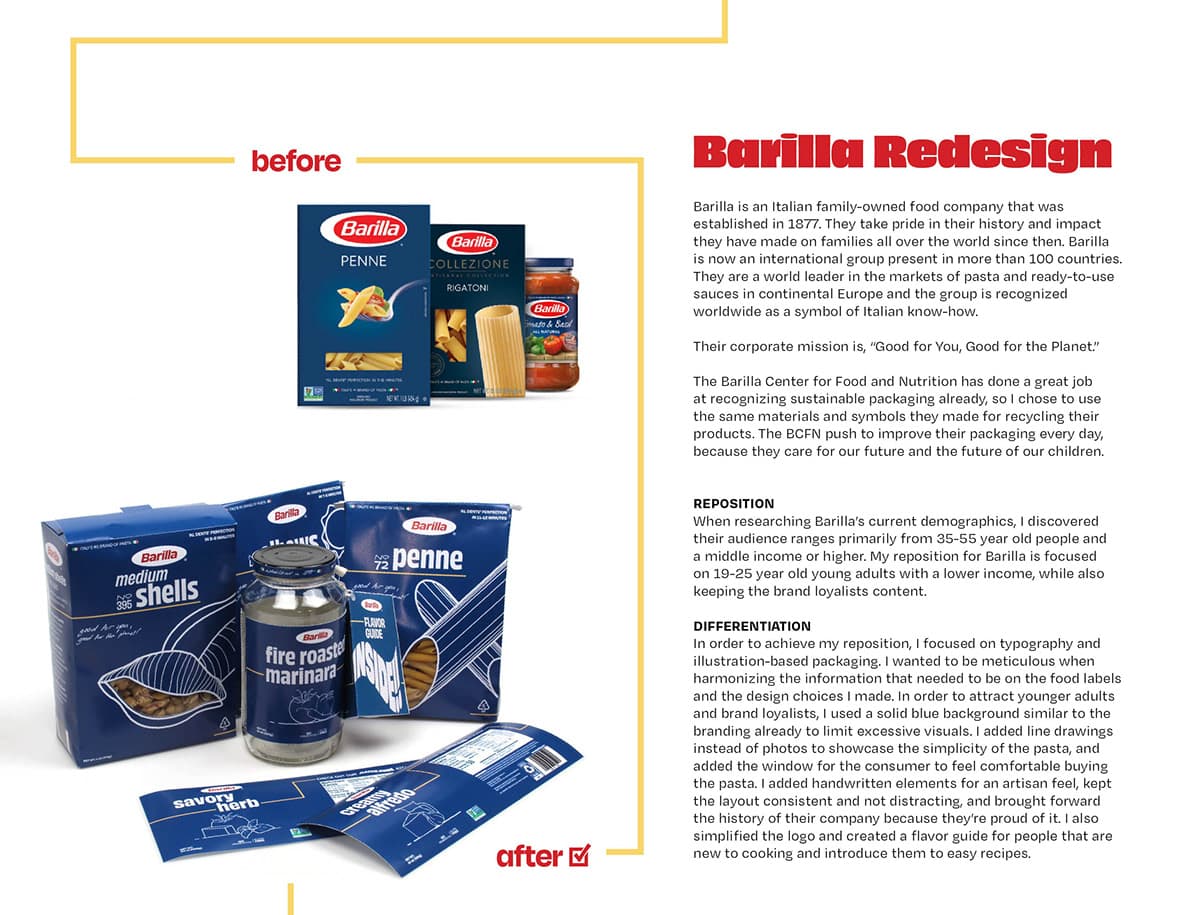
Barilla's blue box just dropped 126,000 kilograms of plastic from the market every year, and that single design decision, removing the cellophane viewing window from its Classics pasta line, is the most tangible sign yet of a packaging overhaul the Italian pasta giant announced the week of March 23, 2026.
The redesigned Classics boxes are rated at 99.8% recyclability, achieved through three specific engineering changes: elimination of the plastic window, use of virgin fiber cardboard sourced from responsibly managed forests, and adoption of low-odor inks and adhesives specifically compatible with paper recycling streams. Those inks and adhesives matter more than they might seem. In older pasta boxes, standard adhesives and solvent-based inks could degrade pulp quality during repulping, flagging the material as a contamination risk in some municipal sorting facilities. By switching to paper-stream-compatible chemistry, Barilla made the box processable by standard paper industry infrastructure without pre-treatment.
The phrase "designed for recycling" carries a precise meaning in packaging compliance: every component has been engineered to be accepted by standard paper recycling infrastructure rather than requiring manual separation before binning. The absence of the plastic window means there's no longer a non-paper element to isolate first. Fiber, inks, and adhesives are all paper-industry compatible by specification. In most curbside programs in Europe that accept corrugated or carton board, the new Classics box goes straight into the paper bin as-is.
One important caveat for North American pasta pantries: Barilla's window removal applies across markets worldwide with the exception of the USA, Canada, and Russia, where the classic cellophane panel may still be present on shelves. Before recycling any Barilla box that still has a window strip, peel and place that piece in general waste rather than paper recycling.
RECYCLING CHECKLIST: screenshot and keep. Empty the box completely. Flatten it. If a cellophane window is present (USA/Canada markets), peel and remove before recycling. Remove any plastic promotional stickers. Place the flattened box in your paper or cardboard bin. The printed label and interior liner are paper-stream compatible and do not need to be removed.
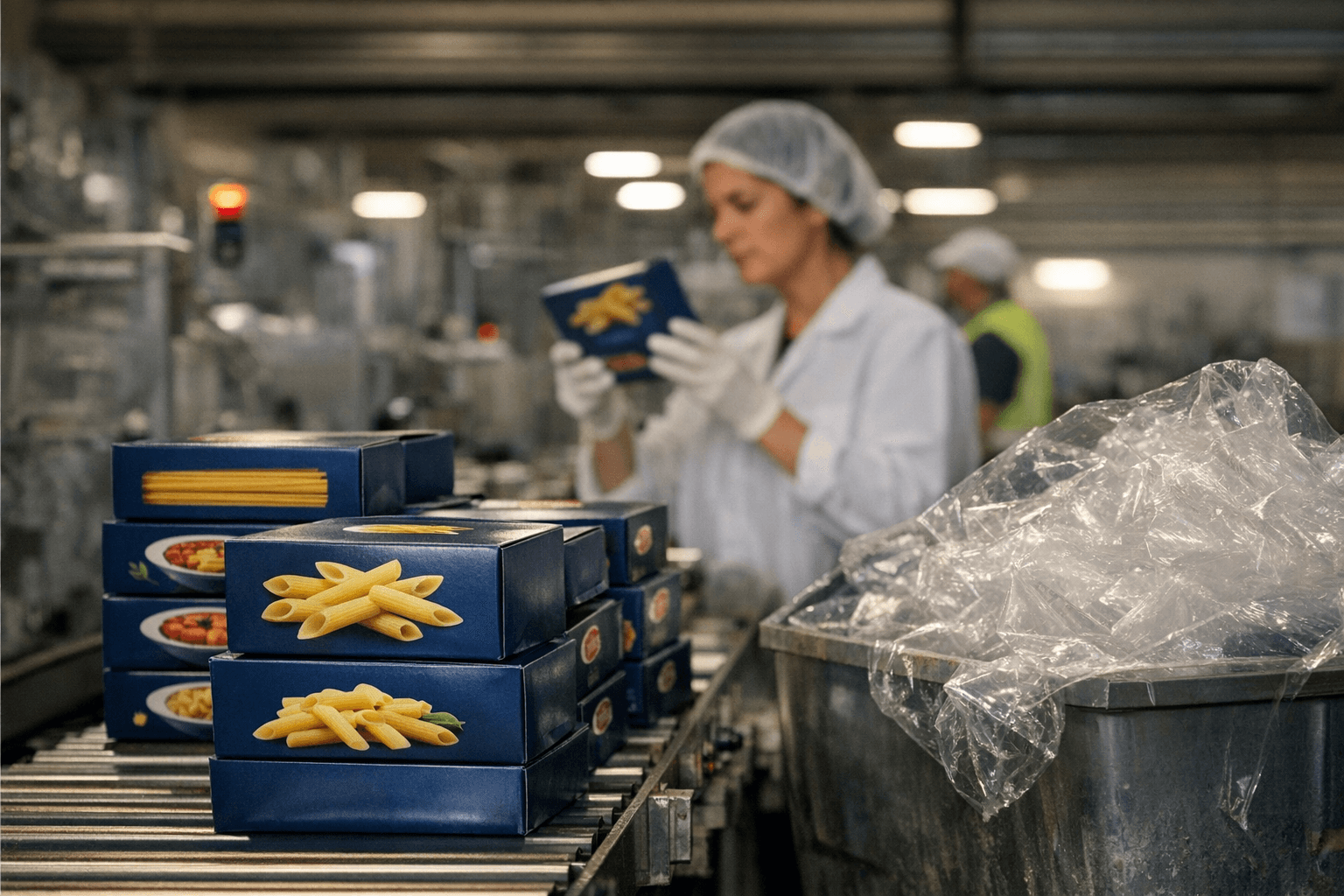
The decision to retain virgin fiber cardboard rather than recycled board is a food-safety requirement, not an environmental shortcut: pasta sits in direct contact with the packaging, and recycled-content board can carry trace chemical migrants from prior use. Certified virgin fiber solves that safety constraint while keeping the box fully recyclable at end of life through standard paper industry pulping.
Barilla's packaging ambitions extend well beyond the Classics SKU. The company reported a 45% increase in water recycled and reused at its manufacturing plants compared to 2022 and set a target of eliminating 4,000 tons of packaging material from the market by 2030 through active redesign programs. Currently, 71% of Barilla's total packaging is fiber-based and more than half of all materials used across the portfolio come from recycled sources.
For craft pasta producers and small-scale fresh pasta operations watching grocery shelf trends, the Classics redesign sets a practical reference point. Recyclability is increasingly a retail listing consideration, and packaging that requires consumers to disassemble composite materials before binning carries a growing perception penalty in mainstream grocery channels. Barilla's Sustainable Packaging Principles date to 1997, making this redesign the latest chapter in a nearly 30-year program. The 126,000 kg figure gives that timeline its sharpest number yet.
This article was produced by Prism’s automated news system from verified source data, official records, and press releases, then run through automated quality and moderation checks before publishing. The system is built and supervised by the people who set the standards it runs under. Read our full AI policy.
Did this article answer your question?