EU court upholds 1 million euro fine against Lidl pasta labels
EU judges left Lidl’s €1 million pasta fine in place, saying Italian flags and slogans can mislead shoppers even when origin details hide in small print.
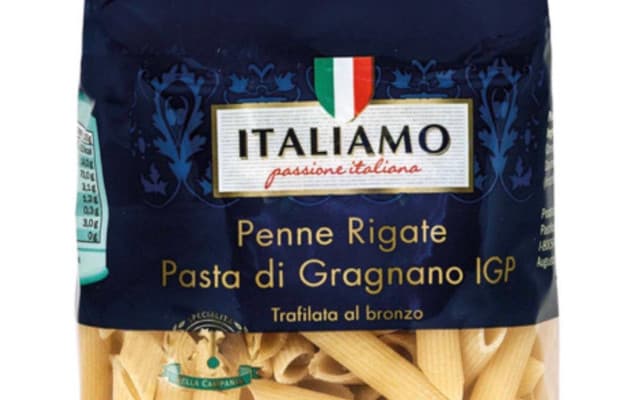
The European Union’s top court has drawn a hard line for pasta labels that look Italian without being fully Italian. It upheld a €1 million fine against Lidl Italia s.r.l. over Italiamo and Combino packaging that used tricolors, Italian references and Italy-evoking imagery while the durum wheat behind the semolina came from a mix of EU and non-EU sources.
The ruling centers on consumer trust at shelf level: the pasta was made in Italy, but the Italian Competition Authority said the front of the package pushed a strong Italian identity while the origin of the wheat appeared only in small print on the side or back. That contrast, the authority said, could mislead shoppers into believing the raw material itself was Italian. The dispute also covered Lidl’s Fusilli Pasta di Gragnano IGP line.
The case dates back to January 17, 2020, when AGCM said it had closed five preliminary investigations into origin claims on durum-wheat pasta. Four companies accepted commitments to change their labels, including Divella S.p.a., F.lli De Cecco di Filippo - Fara San Martino S.p.a., Pastificio Artigiano Cav. Giuseppe Cocco S.r.l. and Margherita Distribuzione S.p.A., formerly Auchan. Lidl did not accept that route, and AGCM imposed the fine.

Lidl fought the sanction through the Lazio Regional Administrative Court, which upheld the penalty on February 13, 2023. The case then moved to Italy’s Council of State, which asked the Court of Justice of the European Union in Luxembourg to weigh in on whether misleading food-label claims could be punished under both food-information rules and unfair-commercial-practice law.
In its April 30, 2026 ruling, the EU court said those two legal frameworks can apply together when packaging, taken as a whole, risks misleading consumers. Legal commentators said the decision matters because it confirms that misleading food labeling is not trapped inside a narrow food-law box and can face stronger enforcement tools and heavier penalties. For pasta buyers scanning shelves, the message is now sharper than ever: if the front of the pack screams Italy, the fine print has to back it up.
This article was produced by Prism’s automated news system from verified source data, official records, and press releases, then run through automated quality and moderation checks before publishing. The system is built and supervised by the people who set the standards it runs under. Read our full AI policy.
Did this article answer your question?