Beginner’s Pasta Primer for Hobbyists: Tools, Flours, Ratios, Shapes
A compact, practical primer on tools, flours, egg-to-flour ratios, shaping methods, and storage so home pasta makers can get started with confidence.
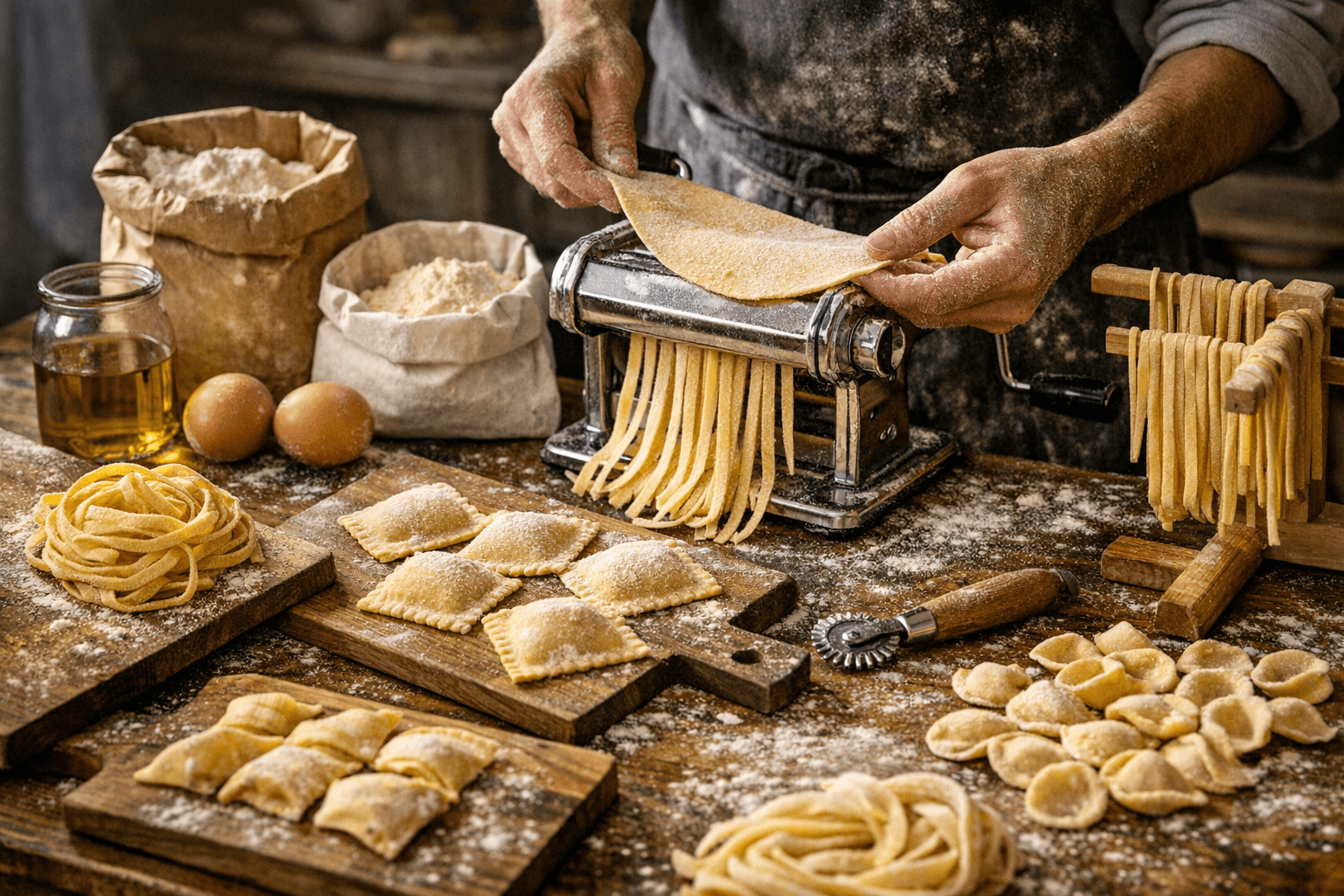
Start with three simple pieces of kit: a bench scraper, a rolling pin or pasta machine, and a well-floured work surface. The bench scraper cuts dough, lifts sheets, and cleans floury counters; a rolling pin or hand-crank machine handles sheets for tagliatelle and pappardelle; a floured surface gives you room to knead and shape without sticking.
Flour choice sets texture and technique. Use 00 flour for classic egg pasta and tender sheets; use semolina for water-based doughs and for shapes that need tooth, such as cavatelli. Combine 00 and semolina when you want a slightly grittier bite on ribbons. Match the flour to the shape: ravioli and tagliatelle favor 00 with eggs, while cavatelli and many regional orecchiette recipes favor semolina and water.
Keep ratios simple. For egg pasta, start with 100 grams of 00 flour per large egg as a baseline; scale up by multiplying for multiple servings (300 grams flour and 3 eggs is a common three-person batch). For semolina, begin with about 100 grams semolina to 40-50 milliliters warm water, adjusting by tablespoonfuls until the dough holds together. These starting points help you avoid overly sticky or dry dough while you learn hydration by feel.
Knead until smooth, then rest. Let dough rest wrapped or under a bowl for 30 to 60 minutes; rested dough relaxes gluten and sheets without springback. If a sheet tears when rolling, let it rest longer rather than adding too much extra flour. Test elasticity by stretching a small piece into a thin film; if it holds without tearing and bounces back slightly, the gluten is developed. If it snaps, return it to the counter and knead a few minutes more.
Turn sheets into shapes. For tagliatelle and pappardelle, roll sheets thin and cut to width: roughly 6-8 millimeters for tagliatelle and 20-30 millimeters for pappardelle. For ravioli, use two thin sheets of egg pasta and seal around fillings with a pinch of water. For cavatelli, portion semolina dough into small rolls and press or dent with your thumb or a fork to form the hollow. Keep pieces separated with semolina or 00 flour to prevent sticking during shaping.
Prevent sticking and store smart. Dust long ribbons with semolina, lay sheets on lightly floured parchment, and avoid piling fresh pasta. Cook fresh pasta within 48 hours if refrigerated. For longer storage, freeze on a tray until firm, then bag and freeze up to two months. Dry on racks for 24 hours if you prefer shelf-stable pasta.
Getting hands-on is the point: start small, keep measurements simple, and tweak hydration and rest until the dough behaves. With a bench scraper, the right flour, and a reliable ratio, you move from noodling around to making reliable plates that showcase technique and taste.
This article was produced by Prism’s automated news system from verified source data, official records, and press releases, then run through automated quality and moderation checks before publishing. The system is built and supervised by the people who set the standards it runs under. Read our full AI policy.
Did this article answer your question?