Cajun Chicken Pasta Gets a Smarter, Creamier Stovetop Makeover
Salon's Senior Food Editor Ashlie D. Stevens calls Cajun chicken pasta "Alfredo in a leather jacket" and fixes it in 25 minutes with one key move: restraint.

There's a version of Cajun chicken pasta that lives in the memory of anyone who's ever eaten at an American chain restaurant: a heap of fettuccine swamped in a brick of cream sauce, dusted with something labeled "Cajun seasoning" that tastes mostly of salt and vague heat. It's a dish you finish feeling full but somehow unsatisfied. Ashlie D. Stevens, Senior Food Editor at Salon, knows that version well. She admits to craving it. And then she explains, methodically and persuasively, exactly why it keeps letting you down and how to fix it.
The Dish as Cultural Artifact
Cajun chicken pasta belongs to a very specific chapter of American dining history: the chain-restaurant era that also gave us onion petals and molten lava cake. It's comfort food dressed up in novelty, and it landed on menus across the country because the core combination is genuinely compelling. Stevens captures it cleanly: "Cajun chicken pasta is essentially Alfredo in a leather jacket." The metaphor works because it's honest about both sides. The leather jacket part, smoke, spice, a little menace, is appealing. The Alfredo underneath it is a sound foundation. The problem was never the concept. It was the execution, specifically the chain-restaurant instinct to pile on more of everything until the subtlety collapses.
Stevens doesn't dismiss the dish. She argues for reclaiming it. "Beneath the excess, there is a solid idea: smoke, spice, cream, pasta. It just needs restraint." That's the entire thesis of her April 2026 piece, and it's a useful lens for anyone who cooks pasta at home and wants to understand why their cream sauces sometimes feel heavy and flat.
What Goes Wrong in Most Versions
Before prescribing fixes, Stevens diagnoses the failures. Three problems come up repeatedly in the chain and home-cook versions of this dish.
First, too much cream. The instinct to keep adding cream until a sauce looks "rich" actually works against you. Past a certain point, more cream means more weight and less flavor, a sauce that coats your mouth and drowns everything else in the bowl.
Second, powdery seasonings applied without technique. Dumping a spice blend into a sauce near the end of cooking gives you a dusty, one-dimensional heat. The spices never integrate; they just sit on top.
Third, no acid. This is the one most home cooks skip, and it's the most noticeable absence. A cream sauce without a finishing acid, a squeeze of lemon or a splash of vinegar, tastes flat and heavy. The acid doesn't make the dish taste sour; it makes it taste like itself, lifting the flavors and cutting through the richness so you can actually taste the smoke and spice you worked to build.
The Technique Shift That Changes Everything
Stevens' corrective is built around three specific moves, each one addressing a failure mode above.
The first is blooming your spices. Before anything else hits the pan, the Cajun spice blend goes into fat over heat. This step is non-negotiable if you want flavor rather than powder. Heat activates the fat-soluble compounds in spices, transforming them from a dusty coating into something aromatic and integrated. It takes maybe ninety seconds and it changes the character of the entire dish.
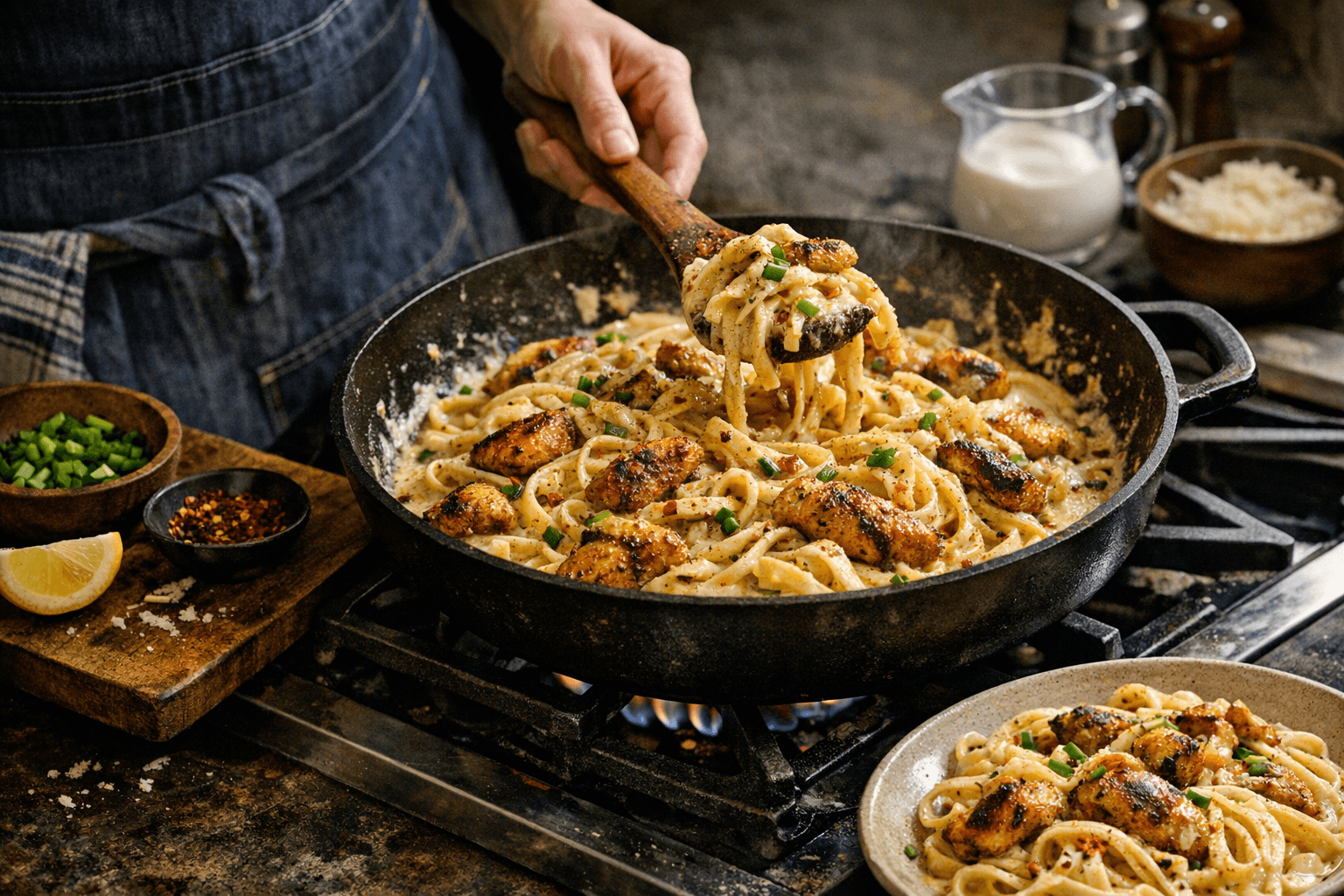
The second is layered seasoning. Rather than hitting the dish with one round of spice at the end, Stevens builds heat in stages so that it functions as what she calls "a chorus rather than a blunt instrument." This is the difference between a dish that has heat and a dish that has depth.
The third is the acid finish. Lemon juice or vinegar goes in at the end, after the cream has had time to reduce slightly, and it does exactly what it sounds like: it brightens. The richness stays but it no longer feels oppressive. The sauce becomes balanced rather than blunt.
Building the Plate: Pasta, Chicken, and the Rest
The recipe runs to about 25 minutes on the stovetop, which makes it genuinely practical for a weeknight. The pasta shapes Stevens recommends are penne or fettuccine, both solid choices for a cream-based sauce with some structural presence. Penne holds the sauce in its ridges and tubes; fettuccine carries it on its flat, wide surface. Either works depending on what you have.
The chicken goes on blackened, which means seasoned aggressively and cooked in a hot pan until the exterior develops a dark, spiced crust. This is not the same as burnt. The crust is where a lot of the smoky character lives, and it provides textural contrast to the tender pasta and smooth sauce.
Beyond the chicken, the dish relies on a confetti of peppers and scallions. These aren't garnish; they're structural. The peppers add color and a mild sweetness that offsets the heat of the spice blend, while the scallions bring a fresh, sharp note that works alongside the acid finish to keep the dish from feeling heavy.
The Restraint Principle in Practice
The most durable lesson in Stevens' approach is the one that sounds almost counterintuitive if you've been trained by restaurant-sized portions: less cream, more technique. The goal isn't a sauce that's lighter in the sense of being thin or timid. The goal is a sauce that's balanced, one where the richness is present but not suffocating, where the spice has dimension, and where the whole plate holds together as something you'd want to finish rather than push aside halfway through.
This is what distinguishes a thoughtful stovetop approach from the chain-restaurant version: not different ingredients, but a different relationship to process. Bloom the spices. Season in layers. Respect the texture of the pasta. Finish with acid. None of these steps are difficult. All of them require paying attention, and that attention is exactly what most versions of this dish have been missing.
For anyone who has ever wanted more from a cream-based pasta than heaviness and blunt heat, this approach delivers a version that's both indulgent and genuinely well-made. The leather jacket stays on; the Alfredo finally earns it.
This article was produced by Prism’s automated news system from verified source data, official records, and press releases, then run through automated quality and moderation checks before publishing. The system is built and supervised by the people who set the standards it runs under. Read our full AI policy.
Did this article answer your question?