Cowboy Spaghetti packs bold Southwestern flavor into one-skillet comfort food
Bacon, beef, and Rotel-style heat turn this skillet spaghetti into a crowd-feeding weeknight win. It’s cowboy comfort with enough swagger to feel clever, not sloppy.
Why Cowboy Spaghetti keeps showing up in pasta conversations
Cowboy Spaghetti is what happens when pantry pasta puts on boots. Bacon, ground beef, sharp Cheddar, and a tomato sauce with green chiles create a skillet dinner that is built for appetite first and finesse second, which is exactly why it works. It is loud, hearty, and built to feed five people without turning the kitchen into a cleanup project.
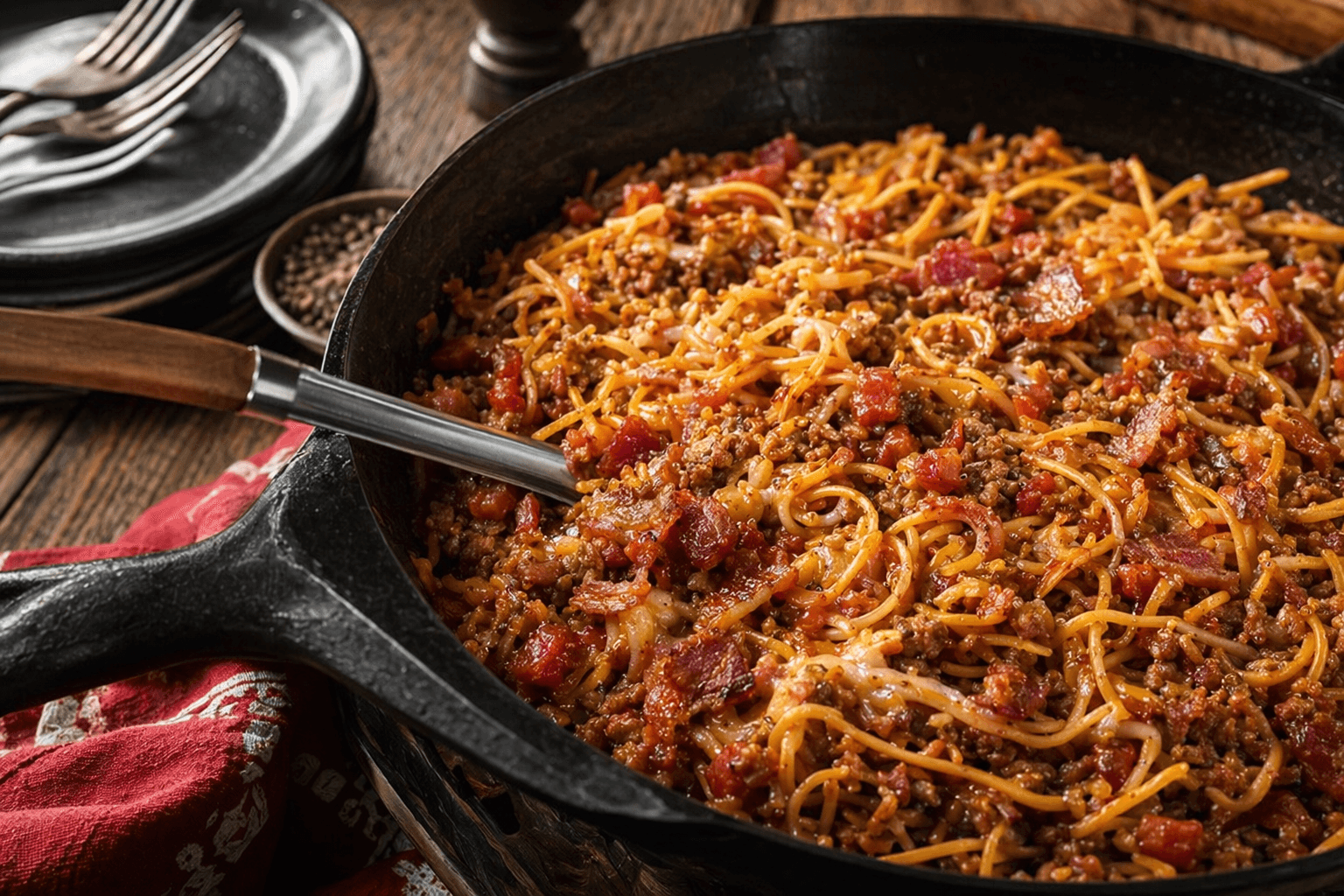
Allrecipes updated the recipe on April 28, 2026, and the current version leans hard into the kind of one-dish comfort food that makes sense on a busy night. The recipe is credited to TheDailyGourmet, serves 5, and clocks in at 55 minutes total, with 15 minutes of prep and 40 minutes of cooking. That is the sort of timing that makes a strong case for weeknight rotation status, especially when the payoff is a skillet full of beefy, smoky pasta that lands at 520 calories per serving.
What goes into the skillet
The ingredient list tells you exactly what kind of meal this is. Bacon and ground beef bring the meat backbone, beef broth and Worcestershire sauce deepen the savory base, and hot sauce adds the kind of heat that keeps the dish from tasting like generic meat sauce. The pasta is spaghetti, but the supporting cast matters just as much: diced tomatoes with green chiles, fire-roasted tomatoes, tomato sauce, onions, green onions, and sharp Cheddar.
That combination is not subtle, but subtle is not the brief here. Allrecipes calls out the hot sauce and Rotel-style tomatoes as the key to the dish’s bold taste, and that tracks with the finished result. You get salt, smoke, tang, heat, and enough dairy finish from the Cheddar to round everything out so it feels like comfort food instead of just a pile of ingredients.
How the method makes the flavor work
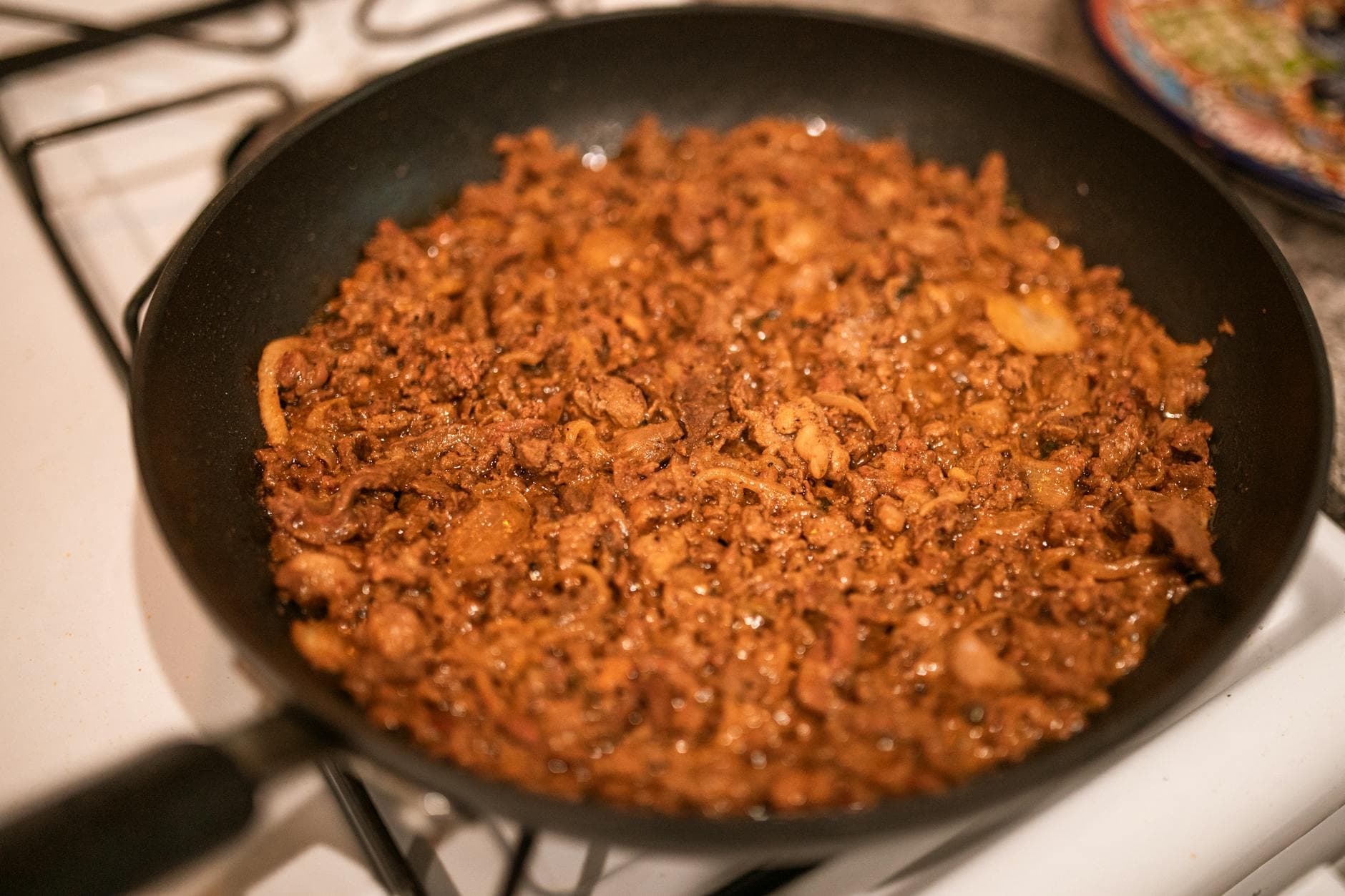
The best thing about Cowboy Spaghetti is that it does not ask you to build a separate sauce and then hope the noodles behave. It starts by crisping the bacon in a cast iron skillet, then using the rendered fat to cook the onion, garlic, salt, and pepper before the ground beef goes in. That sequence matters, because it layers flavor in the pan instead of relying on a sauce from a jar to do all the work.
From there, the broth, Worcestershire sauce, hot sauce, and some of the bacon go in, followed by the spaghetti itself. The tomatoes and tomato sauce are poured over the noodles, the pan gets covered, and the pasta cooks directly in the sauce until tender. That is the whole point of this style: the spaghetti absorbs flavor as it simmers, and the starch helps tighten the sauce so the final dish feels cohesive rather than watery.
Why the one-skillet approach matters
This is where the recipe earns its place in the pasta world. Allrecipes labels it a one-dish meal cooked in a cast iron skillet, and that is more than a convenience note. Cooking the noodles in the sauce saves time, keeps the method straightforward, and gives the dish a more integrated texture than a separately boiled spaghetti tossed with sauce at the end.
That same logic shows up in other Allrecipes one-pot pasta recipes, including One-Pot Spaghetti with Meat Sauce and Easy Skillet Spaghetti. In both cases, the spaghetti simmers directly in a tomato-based liquid for convenience and extra flavor, which is part of a larger pattern on the site. The appeal is obvious: fewer pots, less waiting, and a fuller-tasting bowl that still behaves like a practical dinner.
Why the “cowboy” label keeps getting attached to pasta
The word cowboy does a lot of work here. Historically, cowboy cooking is tied to 19th-century chuckwagon and frontier foodways in the American West, according to The Food Timeline, but this pasta is not a direct reenactment of that era. Instead, the label now signals a broader style: hearty, meat-forward, crowd-pleasing food that sounds rugged even when it comes from a modern home kitchen.
Allrecipes has turned that idea into its own comfort-food family. Cowboy Macaroni, Cowboy Casserole, Cowboy Skillet Casserole, and Cowboy Lasagna all use the same shorthand, and the promise is consistent: big flavor, familiar ingredients, and enough bulk to satisfy a group. In that sense, cowboy has become less about the frontier and more about appetite, abundance, and the kind of meal that disappears fast at the table.
Clever comfort food or excess for excess’s sake?
It is both rich and redundant on paper, which is exactly why it lands. Bacon plus ground beef plus Cheddar plus a sauce built on tomatoes, broth, Worcestershire, and hot sauce could easily tip into overkill, but the skillet method keeps it from feeling bloated. Everything has a job, and the pasta is not just a carrier, it is part of the sauce-building process.
That said, this is not a delicate spaghetti dinner. It is rustic, filling, and built for people who want a single pan to do the work of a whole meal. If you want a lighter red-sauce pasta, this is not your lane; if you want a weeknight skillet that feeds five, tastes smoky and spicy, and comes with real personality, Cowboy Spaghetti is doing exactly the right amount.
What the numbers say about its place at the table
A 4.7-star rating from 163 ratings and 148 written reviews says a lot about how home cooks are responding to it. That kind of engagement suggests the recipe is not being treated as a novelty stunt, but as an easy rotation meal that delivers on its promise. People are not just clicking through for the cowboy name, they are making it, and the one-pan format is clearly part of the appeal.
The calorie count, the serving size, and the timing all point in the same direction: this is family dinner food. It is affordable in the sense that it leans on familiar ingredients, it scales naturally for a group, and it gives you the kind of full-slate comfort that makes a second helping feel inevitable. Cowboy Spaghetti works because it understands the real job of pasta at the end of a long day: feed people well, use one skillet, and make the meal feel bigger than the effort it took to get there.
This article was produced by Prism’s automated news system from verified source data, official records, and press releases, then run through automated quality and moderation checks before publishing. The system is built and supervised by the people who set the standards it runs under. Read our full AI policy.
Did this article answer your question?