Dietitians Share Their Best Tips for Ordering Healthier Pasta at Italian Restaurants
Two VNutrition dietitians break down the one plate-building principle that makes ordering pasta at an Italian restaurant nutritious without killing the fun.
Sit down at almost any Italian restaurant and the menu can feel like a nutritional minefield: cream sauces, fried cutlets, cheese-drenched bakes. But the real picture is more nuanced. Many authentic Italian dishes are built on simple, nutritious ingredients, and a plate of pasta doesn't have to put you in conflict with your health goals. Two credentialed dietitians at VNutrition spelled out exactly how to navigate the menu smartly, and the framework they offer is simpler than you'd expect.
Build a Balanced Plate First
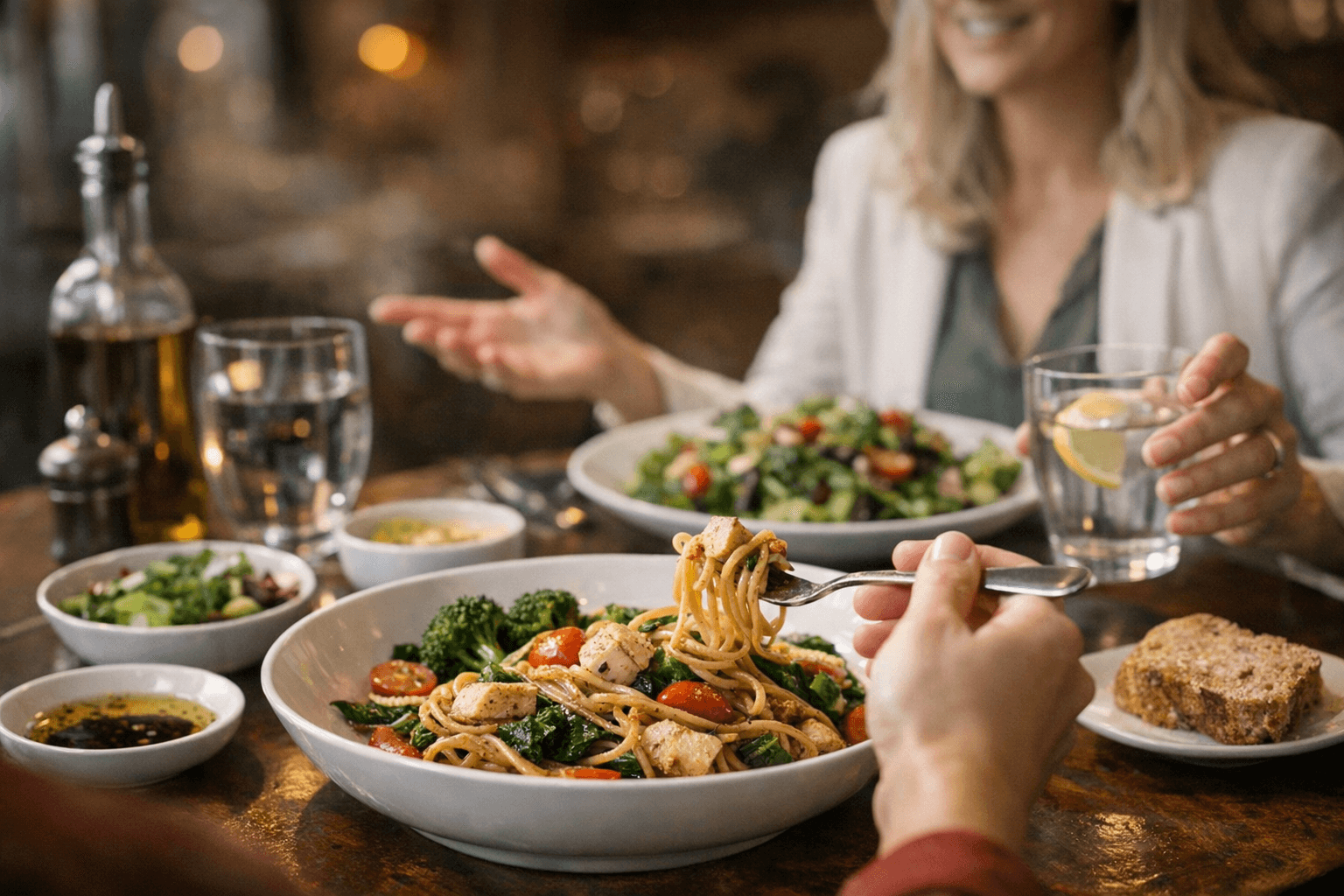
The single most useful lens you can bring to an Italian restaurant menu is balance. Kat Benson, a certified registered dietitian and board-certified specialist in sports dietetics at VNutrition, says to look for a pasta dish that has some balance to it: "That means carbohydrates from the pasta, a source of protein, some fiber, and a moderate amount of fat." That four-part checklist, carbs plus protein plus fiber plus moderate fat, does most of the decision-making work before you've even looked at the specific dishes.
In a typical Italian restaurant, Benson notes that this balance "might be a pasta with a tomato-based sauce (like marinara), paired with a lean protein like chicken or seafood along with vegetables or a side salad." That combination hits every target on the checklist without forcing you into anything that feels like a compromise. Marinara with grilled chicken and a side of roasted vegetables is a standard item on most Italian menus, not a special order.
Sauce Is More Important Than You Think
Once you've committed to the balance principle, the sauce becomes your next lever. "Tomato-based sauces tend to be lighter than cream-based sauces," Benson explains, "and adding protein and vegetables can help balance the meal out so it's more satisfying."
Lena Bakovic, a certified nutrition support clinician and registered dietitian nutritionist at VNutrition, also recommends seeking out a tomato sauce because it's usually "lower in saturated fat, and full of lycopene (which is great for you)." Lycopene is the antioxidant compound responsible for the red color in tomatoes, and cooked tomato products deliver it in particularly bioavailable form. The practical flip side of that advice: try to avoid "really rich, creamy sauces... lots of cheese or butter... [or] fried toppings, like breaded eggplant or anything swimming in oil." Those are the menu items worth steering around, not pasta itself.
Pile On the Vegetables
Vegetables are arguably the most underused tool in the restaurant-pasta playbook. Bakovic suggests incorporating as many vegetables as possible, as "they add fiber and vitamins and make your bowl more satisfying." A side salad alongside your pasta achieves the same goal if the dish itself is light on vegetables. Most Italian restaurants are happy to add spinach, broccoli, zucchini, or cherry tomatoes to a pasta dish on request, and asking takes about ten seconds.
Choose the Right Pasta Type (and Ignore the Gluten-Free Hype)
If the menu offers pasta alternatives, knowing which ones actually deliver a nutritional upgrade matters. Bakovic recommends keeping an eye out for "whole-grain, legume-based, or veggie-fortified pasta," as those ingredients have more fiber and protein than pasta made with traditional white flours. More fiber and protein in the pasta itself means better satiety and a steadier blood sugar response from the meal.
Here's the catch worth knowing before you scan the menu: although those types of alternative pastas are quite easy to find in grocery stores, you might have a difficult time finding any bean-based pasta noodles in a typical Italian restaurant. Whole-grain options show up more frequently at casual chains and modern Italian spots than at traditional trattorias, so it's worth asking your server before you assume the option exists.
One substitution that does appear on menus but doesn't earn the nutrition points people assume it does: gluten-free pasta. Gluten-free isn't necessarily a "healthier" choice. "Unless you have celiac disease or a true gluten sensitivity," says Bakovic, "you're better off choosing whole-grain or legume-based pasta for that extra nutrition boost, rather than picking gluten-free just because it sounds healthier." Gluten-free pasta is typically made from refined rice or corn flour, which offers no meaningful fiber or protein advantage over standard white pasta. The label reads as a health signal; the nutrition facts often tell a different story.
Let Yourself Actually Enjoy the Meal
None of this means turning dinner into a clinical exercise. Italian cuisine's range runs from genuinely light and vegetable-forward dishes all the way to béchamel-drenched lasagna and deep-fried cotoletta alla Milanese, and not every meal needs to sit at the same point on that spectrum. Half of the fun of going out to a restaurant is to relieve yourself of the typical constraints of cooking a meal at home, which should include a bit of indulgence and the ability to relax and enjoy your meal without being incredibly strict in your diet.
By using tips like these, you can still incorporate what's important to you nutrition-wise without the stress and fear that you've gone too far off track of your normal healthy routine. The goal isn't to order the least exciting thing on the menu. It's to know which choices give you the most out of both worlds. A marinara with shrimp and a green salad on the side isn't a compromise: it's a genuinely good meal that also happens to check every box on Benson's balance checklist.
A Quick-Reference Summary
When you sit down at an Italian restaurant and want to eat with intention, here's what the experts say to keep in mind:
- Look for the four-part balance: carbs from pasta, a lean protein source, fiber, and moderate fat in a single dish.
- Default to tomato-based sauces like marinara over cream-based options.
- Pair pasta with chicken or seafood for lean protein.
- Add vegetables to the dish or order a side salad to boost fiber and micronutrients.
- Ask whether whole-grain or veggie-fortified pasta is available, and don't expect legume-based noodles on most traditional Italian menus.
- Skip gluten-free pasta unless you have celiac disease or a medically confirmed gluten sensitivity.
The framework Benson and Bakovic offer is notable for what it doesn't include: calorie counting, portion obsession, or any instruction to avoid pasta altogether. The emphasis is on what to reach for, not what to fear, and that's a framing worth bringing to the table every time.
This article was produced by Prism’s automated news system from verified source data, official records, and press releases, then run through automated quality and moderation checks before publishing. The system is built and supervised by the people who set the standards it runs under. Read our full AI policy.
Did this article answer your question?