Fresh Pasta from Scratch: Ingredients, Ratios, Techniques and Storage
Fresh egg pasta is simple to make at home using a basic 1 egg : 100 g flour ratio; this piece explains ingredients, kneading, rolling, cooking times and storage tips for reliable results.
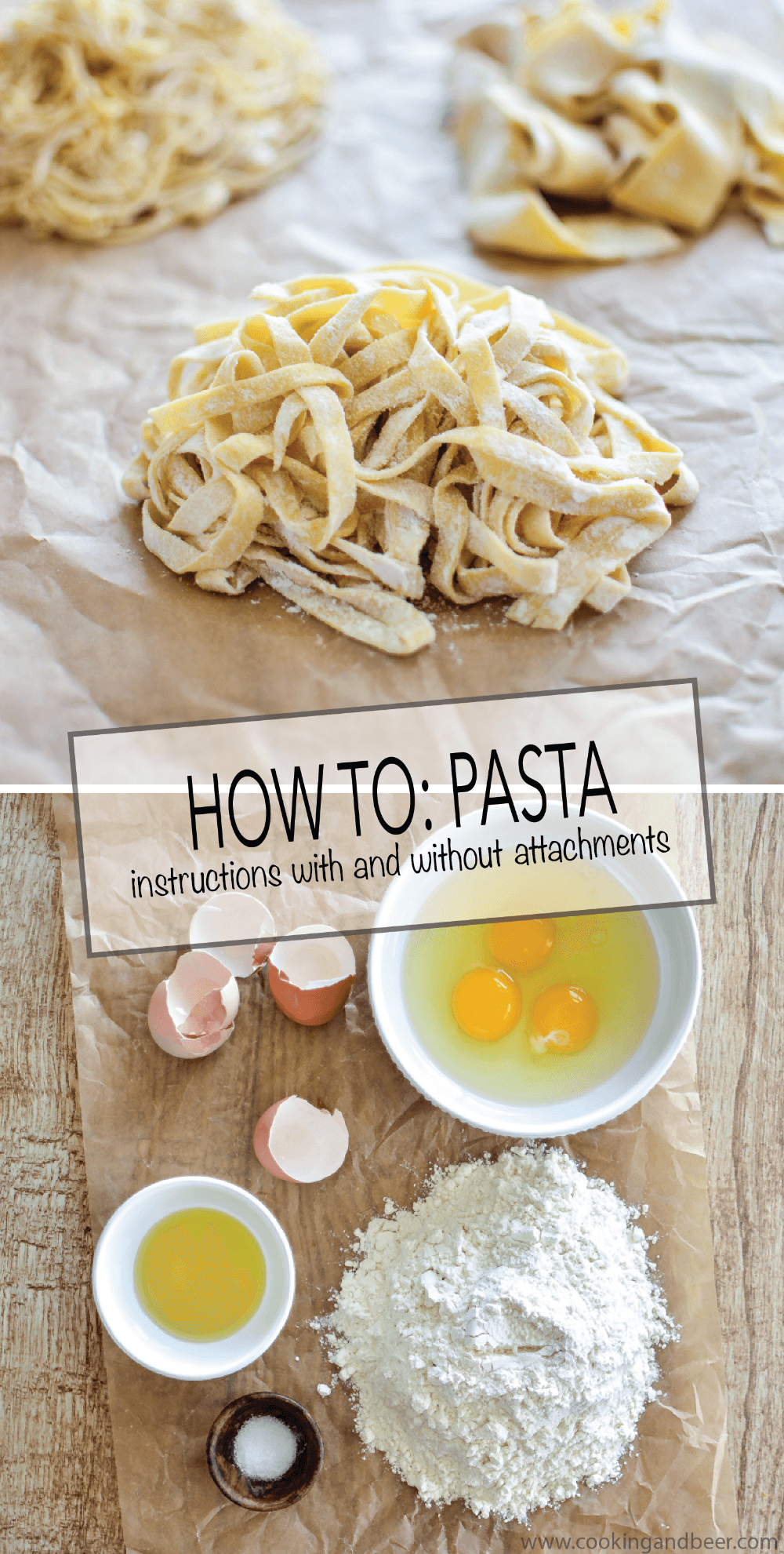
Fresh egg pasta starts with a straightforward math problem: one egg per 100 g of flour gives predictable dough and texture. That 1:100 ratio appears across recipes and examples range from 400 g flour with 4 eggs to a 300 g flour batch mixed with 185 g cracked eggs, so you can scale reliably for family meals or a single plate.
Fresh pasta differs from dry pasta in composition and behavior in the pot. Dry pasta uses semolina and water and becomes dense and firm, able to hold hearty ragù. Fresh pasta contains eggs and aims for a light, springy, delicate bite. Serious Eats captures the quick, rewarding finish: "And voilà! You just made pasta!" and reminds cooks that very thin fresh sheets cook astonishingly fast.
Start on the work surface by making a flour mound and a well, or use a bowl. Crack eggs into the center and, as Serious Eats instructs, use a fork or your fingertips to pull flour into the eggs until the mass holds together. Add salt, oil, or flavorings at this stage if desired. For small adjustments, one source advises: "If bits of flour remain, I’ve found that adding a few drops of water or olive oil helps it along."
Kneading is where practice pays off. Love & Lemons warns that the dough will feel stubborn at first but will smooth out after a sustained effort: "At the beginning, the dough should feel pretty dry, but stick with it! It might not feel like it’s going to come together, but after 8–10 minutes of kneading, it should become cohesive and smooth:" MyItalianFlavors is emphatic about at least ten minutes of kneading, and TheCleverCarrot recommends an early hydration rest - "Cover and rest for 10 minutes" - to make hand kneading easier. After kneading, wrap and rest the dough for a longer period; a 30 minute room temperature rest is a common next step before rolling.
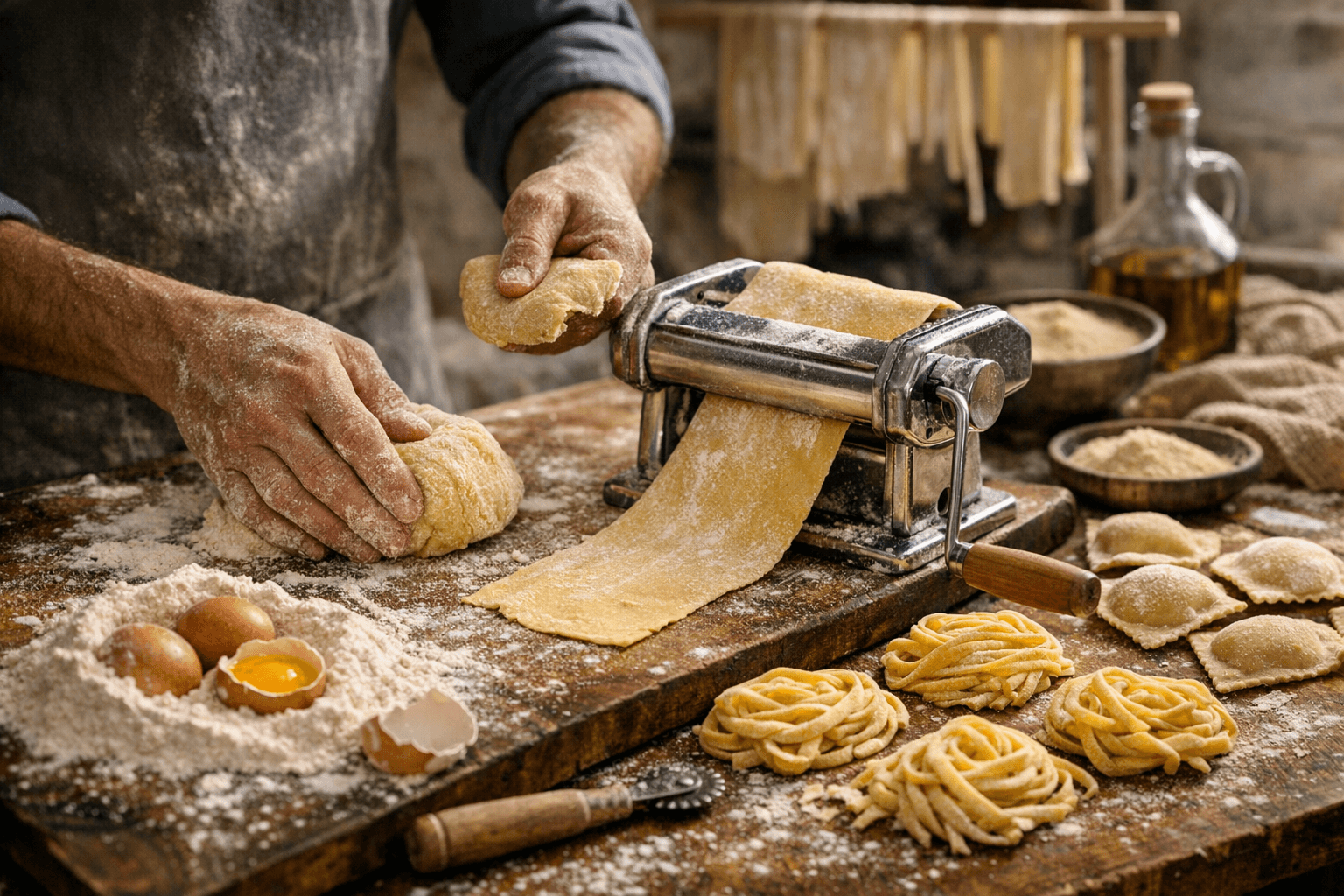
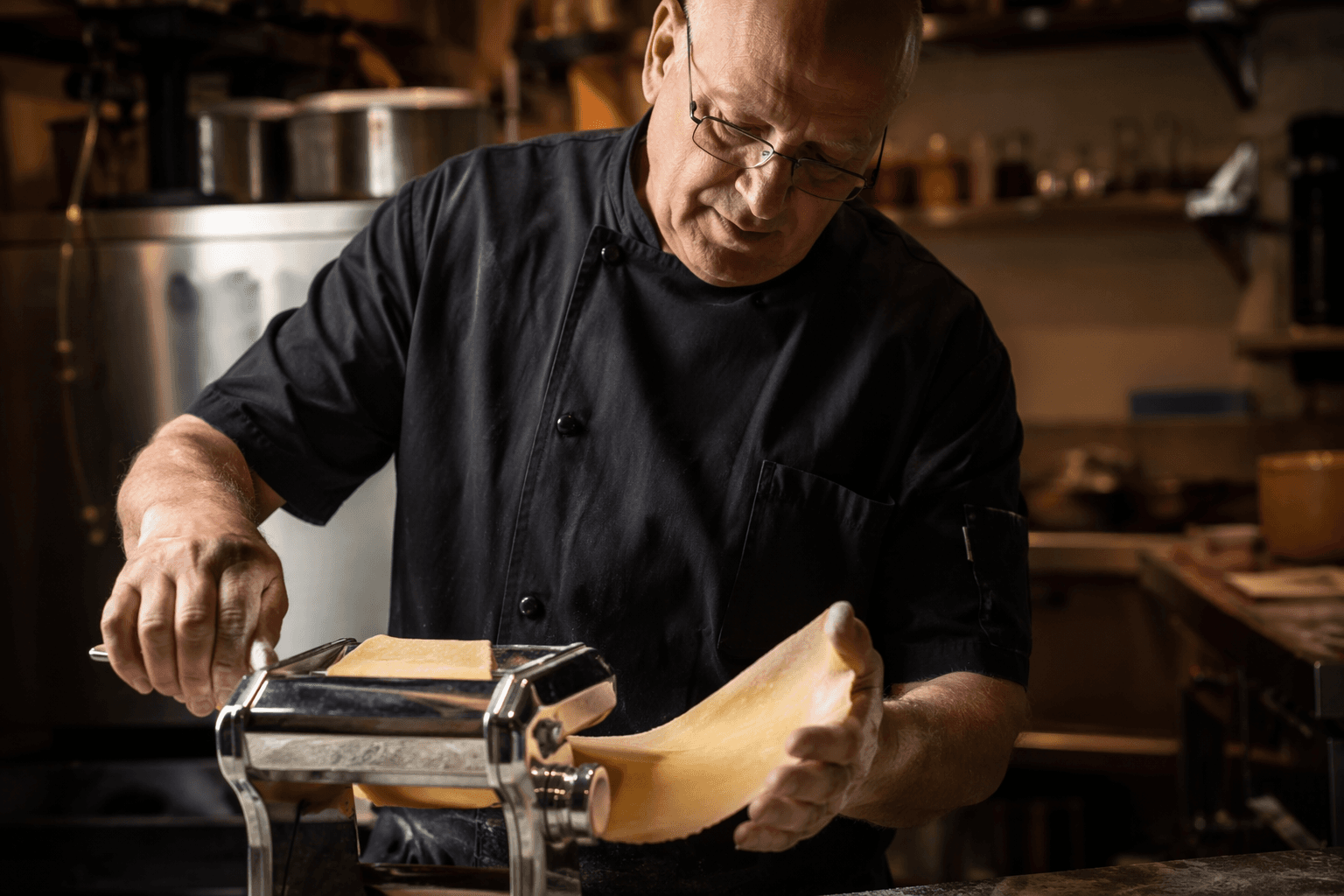
Rolling and cutting can be low‑tech or mechanized. Use a pasta machine or a rolling pin; the KitchenAid attachment progression is a useful benchmark: "I run it through the pasta roller three times on level 2, three times on level 3, and one time each on levels 4, 5, and 6." Before cutting, consider a short semi‑dry hang of about 5-15 minutes to firm sheets: "Before cutting, I like to semi‑dry the pasta sheets first but hanging them over a chair, rod, or on a hanger (~5–15 minutes)." Dust strands with semolina and form nests or lay flat.
Cooking times vary with thickness. Serious Eats warns "They'll cook quickly, I'm talking 60‑seconds quickly, so be ready to taste and drain them almost immediately," and adds a technical caution: "If you don't cook it long enough, the egg and flour proteins won't set, your starch won't fully hydrate, and you'll end up with a kinda pasty pasta." Other sources recommend tasting at two minutes and expect 2-5 minutes depending on shape. Finish by transferring straight into the sauce: "Then, don’t drain it! Transfer your pasta directly into your sauce with tongs."
Variations are simple: fold in chopped herbs, saffron, or swap some wheat for buckwheat or whole wheat. David Lebovitz encourages experimentation: "Once you get the hang of making fresh pasta, you can start adding your own touches to it." If you want to get ahead, make dough earlier in the day or freeze portions, and expect practice to shave time and improve texture. Follow these ratios, respect knead and rest times, taste early in the boil, and you’ll have fresh, home‑made pasta that rewards the effort.
This article was produced by Prism’s automated news system from verified source data, official records, and press releases, then run through automated quality and moderation checks before publishing. The system is built and supervised by the people who set the standards it runs under. Read our full AI policy.
Did this article answer your question?