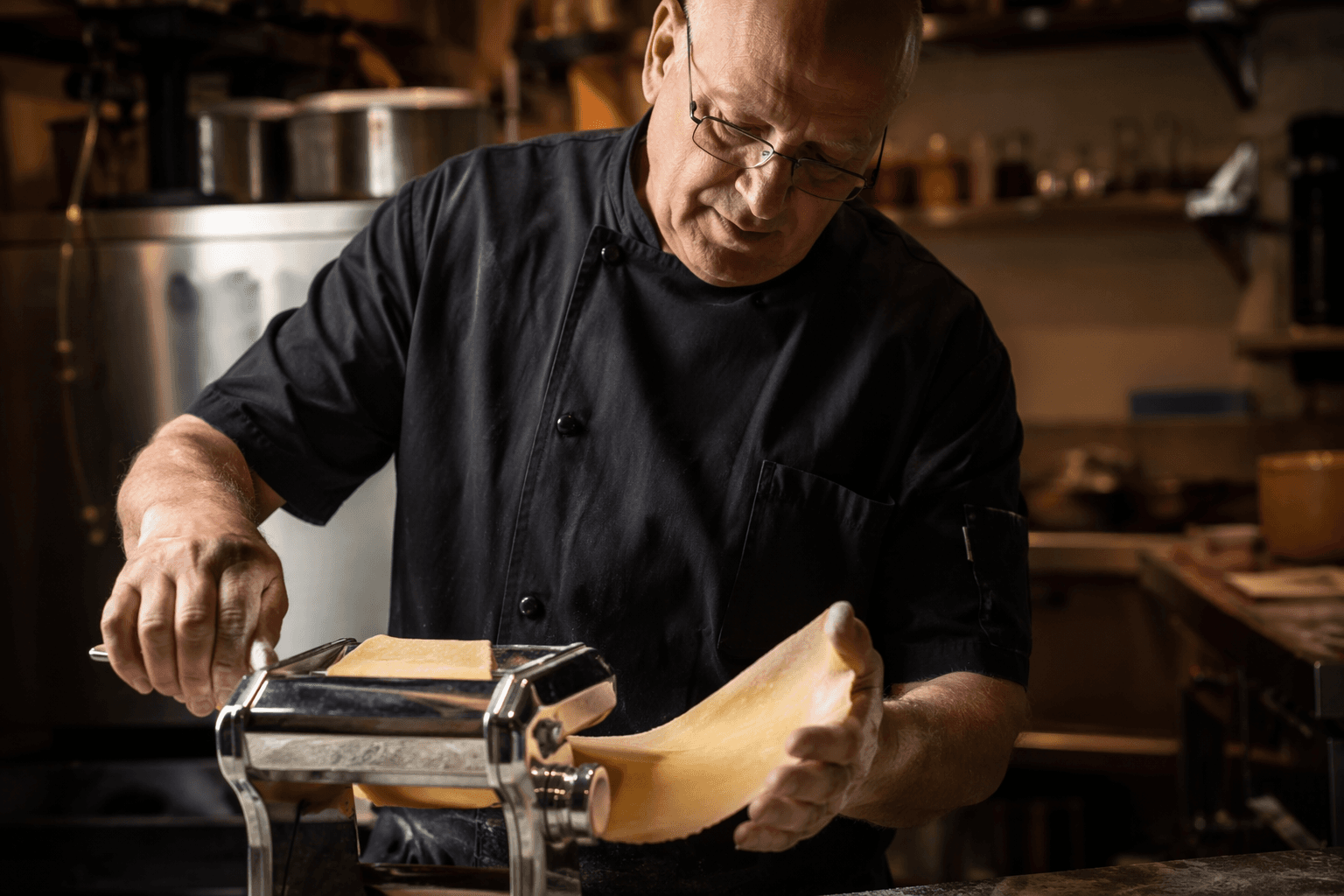
Home Pasta-Making Gear Buyers Guide: Top Machines For Restaurant Results
This comprehensive buyer’s guide reviews and recommends home pasta-making equipment for cooks aiming for restaurant-quality results. Top picks include the Marcato Atlasmotor for powered rolling, the Marcato Atlas 150 for manual rolling, the Philips 7000 Series for electric extruding, and the KitchenAid 3-piece Pasta Roller & Cutter attachment for stand-mixer users, along with practical cleaning, hydration, and pairing advice.

For home cooks upgrading their pasta toolkit, clear choices emerged after hands-on testing across several machine types. The Marcato Atlasmotor finished as the best overall powered roller for consistent sheet thickness and speed, while the Marcato Atlas 150 was the top manual pasta maker for affordability and control. For shaped pasta the Philips 7000 Series stood out as the best electric extruder, and the KitchenAid 3-piece Pasta Roller & Cutter attachment proved the best fit for anyone who already owns a stand mixer.
Testing prioritized the factors that matter most at home: consistency of sheet thickness, ease of use, setup and storage footprint, cleaning, build quality, and how each machine performed with typical doughs. Rollers were evaluated for smoothness through multiple passes and ability to reach wide thickness ranges. Extruders were judged on throughput, ability to form uniform shapes such as penne and rigatoni, and how they handled semolina-based doughs. Attachments were assessed for fit, stability, and whether they simplified common workflows.
Trade-offs were evident. Manual rollers like the Marcato Atlas 150 offered the best value and tactile control but required more elbow grease and time when making larger batches. Powered rollers such as the Atlasmotor saved effort and produced uniform sheets faster, at a higher price and with a small increase in counter space. Extruders such as the Philips 7000 Series open up tubes and ridged shapes that rollers cannot, but they are larger, heavier, and require more work to clean and store. The KitchenAid attachment is compact for those with compatible mixers and speeds up sheet-and-cut recipes while keeping storage efficient.
Practical use tips focused on dough hydration, cleaning, and pairing tools with recipes. Aim for a dough that is supple and slightly tacky rather than sticky; adjust flour or water in small increments to reach that texture. Use rollers for thin sheets needed in tagliatelle, pappardelle, and lasagna; use extruders for hollow shapes and ridged tubes that hold chunky sauces. Clean metal rollers and cutters by brushing dry flour and using a soft brush for dough residue; avoid submerging metal-bodied machines in water. For extruders, disassemble promptly and rinse internal parts to prevent drying. Store attachments in their original boxes or padded covers to protect rollers and cutters.
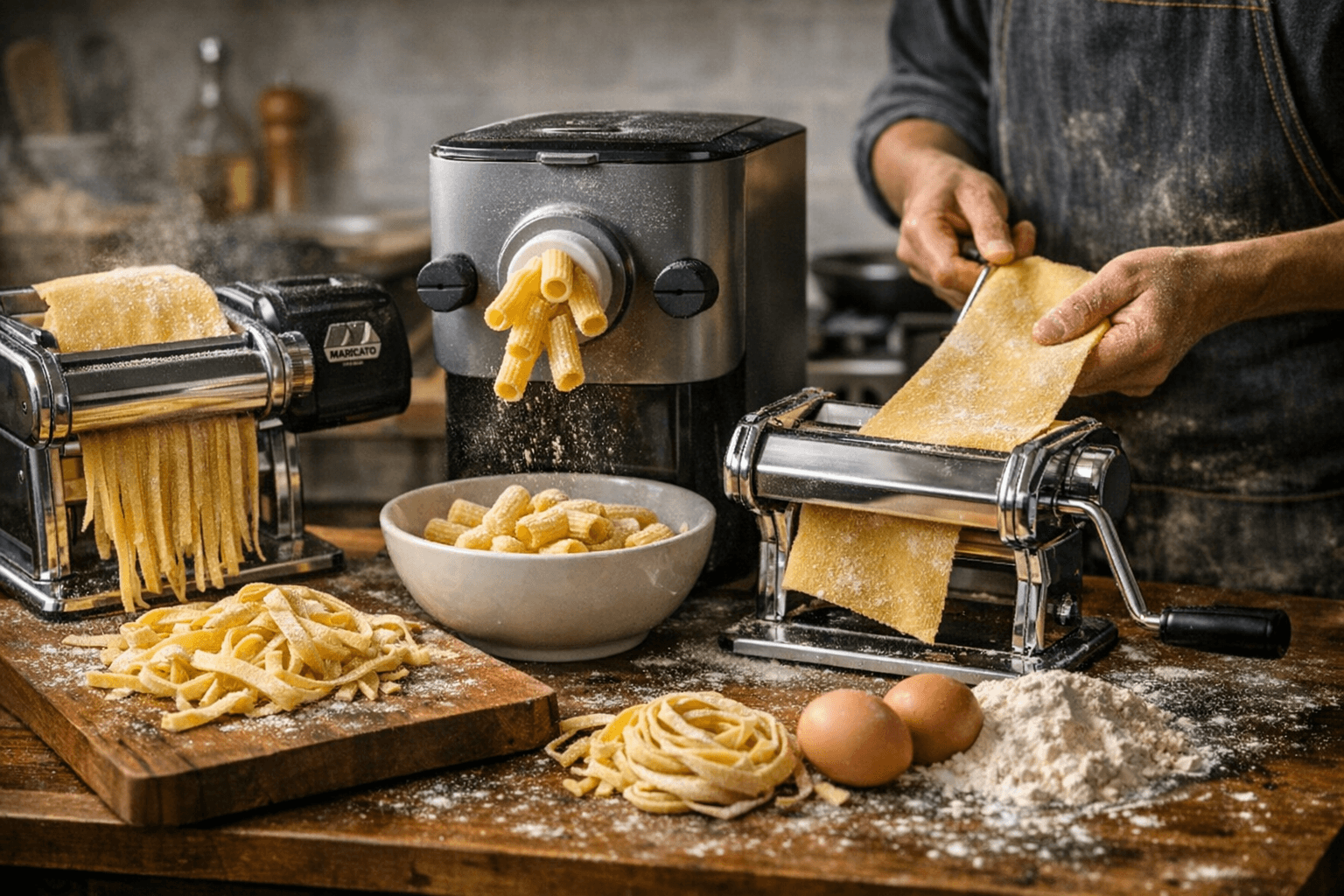
Tester notes highlighted that motorized rolling notably reduced fatigue during larger batches, while manual machines rewarded attention with fine control over thickness. The Philips extruder excelled at specialty shapes but required a dedicated space. The KitchenAid attachment offered speed and convenience for mixers already in regular use.
Frequently asked questions addressed whether a beginner needs an extruder (not necessary for classic ribbon pastas), how to maintain rollers, and which machines pair best with semolina versus all-purpose flour. This guide aims to help you match budget, space, and recipe ambitions to the right pasta-making equipment so you can produce consistent, restaurant-quality pasta at home.
This article was produced by Prism’s automated news system from verified source data, official records, and press releases, then run through automated quality and moderation checks before publishing. The system is built and supervised by the people who set the standards it runs under. Read our full AI policy.
Did this article answer your question?