How to Pair Spaghetti, Fettuccine, Penne and Shells with Sauces
Learn how to match spaghetti, fettuccine, penne and shells to the right sauces, plus practical tips on texture, cooking and community-friendly serving.

A good pasta pairing is equal parts shape science and kitchen intuition. Match a pasta’s surface, nooks and twirl factor to the sauce’s thickness and chunkiness, finish the dish in the pan with starchy pasta water, and you’ll turn weekday dinners into neighborhood hits. Below I break down the best matches for spaghetti, fettuccine, penne and shells, with practical techniques and community-minded tips for serving.
1. Spaghetti (and other long, thin shapes)
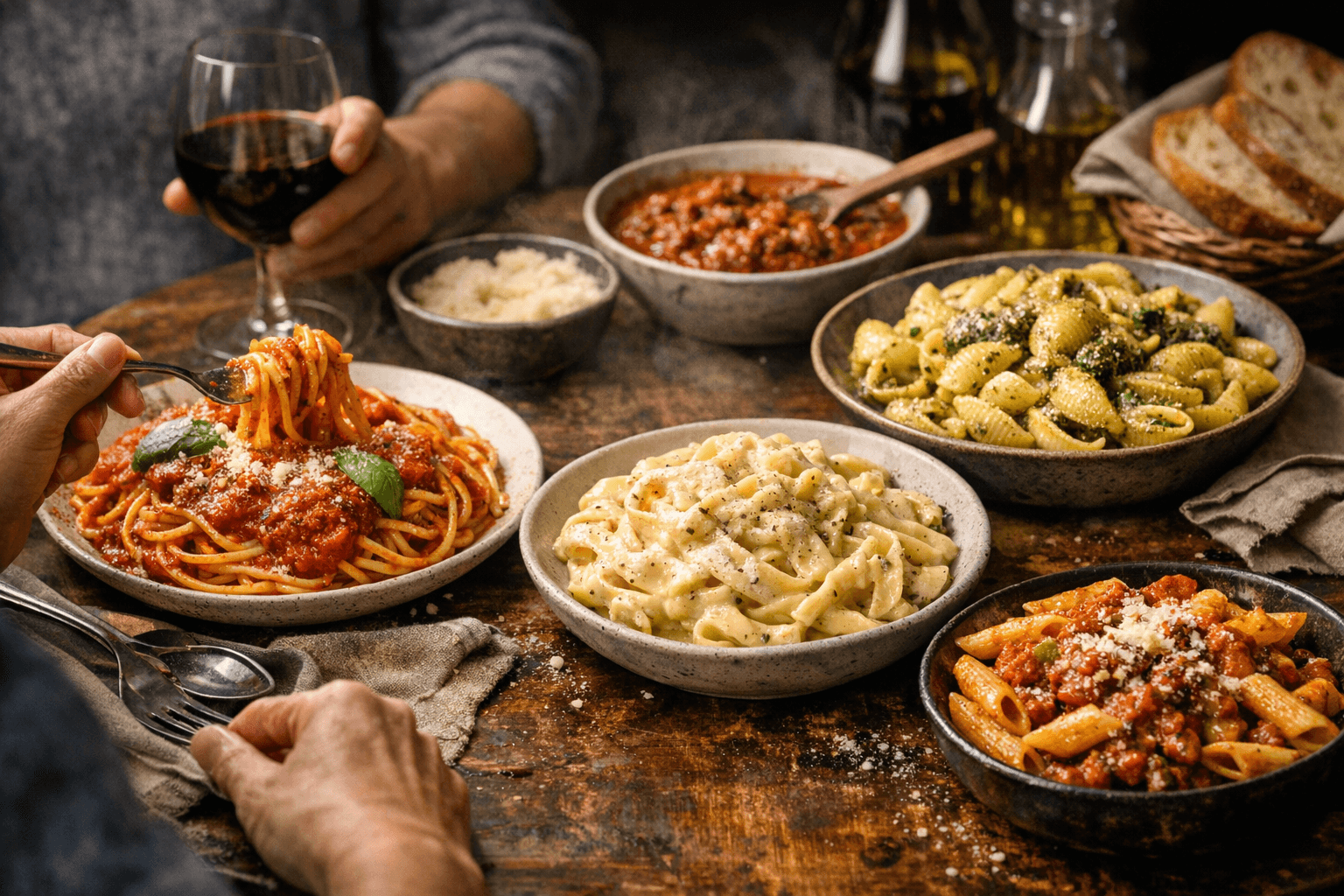
Spaghetti and its cousins like linguine are built for light, oil-based or thin tomato sauces. Because these noodles have a smooth, cylindrical surface and a high twirl factor, they cling best to emulsified sauces, think aglio e olio, puttanesca, or a light marinara, where the sauce coats rather than fills. For seafood pairings such as clam or tuna sauces, long pasta lets delicate flavors and little bits of protein distribute evenly across every forkful. Cook to just‑al dente, reserve starchy pasta water, and finish the pasta in the pan so the sauce emulsifies around each strand for a glossy, restaurant-style finish.
2. Fettuccine (and ribbon pastas)
Fettuccine, tagliatelle and other flat ribbon pastas offer a broader surface area that loves creamy and rich sauces. Carbonara, Alfredo variations, and meat ragùs (Bolognese-style) cling to the flat surface, giving you a satisfying bite that carries both sauce and body. The extra width makes fettuccine a go-to when you want a luxurious mouthfeel, use butter, cream or slow-simmered ragù to exploit that surface area. When serving at community dinners or potlucks, cook slightly firmer than you’d eat at home (it softens while sitting) and toss with a splash of reserved pasta water to keep the sauce glossy.
3. Penne (and other tubular pastas)
Penne, rigatoni and similar tubes excel with chunkier, vegetable-forward, or meat-based sauces because their hollow centers and ridges trap pieces of tomato, sausage, or roasted vegetables. Penne al arrabbiata, baked penne with ricotta, or a hearty ragù find a natural home here, each bite captures sauce and chunks inside the tube. When you want even more cling, choose rigate (ridged) penne: the scars grab sauce better than smooth tubes. For community cookouts or shared trays, penne’s forgiving shape stands up well to rewarming and baking, so it’s a low-stress winner for feeding crowds.
4. Shells (conchiglie) and small shapes (orecchiette, cavatelli)
Shells are literal sauce catchers, conchiglie’s cup shapes hold chunky fillings, creamy sauces, and make baked dishes shine. Large shells can be stuffed or layered in casseroles; medium and small shells scoop up bits of sausage, mushrooms, or peas, so creamy cheese sauces and chunky vegetable ragùs are ideal. Small regional shapes like orecchiette and cavatelli deserve a shout-out: they’re designed to partner with vegetable ragùs, bitter greens, and bean-based sauces where each little pocket collects flavor. For community events, shells and small shapes perform well in buffet lines because they retain sauce and reheating doesn’t flatten their texture as quickly.
- Match texture: thin sauces → long, thin pasta; creamy/rich → ribbon pasta; chunky sauces → tubular or shell shapes.
- Use starchy pasta water: reserve at least a cup; a ladleful helps emulsify and bind sauce to pasta.
- Finish in the pan: cook pasta to just al dente and toss it with sauce over heat to marry flavors and adjust consistency.
- Consider crowd logistics: penne and shells reheat/bake better for potlucks; long pastas are best plated and served immediately.
- Mind the “twirl factor”: forks prefer spaghetti-like shapes; kids and casual crowds may love penne or shells for ease of eating.
Practical pairing rules (easy reference)
Community relevance and kitchen tactics Your local supper club or block-party menu benefits when you lean on these rules: a potluck tray of baked penne demands less last-minute attention than a platter of spaghetti, while a weekend family ragù deserves ribbon pasta to showcase the slow-cooked sauce. Shareable tips, like bringing an extra bottle of olive oil to a pasta swap or pre-tossing penne with sauce for transport, make you the neighbor everyone invites back. In community kitchens, simple technical steps (reserve water, finish in the pan, salt generously) are the little practices that raise home-cooked pasta to group-pleasing levels.
Closing practical wisdom Treat pasta pairing like a toolkit: select the shape to match the sauce’s personality, keep starchy water and heat handy, and think about how you’ll serve it, plated now or passed around later. With these shape-and-sauce rules, you’ll turn everyday noodles into crowd-pleasing meals and keep the community table humming with confidence and flavor.
Know something we missed? Have a correction or additional information?
Submit a Tip