Inside Hank’s Pasta Bar, Darren Norris serves cacio e pepe with chicken
Darren Norris turns Hank’s upstairs room into a serious pasta stop, with cacio e pepe with chicken, tight technique, and a softer, more personal kind of neighborhood dinner.
An upstairs room with its own pulse
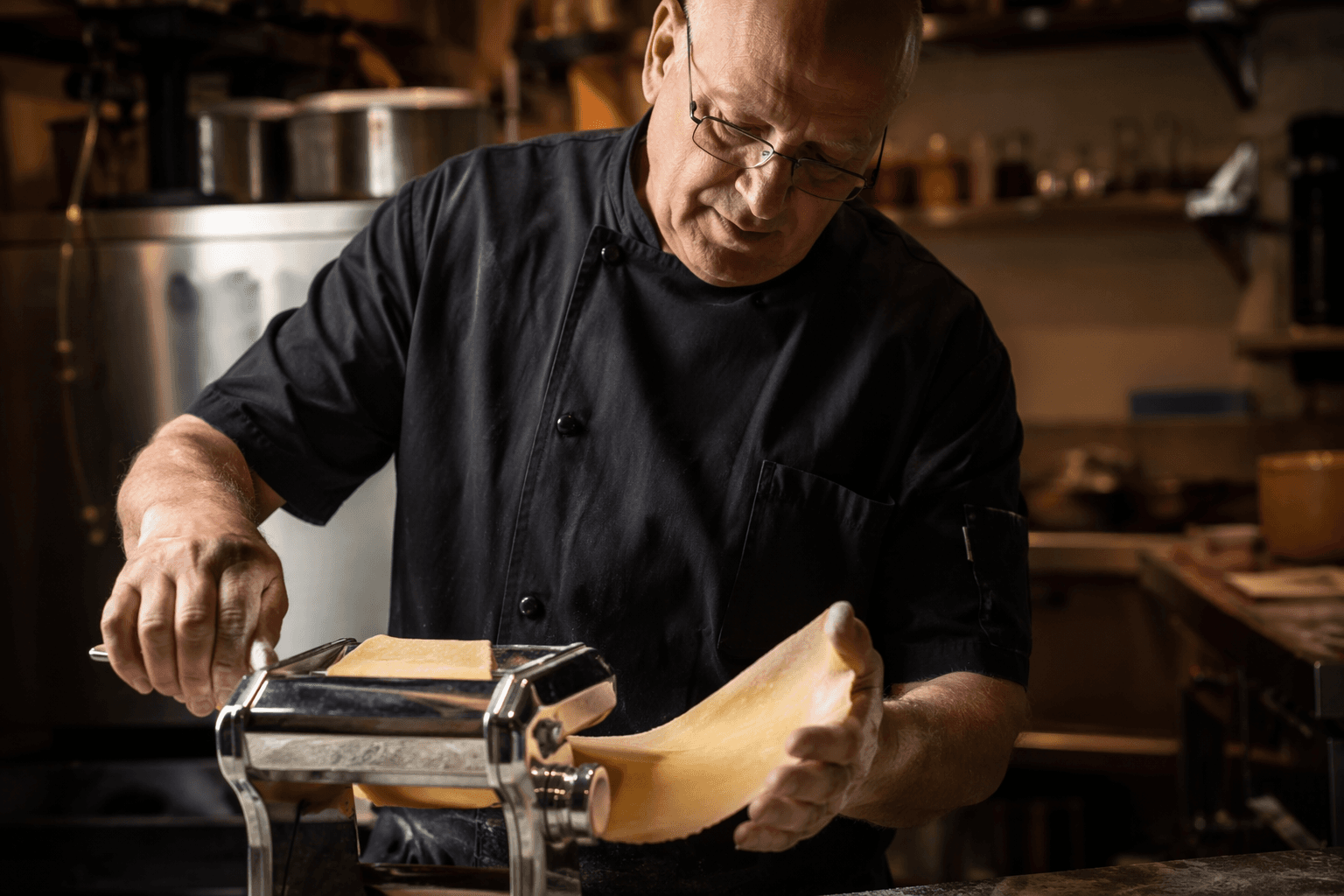
At Hank’s Pasta Bar, Darren Norris is not cooking like he has all night. He is working three skillets at once, with a huge vat of pasta water waiting on the back burner, and that motion tells you almost everything about the place. This is the upstairs Italian room inside Hank’s Oyster Bar in Old Town North, but it feels like its own destination, built around timing, heat, and the kind of focus that makes a familiar neighborhood meal feel worth the trip.
The first thing to understand is that this is not a generic red-sauce annex above a seafood bar. Downstairs, Hank’s Oyster Bar is the oyster-and-seafood side of the equation, with rooftop and main-floor seating at 818 N. St. Asaph Street in Alexandria, Virginia, and a daily service pattern that makes it easy to drop in. Upstairs, Hank’s Pasta Bar leans into Italian comfort with a sharper sense of technique, and that difference is the whole point.
What Norris is actually doing at the stove
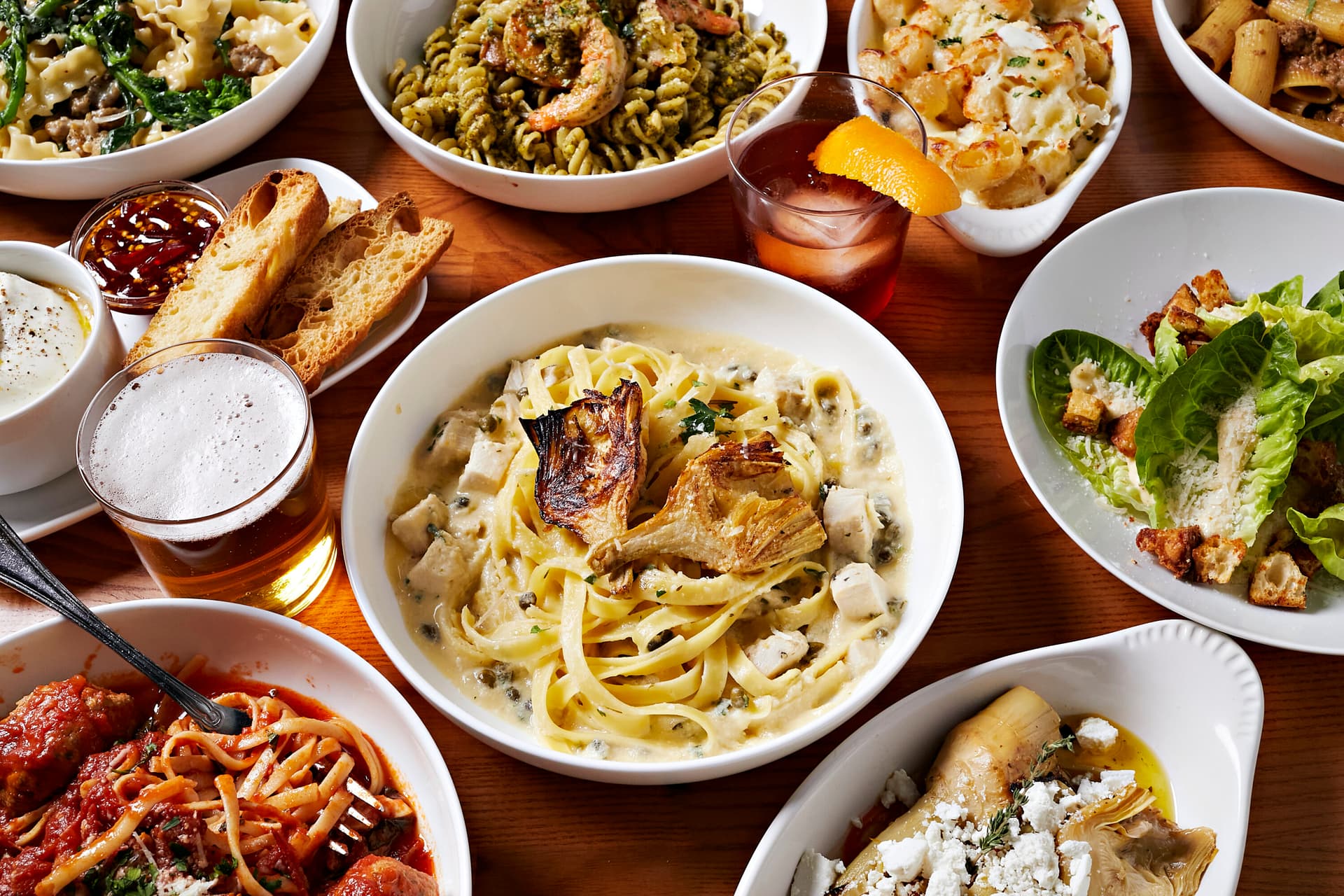
The dish drawing the most attention early on is linguine cacio e pepe with chicken, and Norris treats it like a lesson in building texture, not just seasoning pasta. He avoids non-stick pans, uses freshly ground Tellicherry pepper, and works pasta water into the sauce so the cheese and starch turn into a silkier emulsion instead of clumping or breaking. That kind of detail matters because cacio e pepe lives or dies on execution, and Norris is clearly cooking it one plate at a time instead of trying to fake volume.
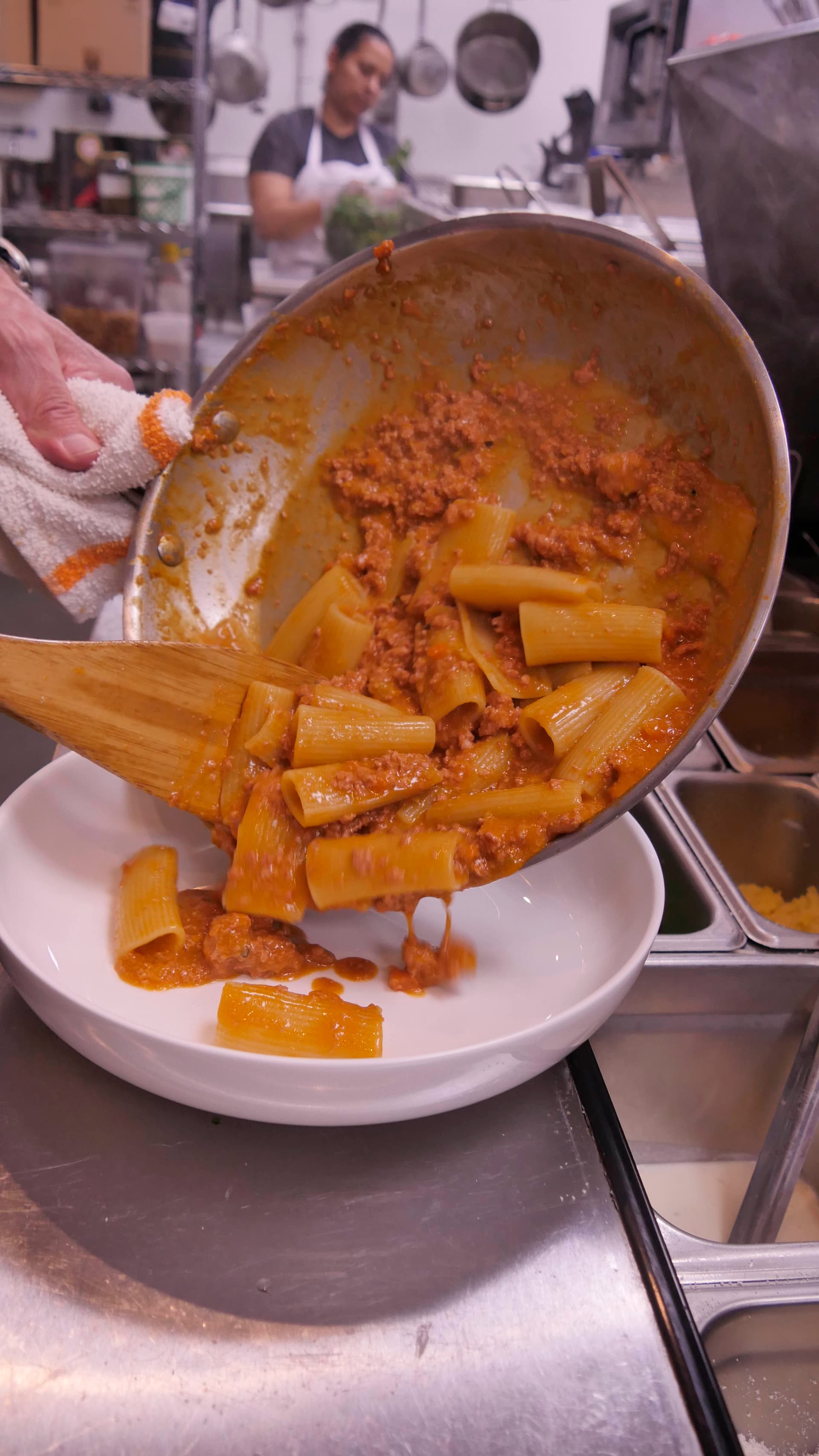
That same discipline shows up in the rigatoni bolognese. Norris builds the sauce from veal, beef, and pork, then layers in San Marzano DOP tomatoes, soffritto, pancetta fat, wine, butter, and cheese before cooking the rigatoni in the sauce itself so the pasta soaks up more flavor. He also uses Mancini pasta, an estate-style pasta made from durum wheat grown and harvested annually in Le Marche, Italy, which gives the dishes another layer of specificity that separates this room from the usual neighborhood Italian spot.
The signatures worth your attention
- Linguine cacio e pepe with chicken: the early favorite, and the clearest expression of Norris’s style, because it depends on heat control, pepper, and emulsification rather than sheer richness.
- Rigatoni bolognese: deep, savory, and built the old-school way, with multiple meats and a sauce that clings because the pasta finishes in the pan.
- Mancini pasta across the menu: the choice signals intent. This is pasta with a point of view, not a filler starch.
The tomato choice matters too. The San Marzano DOP consortium says those tomatoes are grown exclusively in the Sarnese-Nocerino area under strict quality controls, and that pedigree shows up in the sauce logic here. Norris is not reaching for ingredients because they sound nice on paper. He is using them because they behave the way a cook wants when the goal is a clean, balanced plate rather than a heavy one.
Why this reopening feels different from the original Hank’s Pasta Bar
Hank’s Pasta Bar is not appearing out of nowhere. It first opened in Old Town Alexandria in February 2016 as a 100-seat rustic Italian concept, and the original menu made the point immediately with dishes like parsnip gnocchi with crab, pappardelle with braised lamb ragu, and linguine with white clam sauce. The early pitch was neighborhood Italian with enough polish to feel special, but still casual enough to fit the Hank’s name.
Then the pasta bar closed in September 2019 for an extensive remodel and rebranding that was expected to bring it back with a rooftop bar and an expanded regional Italian menu. That history matters because the current version is not just a fresh opening, it is a return with a clearer identity. The restaurant group has also described Hank’s Pasta Bar as a takeout-and-delivery concept, which makes the upstairs dining room feel like the most complete, most satisfying expression of the brand’s Italian side.
The 2026 relaunch also came with a simple, smart opening-week push: the first 50 dine-in guests each evening from May 14 through May 17 received a complimentary prosecco or nonalcoholic sparkling alternative. That kind of promotion does not build a concept on its own, but it does signal confidence. The kitchen wants you in the room, watching the pans, not just ordering a box to go.
Darren Norris gives the room its identity
Norris is the reason this feels more like a destination than a rebrand. He has a long history with Italian cooking, including work as chef de cuisine at Scalini Fedeli in New York, and he also has a reputation in Japanese cooking through projects such as Kushi and Shibuya. That mix makes the move to Hank’s Pasta Bar more interesting than a standard chef assignment. He is not presenting Italian as a costume; he is bringing a career’s worth of technique into a room that already has local recognition.
That combination also helps explain the atmosphere. This upstairs space is not trying to out-shout the oyster bar downstairs. It is doing the opposite, using precision and a smaller culinary vocabulary to create a different reason to walk in the door. For Old Town North, that matters because the neighborhood gets another dinner option that feels distinct rather than duplicative.
The real appeal is how clearly the food matches the room. You see the skillet work, the pasta water, the pepper, the sauce building, and you understand why leaving the house for dinner here makes sense. Hank’s Pasta Bar works because Norris turns an upstairs room into a place where pasta is handled with the same seriousness that other restaurants reserve for tasting menus, and that is exactly why the cacio e pepe with chicken lands as more than a headline dish.
This article was produced by Prism’s automated news system from verified source data, official records, and press releases, then run through automated quality and moderation checks before publishing. The system is built and supervised by the people who set the standards it runs under. Read our full AI policy.
Did this article answer your question?