Michelin-Starred Chef Esposito Champions Smooth Pasta Over Ridged Shapes
Two-Michelin-starred Gennaro Esposito says smooth liscia pasta beats ridged rigata, a claim he backed in a blind tasting alongside a chef from Alain Ducasse's kitchen.
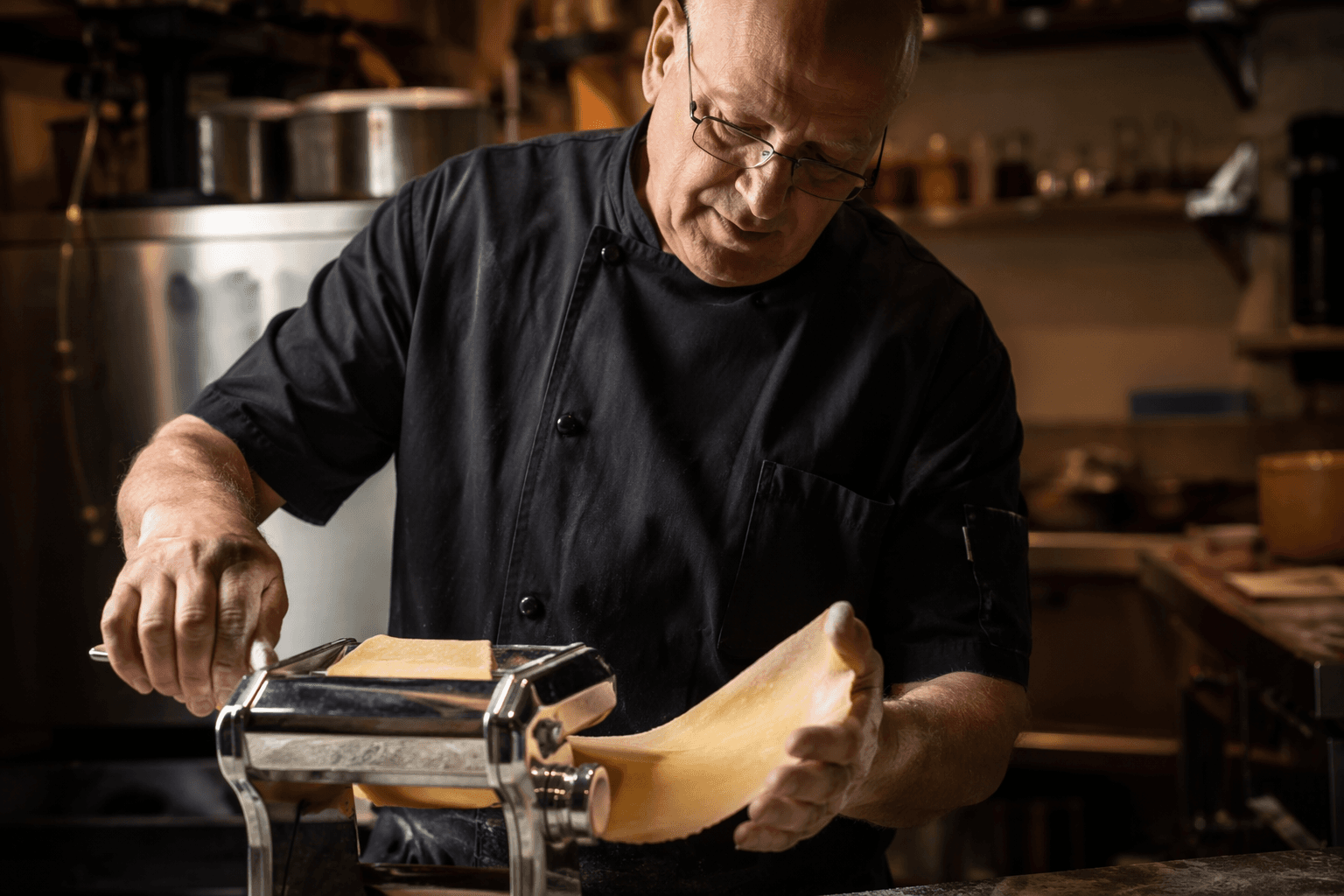
Two-Michelin-starred Italian chef Gennaro Esposito holds one of the more provocative positions in Italian cooking: smooth pasta is not merely a personal preference but a matter of outright superiority, and most Italians, he argues, have it wrong.
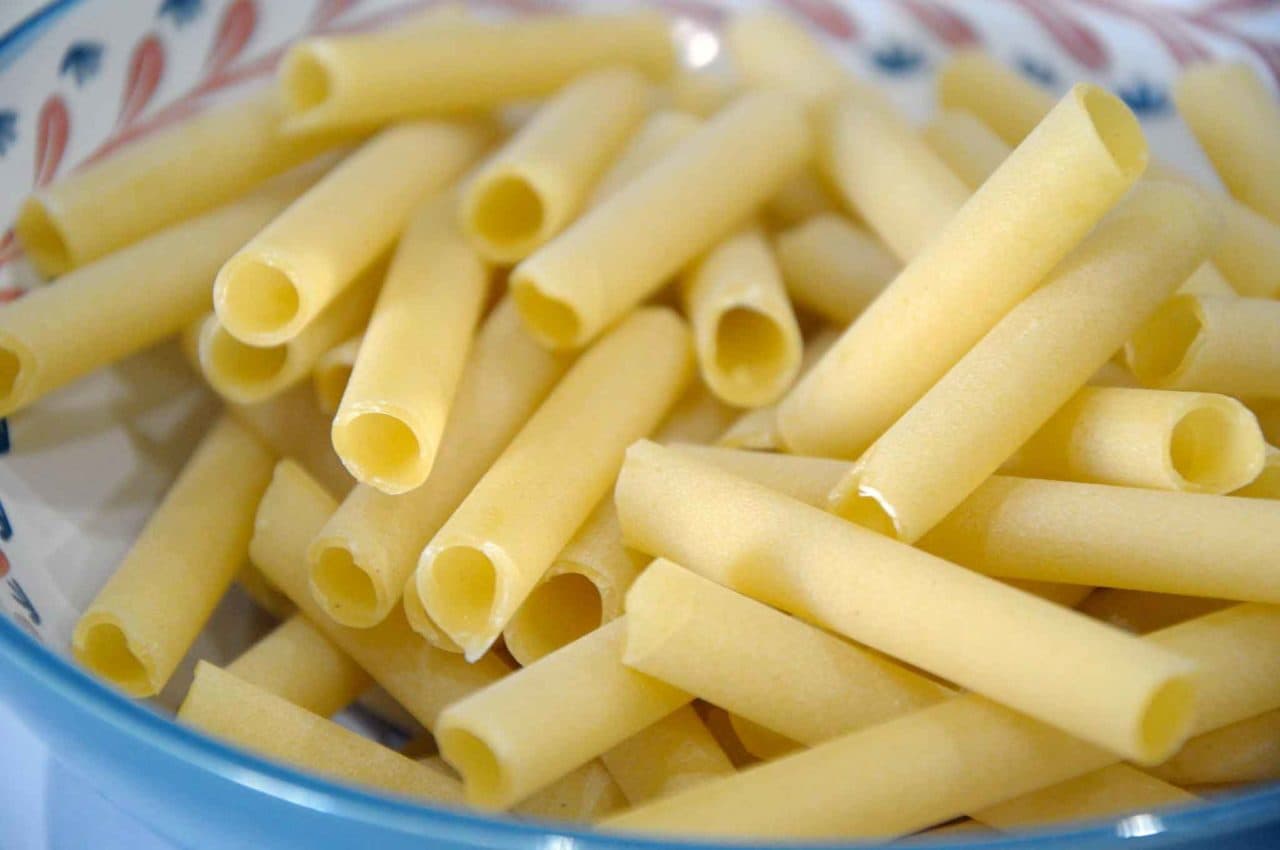
Esposito champions liscia, the unridged category, over rigata, the grooved cuts that dominate Italian kitchens and restaurant menus. His position challenges the long-standing assumption that ridges grip sauce more effectively, a belief so entrenched in Italian culinary culture that smooth shapes are routinely treated as the lesser option. Esposito contends the preference for rigata reflects a misunderstanding, not mastery.
The debate crystallized during a blind pasta tasting documented in a November 2013 Cosmo-Culinarian entry. Esposito sat down with a visiting chef from Alain Ducasse's kitchen to evaluate pasta from multiple producers and discuss, as the account describes, "how pasta is made, the effect of grooves on the surface, or the smoothness and how the pasta varies from producer to producer." When preferences were tallied, Esposito and the Ducasse chef aligned on the same producer, while the tasting's author held out for a different artisan-made pasta. Even after Esposito pointed to the cooking pots and the group tasted the water from each batch, the split held.
Esposito's approach to the pot was precise. He uses 5/10 grams of coarse salt per kilo of water, coarse salt only. On the al dente question, which the group debated at equal length, Esposito produced a flat plexiglass hinged device. Open it, press a piece of cooked pasta between the two halves, and look through it like a window: "If the pasta is under cooked it has a thin line, and if it is totally cooked no line appears." It is a deceptively simple tool, and a useful one for anyone who has ever stood over a pot arguing about whether another thirty seconds is warranted.
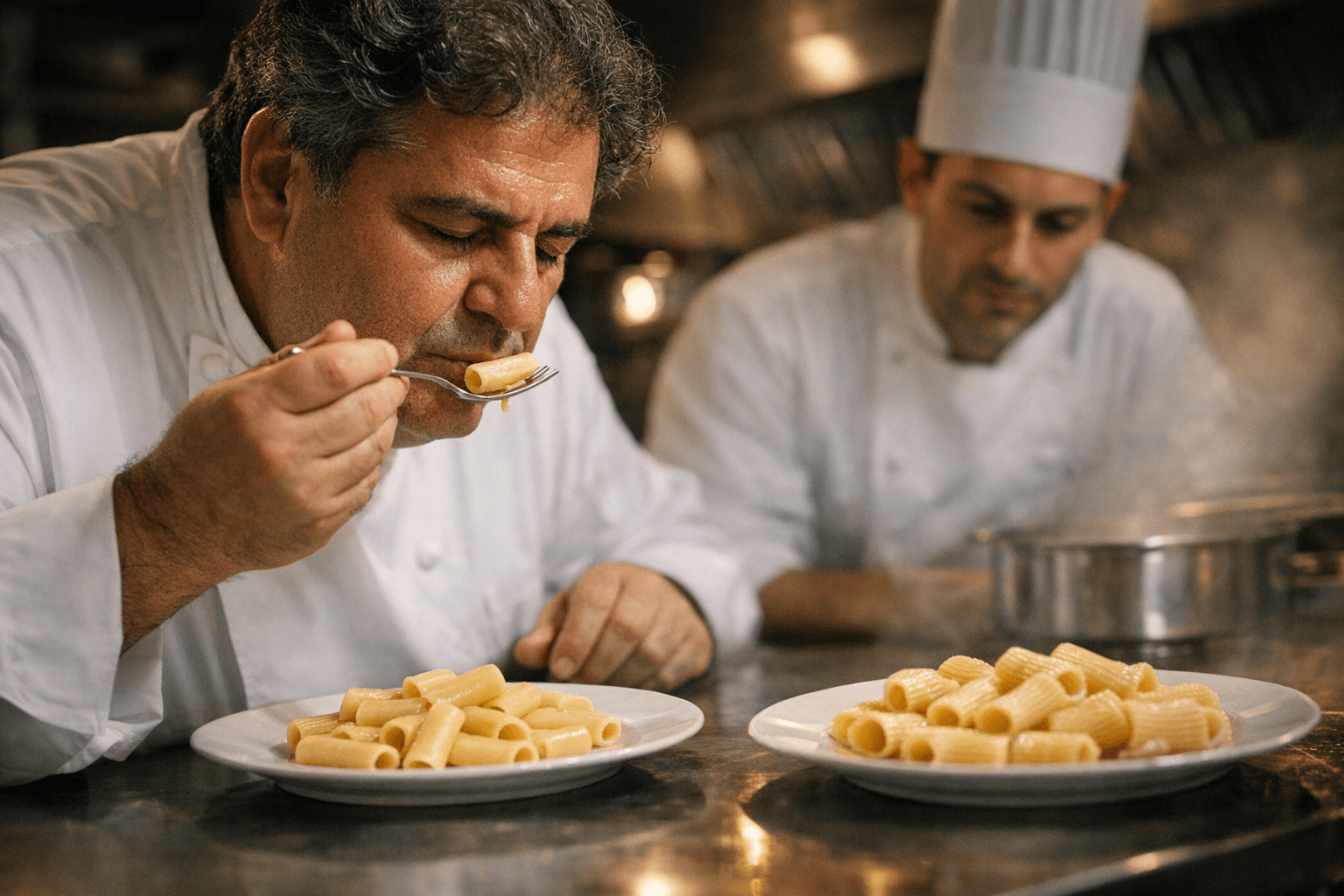
That device points toward a practical experiment worth running at home tonight. Cook a smooth shape and a ridged shape side by side, press each one in whatever improvised way works, then plate both with the same sauce. For the smooth camp, try a butter-based cacio e pepe: the sauce coats a smooth tonnarello in one clean pass, with nothing snagging or pooling unevenly. For ridged loyalists, a chunky ragù Bolognese loaded into rigatoni seems to settle the argument in the other direction, every groove acting as a small reservoir for meat and fat. Esposito would likely say the first example reflects an informed technique, while the second reflects an inherited habit that deserves more scrutiny.
What the November 2013 tasting actually demonstrated is that even a room assembled from Michelin-level and Ducasse-adjacent credibility could not reach consensus. The preference split was real, unresolved, and documented. The question of which pasta surface genuinely serves the plate better is one Esposito's two stars have raised loudly, not settled.
This article was produced by Prism’s automated news system from verified source data, official records, and press releases, then run through automated quality and moderation checks before publishing. The system is built and supervised by the people who set the standards it runs under. Read our full AI policy.
Did this article answer your question?