New Durum Wheat Lines Boost Freezing Tolerance Without Sacrificing Pasta Quality
International researchers bred durum wheat lines that survive freezing without losing the gluten quality pasta makers depend on, published in Frontiers in Plant Science.
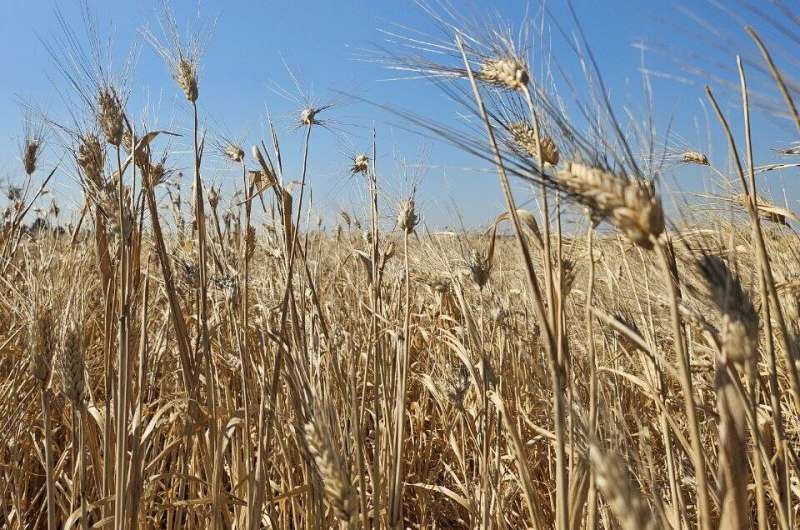
Durum wheat, the grain behind virtually every strand of spaghetti and sheet of lasagna on the planet, has long had a vulnerability that plant breeders and pasta producers quietly worry about: a late frost can devastate a crop before it ever reaches the mill. A new study published in Frontiers in Plant Science suggests that vulnerability may finally have a practical answer.
Researchers from Skoltech, the International Maize and Wheat Improvement Center in Mexico, the Research Center for Cereal and Industrial Crops in Italy, and additional international partners developed new durum wheat lines capable of surviving freezing temperatures while preserving the grain quality that premium pasta production demands. The Phys.org research summary covering the work appeared on March 19, 2026.
The core tension the team was working against is one every serious pasta maker understands at a molecular level: gluten. Durum's unusually high gluten strength is what gives pasta its characteristic bite, its resistance to overcooking, and the smooth surface that holds sauce. Breeding for cold hardiness without degrading that gluten network has historically been the sticking point. Push the frost-tolerance too far and you compromise the very protein architecture that separates proper pasta flour from ordinary bread wheat.
The study addresses that tradeoff directly by presenting what the researchers describe as a new breeding framework intended to make durum production more resilient to climate variability. As unpredictable cold spells become a growing risk in wheat-growing regions worldwide, the practical stakes for the pasta supply chain are real. Durum is already a geographically concentrated crop, with major production zones in the Mediterranean basin, the Great Plains of North America, and parts of Central Asia, all of which face their own patterns of climate instability.
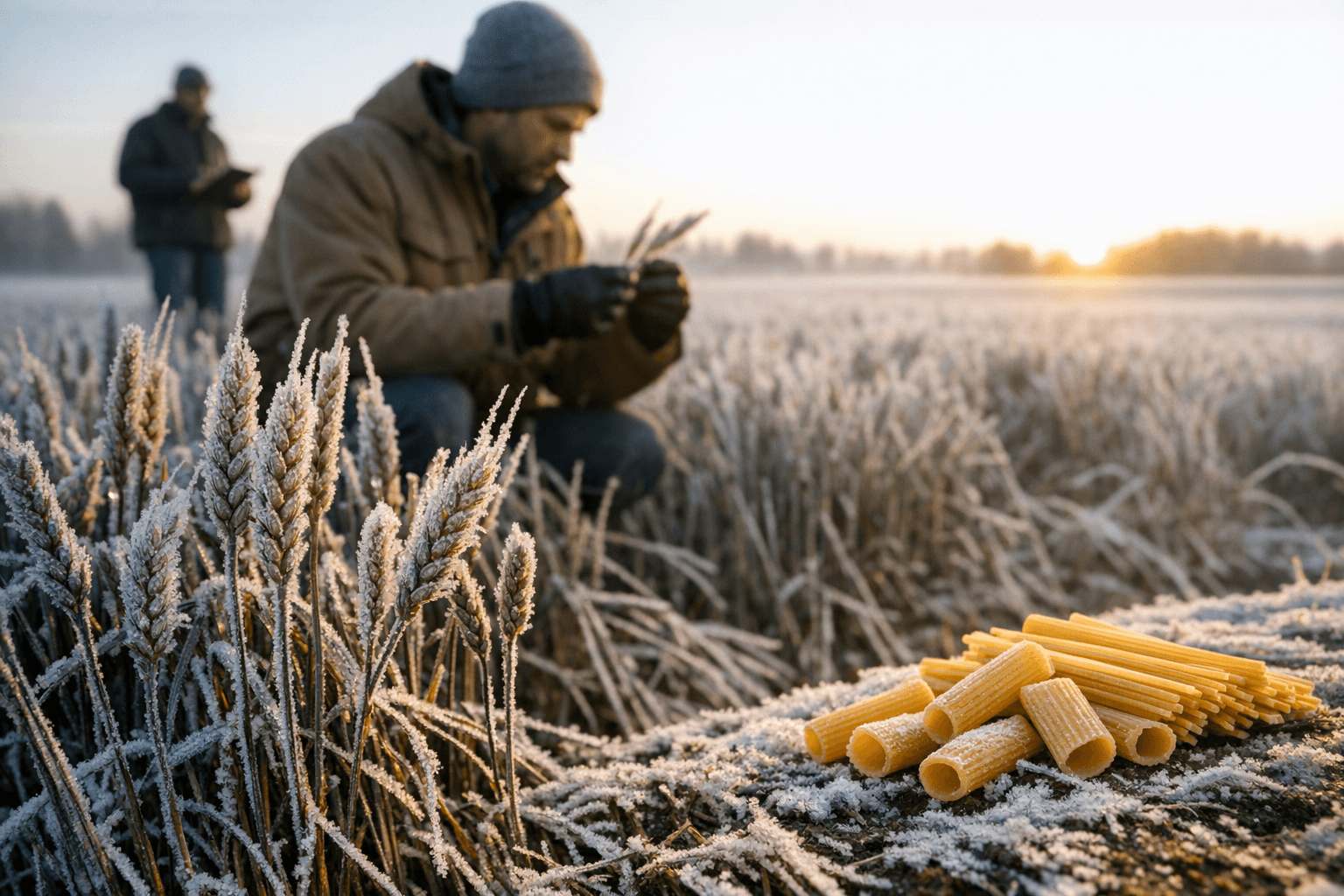
The research does not represent a single silver-bullet variety but a framework, suggesting the work is designed to guide ongoing breeding programs rather than deliver one finished commercial line. The three named institutions span Russia, Mexico, and Italy, covering much of the global expertise in durum genetics and industrial cereal research, and the involvement of other international organizations points to a collaboration built for broad applicability.
The full experimental data, including how many lines were tested, the specific freezing tolerance measurements, and the grain quality metrics used to validate pasta performance, remain to be detailed through the complete Frontiers in Plant Science paper. What the research makes clear, even at the summary level, is that the old assumption, that you could have cold hardiness or pasta quality but not both, no longer holds.
This article was produced by Prism’s automated news system from verified source data, official records, and press releases, then run through automated quality and moderation checks before publishing. The system is built and supervised by the people who set the standards it runs under. Read our full AI policy.
Did this article answer your question?