Noni’s Lighter Turkey Bolognese Finished With Half-and-Half, Served Over Zoodles
Noni’s lighter turkey bolognese swaps beef for lean turkey and a soffritto base, slow-simmered and finished with half-and-half, for a lower-fat ragu served over whole-grain pasta or zoodles.
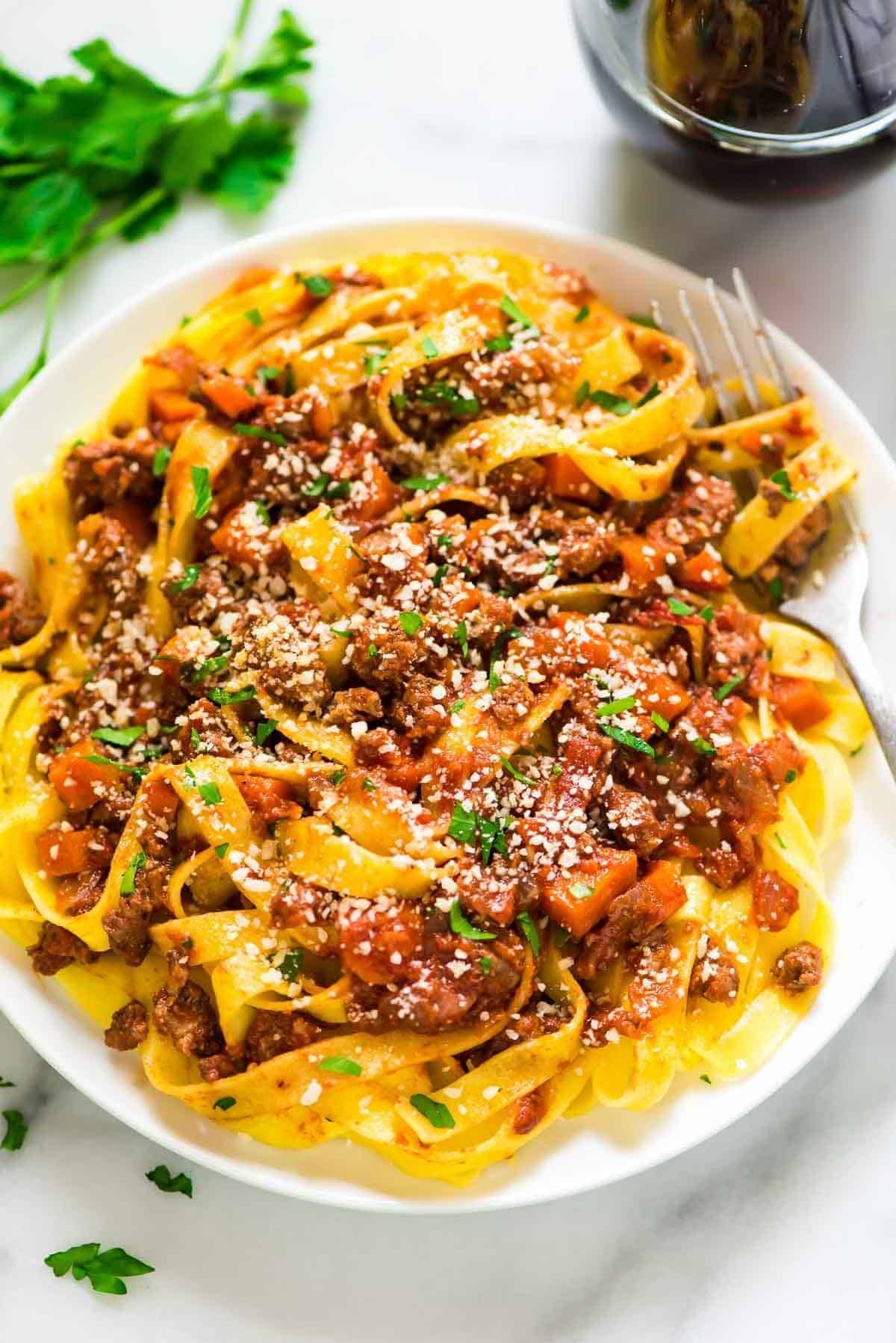
Lowcountry Bella has shared a lighter take on classic Bolognese that keeps the structure and depth of a traditional ragu while cutting heaviness. The recipe builds from a classic soffritto of onion, carrot, and celery, moves through browned lean ground turkey, then layers in wine, stock, and tomato sauce before a long, patient simmer. The result aims for the familiar comfort of Bolognese with fewer calories and a brighter finish.
The method is simple but disciplined: soften the vegetables, brown the turkey, add stock, wine, and tomato sauce, then simmer for two to three hours to coax complexity from modest ingredients. A splash of half-and-half is added about 15 minutes before serving to round acidity and create a silkier mouthfeel without reverting to a heavy cream sauce. Finish suggestions include shaved pecorino and fresh basil for classic savory-sweet contrast.
For people who want to lighten up their weeknight pasta without losing technique, this recipe makes practical sense. The soffritto sets the aromatic baseline that so many quick skillet sauces miss, and the long simmer amplifies flavor without relying on fattier meat. Serving options emphasize flexibility: whole-grain pasta for a fiber-forward plate, or zoodles for a low-carb, veggie-forward presentation that still soaks up sauce. Presentation tips on the recipe page recommend shaving pecorino over the top and tucking in a few basil leaves for brightness.
Timing and small technique choices matter here. Softening the vegetables before browning the turkey prevents raw onion or undercooked carrot in a long-simmered ragu, and browning adds Maillard notes that compensate for the lean protein. Adding the dairy late keeps it from breaking during hours of simmering while still lending creaminess. Simmering two to three hours is purposeful: it reduces and concentrates flavors so the turkey does not taste flat against tomato and wine.

The dish speaks directly to community habits, home cooks who want ragu-depth without a heavy winter sauce, and pasta lovers curious about pairing ragu with alternatives like zoodles. It also fits meal-prep routines: the long-simmered sauce can be chilled and reheated, and it pairs cleanly with different bases for weeknight rotation.
What this means going forward is straightforward: you can have ragu that respects traditional technique while meeting lighter eating goals. Try the simmer-and-finish rhythm laid out here, swap your usual pasta for whole-grain or spiralized zucchini, and keep the soffritto at the heart of the sauce, those few foundational moves bring big returns at the table.
This article was produced by Prism’s automated news system from verified source data, official records, and press releases, then run through automated quality and moderation checks before publishing. The system is built and supervised by the people who set the standards it runs under. Read our full AI policy.
Did this article answer your question?