Osteria Novella bets on handmade pasta and imported Italian ingredients
Osteria Novella is betting that handmade pasta, imported ingredients, and personal hospitality will pull Madison diners away from safer Italian defaults.
A west-side Italian opening with a clear point of view
Osteria Novella is not trying to be another comfortable red-sauce stop on University Avenue. The west-side restaurant opened in the former Novanta space at 2903 University Ave. with a soft opening before its first day of business on Nov. 22, 2025, and it arrives with a sharper identity than most new Italian spots manage out of the gate. Giovanni Novella and Evan Ackers built it as an independent venture, and everything about the concept points back to a simple pitch: if you want pasta that feels handmade, rooted, and personal, this is where you go instead of settling for something generic.
That is the real market entry story here. Madison already has plenty of Italian options, but Osteria Novella is leaning into craft and memory as its differentiator, not just comfort food. It wants diners to feel closer to the flavors, stories, and atmosphere of the Amalfi Coast, while still fitting the pace and expectations of a neighborhood place on a busy city corridor.
Why the pasta pitch matters
For pasta readers, the strongest reason to pay attention is the kitchen philosophy. Novella says everything is handmade, from pasta to mozzarella to sauce, and that nearly 70 percent of the restaurant’s ingredients come from Italy. That is not window dressing. It is the backbone of the restaurant’s argument that quality, sourcing, and identity are inseparable.
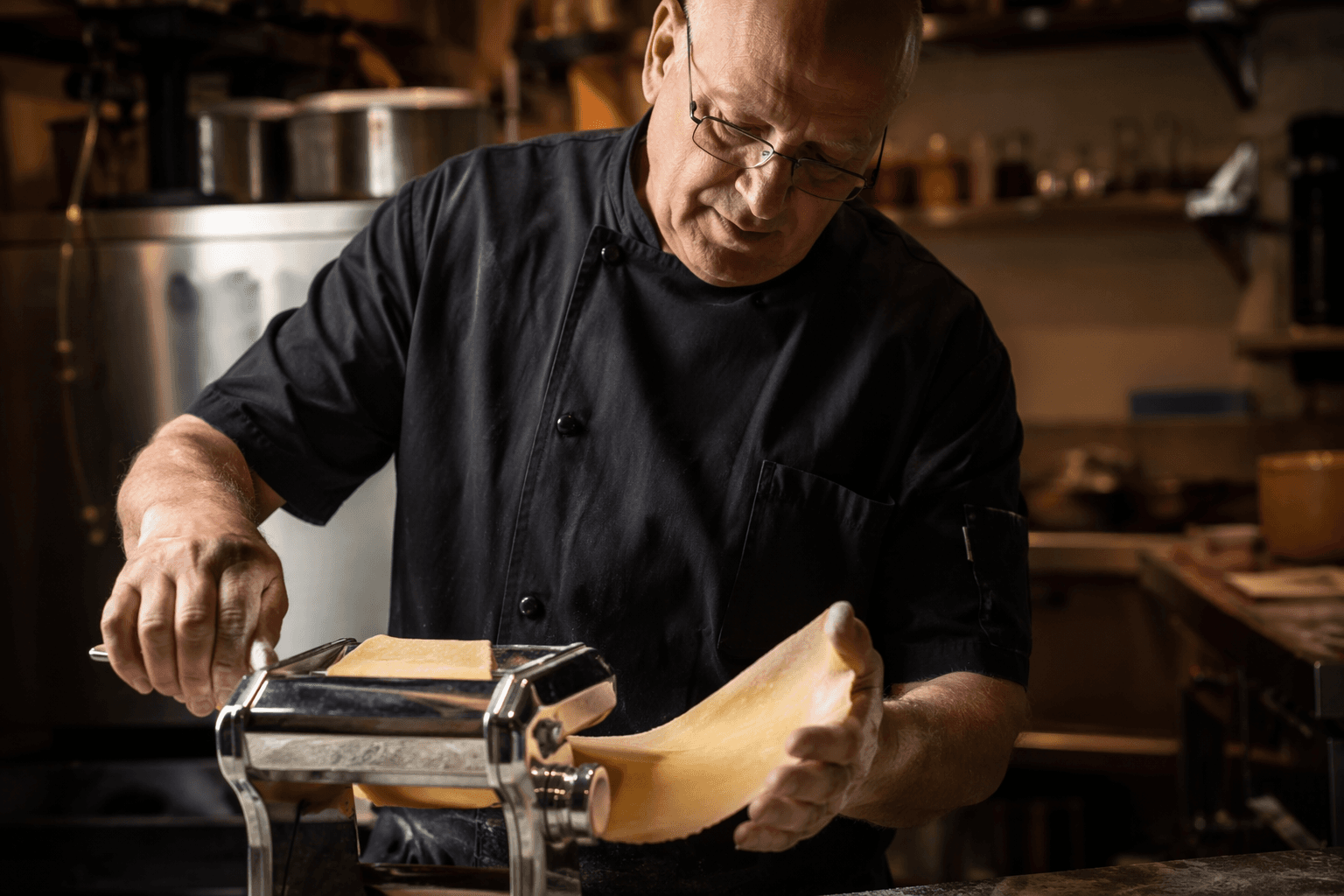
Novella has long pushed back against the idea that pasta is just a boxed grocery item. In a 2024 profile, he framed it as something more alive than that, and the details behind his workflow back it up. At Bar Corallini, he measures pasta in “distance,” not pounds, uses rimacinata semolina from a small mill in Liguria, Italy, and pairs it with local eggs. He also keeps a wall of imported pasta-making tools he jokingly calls “the Ferrari.” That kind of specificity matters because it explains why Osteria Novella feels built by people who actually care about the mechanics of the craft, not just the branding around it.
The pasta program is also the clearest answer to the question diners are really asking: why try this place instead of the city’s other Italian options? Because this kitchen is not treating pasta as a side note. It is treating it as the central proof of concept.
A menu that leans south, but not in a tired way
The food at Osteria Novella threads together Neapolitan heritage and the cuisine of the nearby Amalfi Coast, which gives the menu a regional spine instead of a catch-all Italian identity. Seafood plays a visible role, and the restaurant also serves a classic-but-updated Margherita pizza and sourdough pizza, both of which help widen the appeal without blurring the concept.
One of the most interesting dishes mentioned so far is a cacio e pepe that swaps spaghetti for busiate and adds ahi tuna tartare. That is the kind of move that tells you the kitchen is willing to respect tradition without freezing it in place. It keeps the familiar flavor logic of the dish, then sharpens it with a pasta shape choice and a seafood addition that fits the restaurant’s coastal frame.
There is also a dish based on Novella’s mother’s recipe, which gives the menu an intergenerational layer that goes beyond sentimentality. Combined with the Amalfi Coast focus, it makes the restaurant feel less like a concept built from trend pieces and more like a personal translation of family cooking into a Madison dining room.
A recent roundup described the cuisine as Southern Italian-inspired and pointed to a fettuccini scampi as one of the dishes drawing diners in. That tracks with the broader shape of the menu: coastal, polished, and anchored in handmade execution rather than heavy novelty.
Imported ingredients, but with a reason
The imported-ingredient focus at Osteria Novella is important because it is tied to purpose, not just prestige. Novella has said the sourcing supports producers in his native country and helps ensure quality. That matters in a city where diners are increasingly fluent in ingredient talk and can tell the difference between a restaurant that uses provenance as a sales pitch and one that actually builds around it.
His own background makes that choice feel earned. Novella grew up in Torre del Greco, a fishing village near Naples, and learned to cook with his mother and grandmother. That family lineage shows up in both the food and the feeling of the room. It is hard to separate the restaurant’s emphasis on seafood, pasta, and southern Italian flavors from a life shaped by the coastal culture he came from.
The beverage program extends the same logic. Novella Limoncello, the limoncello business he launched in 2023, is a centerpiece of both the drinks list and the interior design. That gives the restaurant a distinct signature beyond the plate. Even the room is part of the pitch, with artwork, open-kitchen aromas, and a grandmother-inspired hand motif on some branding making the space feel deliberate rather than assembled from stock Italian decor.
The people behind the room matter as much as the food
Osteria Novella also stands out because of who built it. Novella immigrated to the United States from Italy, worked his way up through Food Fight Restaurant Group, and helped open Bar Corallini. Ackers worked there as general manager, moved to Milwaukee to open Il Cervo, then later returned to Bar Corallini before the two opened Osteria Novella together. That history gives the restaurant a veteran hospitality backbone, which is a big part of why the opening feels polished instead of experimental.
Food Fight’s scale puts that history in context. The company says it was officially founded on Dec. 17, 1994, and Bar Corallini is one of 16 restaurants within the group. Novella’s own standing inside Madison’s dining scene is already established too. Food Fight says Madison voters named him Best Chef in 2023 and 2024, which helps explain why this opening arrived with real anticipation.
Ackers and Novella also bring complementary experience from other parts of the group’s orbit. Il Cervo, Food Fight’s first Milwaukee restaurant, was announced in September 2022 as a 9,000-square-foot rooftop concept at The Trade hotel at 420 W. Juneau Ave. in Milwaukee. That kind of operational range matters. It signals that the team knows how to run both ambitious destination dining and the day-to-day rhythms of a neighborhood restaurant.
Why this opening lands in a crowded year
Osteria Novella is opening into a busy market, not a quiet one. Dane County gained 39 new restaurant and food business concepts in 2025 and saw 15 closures, while Madison Magazine counted seven new restaurant concepts opening in November 2025 alone. In other words, novelty is not enough here. A new Italian restaurant has to show its work quickly.
That is where Osteria Novella has an edge. It is not selling itself as just another nice place to get pasta. It is presenting a sharper mix of handmade production, imported Italian ingredients, family memory, and veteran service, all in a west-side location that gives it a neighborhood anchor. The result is a restaurant that feels less like a generic opening and more like a deliberate claim on Madison diners who care about where the pasta comes from, who made it, and why it tastes the way it does.
If you are choosing between Osteria Novella and the city’s other Italian options, that is the difference: this place is built to feel lived in from the start, with enough specificity in the kitchen and enough confidence in the room to make the case that handmade still beats interchangeable.
This article was produced by Prism’s automated news system from verified source data, official records, and press releases, then run through automated quality and moderation checks before publishing. The system is built and supervised by the people who set the standards it runs under. Read our full AI policy.
Did this article answer your question?