Sardinia's rare pasta shapes survive through village traditions
In Sardinia’s villages, crogoristas, caombus, lorighittas, and su filindeu survive only because a few hands still know the motions. Lose the makers, and the pasta disappears with them.
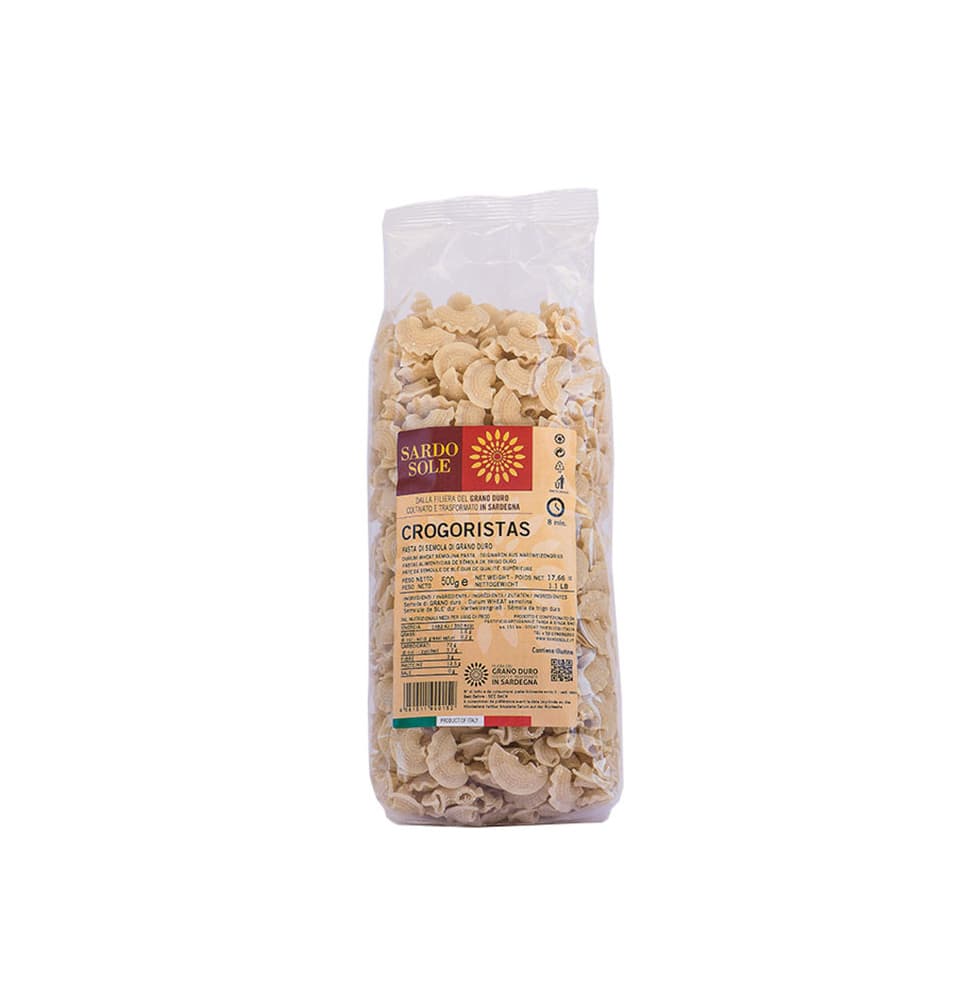
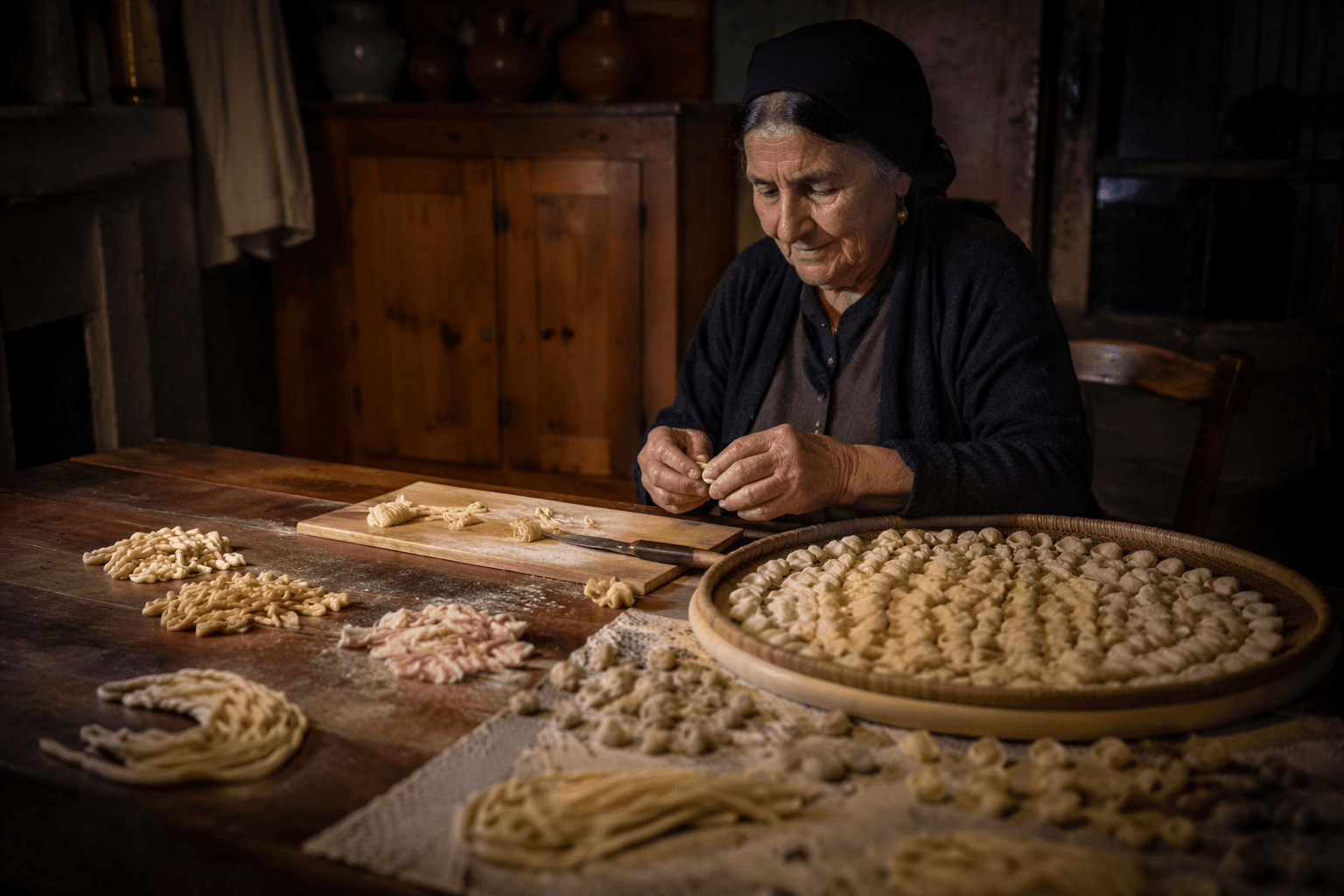
Sardinia’s rarest pastas are not preserved behind glass. They survive in kitchens, on village tables, and in the hands of people in Masullas, Morgongiori, and Nuoro who still make them the way they were taught. That is what gives crogoristas, caombus, lorighittas, and su filindeu their force: they are living food traditions, not decorative relics, and each one carries a specific place with it.
Masullas and the fragile life of crogoristas and caombus
Masullas is where crogoristas and caombus still exist as working shapes rather than culinary footnotes. The point is not simply that they are rare, but that they are made through inheritance, one generation handing the motions to the next in a village setting where the recipes do not live in books first. In that sense, the pasta tells you as much about the people making it as it does about the dough itself.
That kind of transmission is vulnerable. When younger people leave rural communities, the chain breaks at the exact point where skill matters most: the touch, the rhythm, the drying, and the small local habits that keep a shape authentic. Crogoristas and caombus depend on that continuity, and Masullas shows how quickly a pasta can become endangered when it stops being part of everyday village life.
Morgongiori and the tight, braided identity of lorighittas
Morgongiori gives the story a different register. Lorighittas are the shape most readers may have heard of, but the village context matters just as much as the pasta’s distinctive form. In a place like Morgongiori, lorighittas are not a novelty item for visitors. They are part of the local identity, made by hand and tied to a knowledge system that belongs to the town itself.
That is what makes lorighittas such a useful lens on Sardinian pasta culture. The shape is memorable, but the real story is labor and repetition, the kind of work that turns pasta making into a communal craft. If Morgongiori stops making lorighittas, the loss is not only culinary. It is the disappearance of a village practice that connects family memory, local celebration, and a sense of belonging that cannot be rebuilt from a recipe card.
Nuoro and the threadlike drama of su filindeu
Nuoro pushes the preservation question even further because su filindeu is so delicately made that it feels almost impossible until you see it done. The shape’s threadlike structure has made it famous, but fame does not protect it. What protects it is the same thing that protects the other Sardinian shapes: a living oral tradition that keeps the method moving from one maker to another.
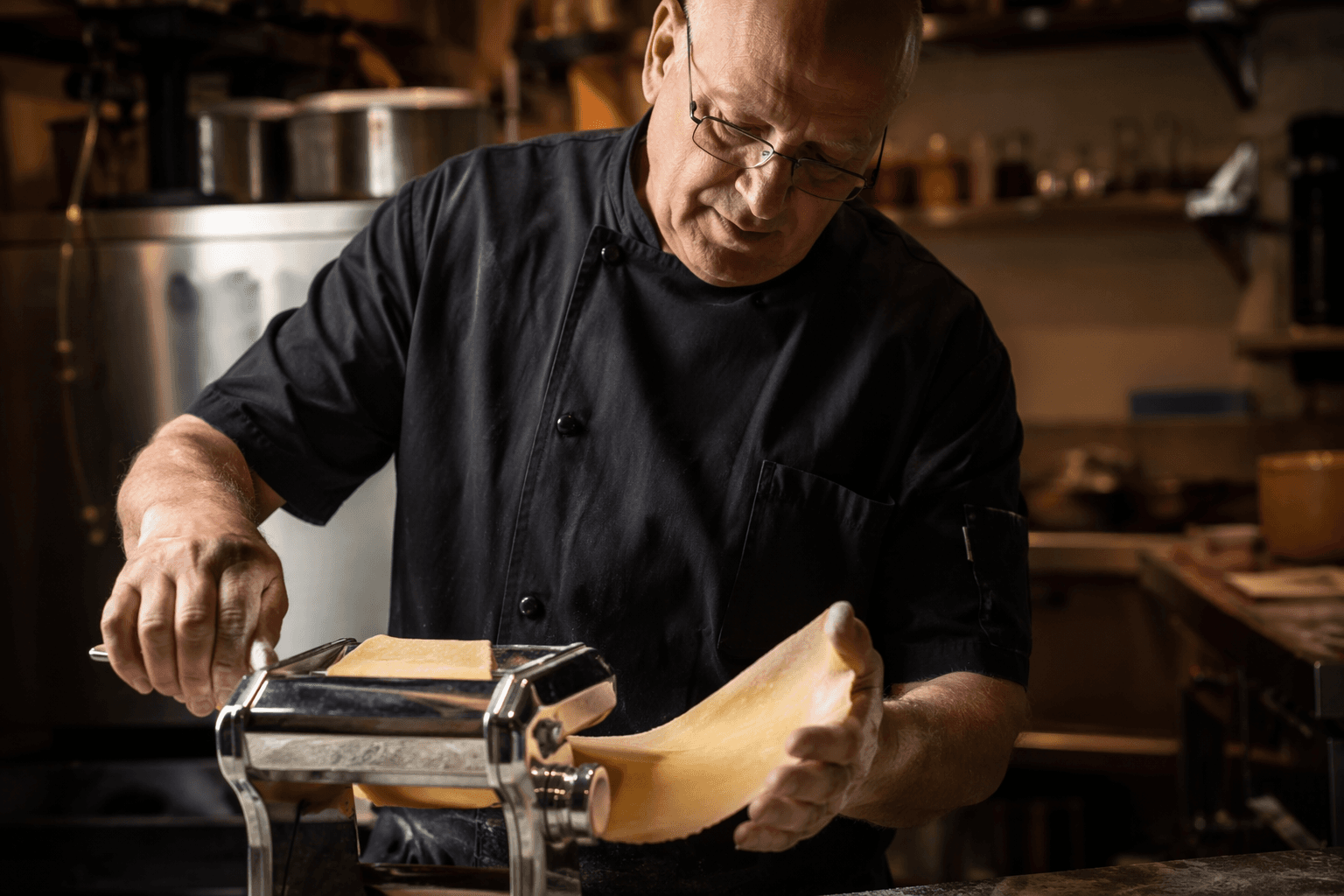
Su filindeu also shows why these pastas matter beyond novelty. It is not enough to admire the finished strands. The knowledge lives in how the dough is handled, how the strands are stretched, and how the final texture is managed. Once the craft stops being practiced in Nuoro, it is not just one dish that vanishes. A whole set of skills, adjustments, and inherited timing goes with it.
Why these shapes nearly disappeared
The common threat across Masullas, Morgongiori, and Nuoro is depopulation of the rural world that sustains them. As young people leave, the places that teach rare pasta become thinner, older, and easier to lose. That matters because these are oral traditions, which means there is no substitute for apprenticeship. A written recipe can name ingredients, but it cannot teach the exact feel of a dough or the timing that separates a workable strand from a failed one.
That is why the preservation issue is immediate, not abstract. The shapes survive only while the villages keep producing them, and the villages keep producing them only while the knowledge remains embedded in daily life. Once that chain weakens, the pasta moves from tradition to memory very quickly.
What readers learn by going to the source
The useful lesson in Sardinia is that pasta culture is local down to the last motion. In Masullas, crogoristas and caombus show how little-known shapes can survive outside the mainstream. In Morgongiori, lorighittas shows how a village can anchor its identity in a pasta that still has to be made by hand. In Nuoro, su filindeu shows how extreme skill can persist without becoming a spectacle, as long as someone keeps teaching it.
- The shapes are handmade, not industrial.
- The knowledge is oral, not primarily written.
- The survival of each pasta depends on a specific village.
- The loss is cultural as much as culinary.
That is also what makes the story larger than Sardinia. Italian cuisine is often treated as if it were a single, unified thing, but these villages prove the opposite. It is many traditions at once, and some of the most revealing ones live in small places where a few makers still treat pasta as something to be passed on, not packaged up.
The real edge of the story is that nothing about these shapes feels frozen. Crogoristas in Masullas, lorighittas in Morgongiori, and su filindeu in Nuoro are alive only because somebody still knows how to begin, how to finish, and how to teach the next person. In Sardinia, that is the difference between a tradition that survives and one that becomes a memory.
This article was produced by Prism’s automated news system from verified source data, official records, and press releases, then run through automated quality and moderation checks before publishing. The system is built and supervised by the people who set the standards it runs under. Read our full AI policy.
Did this article answer your question?