Sicily revives communal pasta on seasoned wooden boards, celebrating rural heritage
Wooden boards are turning Sicilian pasta into a communal ritual again. In agriturismi, pasta a scannaturi is less a gimmick than a living piece of rural identity.
The board is the main event
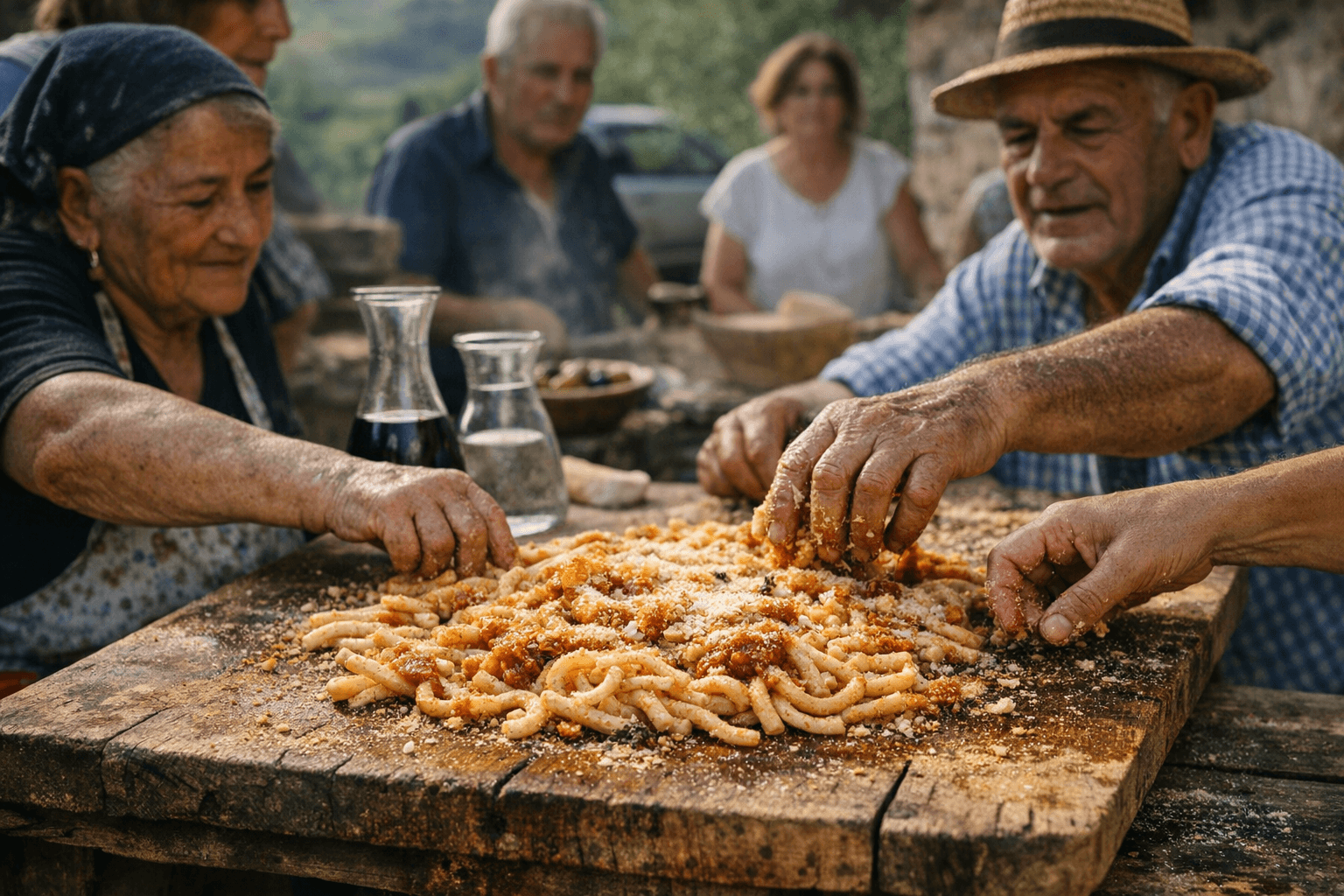
The first thing you notice is not the pasta. It is the wood: a wide, seasoned board set at the center of the table, with pasta spread directly across it so everyone eats from the same surface. That is the shock of pasta a scannaturi, and it is exactly why the dish has leapt from local custom to viral fascination.
What looks novelty-driven online is really a postwar peasant tradition with deep roots in Sicilian rural life. The board was never meant to be a prop. It was part of the working kitchen, part serving surface and part social glue, carrying heat, flavor, and memory in a way that plates never could.
Why the ritual matters in Sicily
Pasta a scannaturi makes the meal communal in the most literal sense. Instead of dividing food into separate portions, the dish invites everyone to gather around one shared board, turning dinner into a small ceremony of proximity and trust. In a region where food culture is inseparable from identity, that matters as much as the pasta itself.
The tradition also speaks to rural unity. It comes from a time when abundance was not assumed, and the table had to do more with less. Sharing one board was practical, but it also reinforced the idea that food belonged to the household, the land, and the group, not to any single diner.
What seasoned wood adds to the experience
The seasoned wooden board is not just visual theater. Its age and use are part of the point, and that seasoning is what gives the dish its character and sense of continuity. The board becomes a quiet archive of meals, with each new serving layered onto a surface that has already absorbed years of use.
That is why the flavor story matters so much here. The pasta is not being isolated on sterile dinnerware. It is being served on a surface that carries the atmosphere of the kitchen, which is one reason the dish feels so tied to place. The experience is rustic, but it is also deliberate, and that balance is exactly what makes it so compelling.
Where to find it now
If you want the real version, the clearest path is through Sicily’s agriturismi. These farm stays are where the tradition has been revived with the most credibility, because they are already built around land, family, and regional cooking rather than tourist spectacle. In that setting, pasta a scannaturi reads as continuity, not cosplay.
That matters for travelers. The dish is strongest when it is tied to the countryside, where the setting matches the food’s origins. Look for family-run places that lean into Sicilian rural identity, where communal eating still feels natural and the meal is treated as part of the hospitality, not as a performance designed for a camera.
What separates the real thing from the imitation
The best versions are easy to spot once you know what to look for. They are served in places that are rooted in the region, not repackaged for novelty. The atmosphere should feel earthy and lived-in, with the board at the center and the group arrangement doing real cultural work, not just visual marketing.
A convincing plate of pasta a scannaturi is about more than a trend-friendly presentation. It should feel like part of a larger agriturismo table, where the food, the room, and the people all point back to the same rural logic. If it feels too polished, too staged, or too detached from Sicilian country cooking, it has probably lost the point.
- The board should feel used, not decorative.
- The setting should read as farmhouse hospitality, not a themed dining room.
- The meal should feel shared, with the table arrangement encouraging communal eating.
- The dish should carry the flavor of Sicilian identity, not generic rustic branding.
Why the video caught on
The online appeal is obvious: a bowl-free, plate-free pasta scene instantly stops the scroll. But the reason people keep sharing it is deeper than the visual surprise. Pasta a scannaturi compresses a whole story into one image, postwar necessity, rural thrift, family continuity, and a living regional custom all landing on the same board.
That is why the dish resonates far beyond Sicily. It offers something modern food culture rarely gives: a reminder that a meal can be an act of belonging. In a world that often treats tradition like content, this one still feels tied to actual practice, and that is what gives the board its power.
A tradition worth traveling for
Pasta a scannaturi is compelling because it refuses to separate eating from place. In Sicilian agriturismi, the revived ritual still carries the weight of peasant history while giving travelers a direct route into the island’s rural identity. The board, the sharing, and the setting all work together to keep the tradition alive in a form that feels both preserved and immediate.
That is the real appeal: not a gimmick, but a meal that still knows where it comes from.
This article was produced by Prism’s automated news system from verified source data, official records, and press releases, then run through automated quality and moderation checks before publishing. The system is built and supervised by the people who set the standards it runs under. Read our full AI policy.
Did this article answer your question?