Willie's Beacon Hill Blends Korean and Italian Flavors With Pizza and Pasta
James Beard chef Jamie Bissonnette's new Beacon Hill spot hides Korean-Italian fusion behind a deceptively simple pizza-and-pasta menu.
BCB3 Hospitality has a habit of opening restaurants that resist easy categorization, and Willie's, their newest spot at 20 Charles Street on Beacon Hill, is no exception. The concept opened officially on March 12, 2026, planted right next door to sister restaurant ZURiTO, and at first glance reads like a straightforward Italian-American neighborhood joint: burrata, meatballs, pizza, pasta. Look closer, though, and you'll find Korean gochujang threading through a rigatoni amatriciana, yuzu kosho brightening a spaghetti with bottarga, and a buchu muchim tucked alongside a plate of creamy burrata. James Beard Award-winning chef Jamie Bissonnette, working alongside restaurateurs Andy Cartin and Babak Bina, has kept his framing deliberately modest. "Label it what you will," Boston Magazine noted, "but at least as far as Bissonnette is concerned, it's simply 'a neighborhood pizza joint.'"
That characterization is both accurate and a little cheeky. BCB3 Hospitality has now opened five restaurants in less than two years, a portfolio that includes the Korean restaurant Somaek, Basque pintxo bar ZURiTO, cocktail lounge Temple Records, and the downstairs Sushi @ Temple Records. Willie's borrows flavors and techniques from all of them while still centering the humble pie.
The Pizza
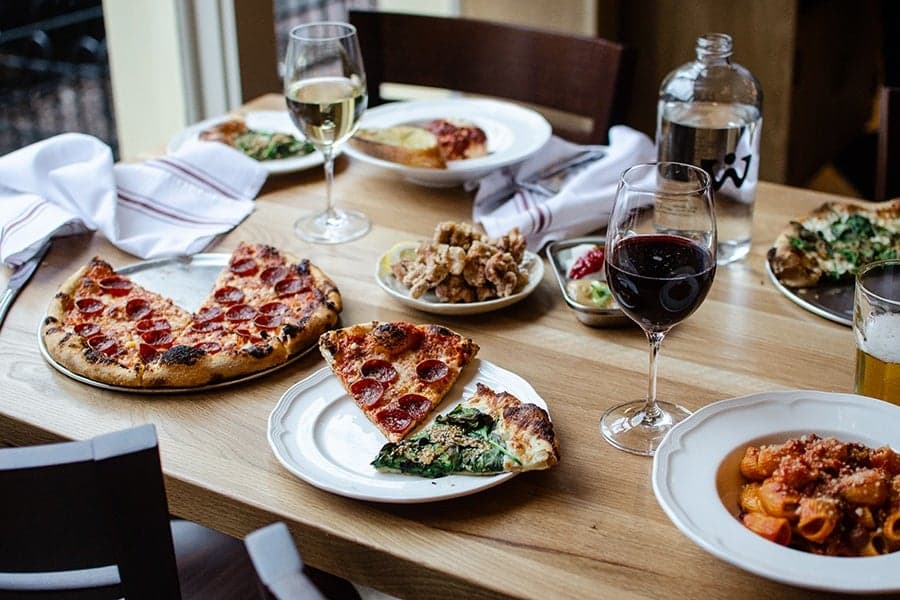
Pizza is unambiguously at the heart of the menu, built on thin-crust pies made from a two-day fermented dough. That extra time in fermentation gives the crust its structure and complexity, the kind of foundation that earns regular orders rather than one-time curiosity visits.
The standout on the pizza menu is the Margherita 5J, topped with fresh tomato, mozzarella, basil, and nutty Jamón Ibérico de Bellota, the acorn-fed Spanish ham that adds a rich, savory depth against the bright tomato base. Elsewhere, a vodka-sauced, pepperoni-cup pizza brings something more indulgent and familiar, while another pie carries toppings that Boston Magazine described as resembling "a deconstructed version of a pintxo" from neighboring ZURiTO, a nod to the cross-pollination BCB3 has built into the block. Expect the pizza menu to shift with the seasons, as Bina confirmed that seasonal toppings and ingredients will rotate through both the pizza and pasta offerings.
The Pasta
The pasta program is where the Italian-Korean synthesis gets most explicit. The headline dish is the Rigatoni Amatricianan, a twist on the Roman classic that swaps or supplements the traditional guanciale with pancetta and introduces yak gochujang alongside pecorino. The Beacon Hill Times, which provided the most detailed ingredient breakdown, listed the dish as "a twist on the classic dish with a Korean influence comprising extruded pasta, pancetta, yak gochujang, and pecorino," while Boston Chefs more simply called it "rigatoni amatriciana with gochujang." Boston Magazine framed it as a "Korean-meets-Italian riff," which captures the spirit of what's happening on the plate. The gochujang element, whatever its precise form, replaces the slow heat of traditional Roman pepper with something fermented and layered, making it at once familiar and genuinely new.
A second pasta, spaghetti with bottarga and yuzu kosho, pairs the salty intensity of cured fish roe with the citrusy heat of a Japanese condiment. It's a quieter kind of fusion than the rigatoni, but equally deliberate. According to Bina, pasta is "ostensibly" made in house, a qualifier worth noting even as Boston Chefs described the menu as featuring "housemade pastas" without hedging.
Small Plates Worth Ordering
The burrata is arguably the best entry point for understanding what Willie's is doing. Mozzarella stuffed with creamy stracciatella arrives with a baguette and buchu muchim, a zippy Korean garlic chive salad. Bissonnette noted that buchu muchim is "one of the more popular side dishes" at sibling restaurant Somaek, and transplanting it here turns a standard burrata plate into something with real personality. The Korean chive salad cuts through the richness of the cheese in a way that a drizzle of olive oil simply doesn't.
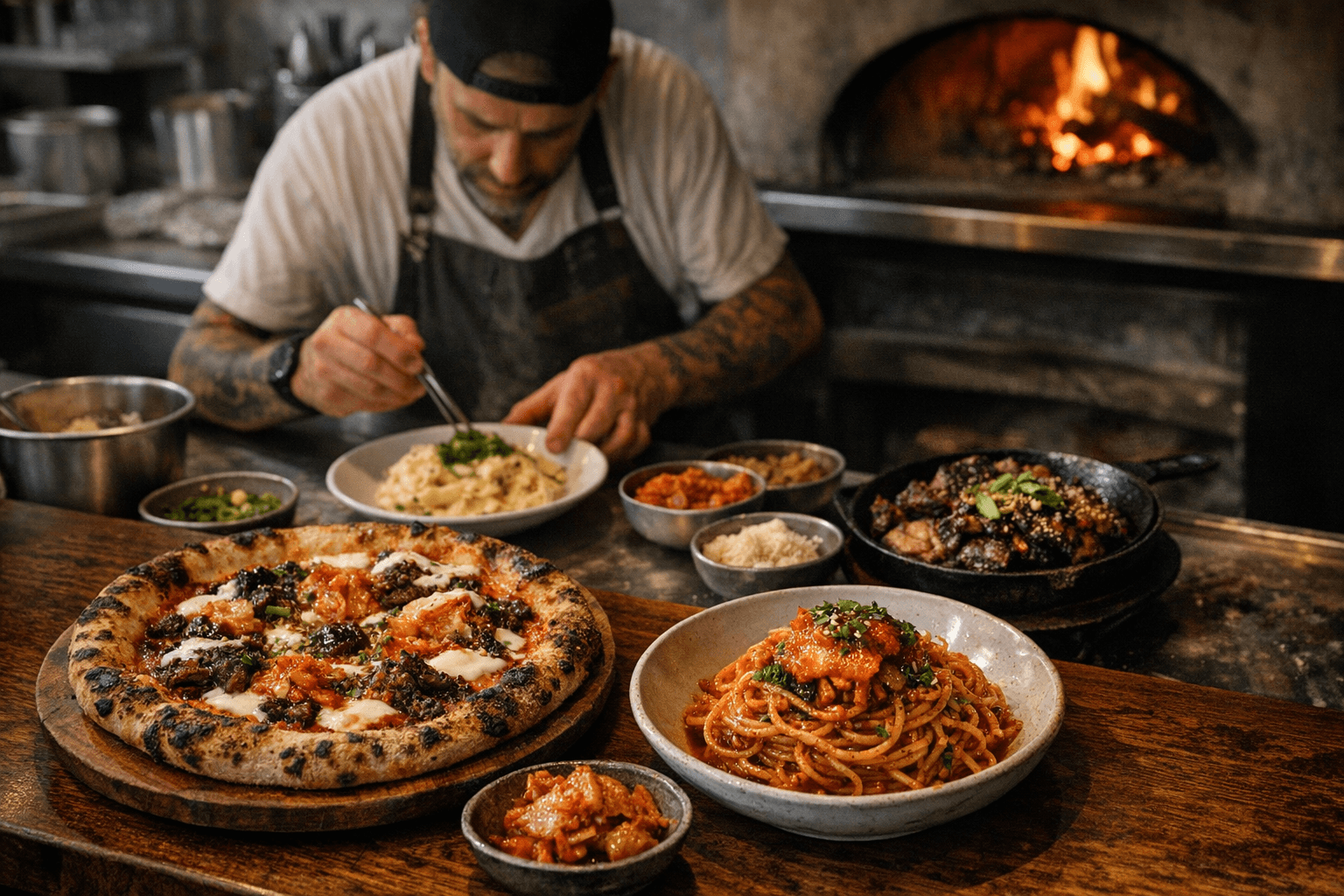
Willie's Little Meatballs take a different approach to a familiar comfort food. The beef-and-pork mixture is prepared using pâté techniques, producing a texture that's measurably more tender than the average meatball, and they arrive with salumi ragu and parmesan. The Caesar salad is rebuilt around napa cabbage and celery rather than romaine, dressed with classic Caesar dressing and finished with anchovy miga and parmesan.
For something more substantial in the small-plates range, The Grinder loads a ciabatta sub roll with mortadella, prosciutto, Iberico coppa, provolone, cherry pepper, and oil and vinegar. It's the kind of sandwich that could anchor a lunch, generous in both ingredient count and cured-meat quality. The Calabrian karaage rounds out the starters, bringing together Italian chile heat and a Japanese frying technique in a format that signals exactly how BCB3 thinks about menu building.
The Drinks
Spirits Director Oscar Simoza has built a cocktail program anchored in low-ABV compositions centered on vermouth, sherry, and wine-based ingredients. The result is a list that drinks easily alongside food rather than competing with it. Two signature cocktails give a sense of the range: the Real Housewives of Beacon Hill combines fino sherry, midori, St-Germain, and bubbles into something light and slightly playful; the Wall Banger takes vodka, Italicus, Galliano, passionfruit, and orange in a richer, more aromatic direction.
The wine program, assembled by Wine Director Nader Asgari-Tari, is compact and grower-driven, with a clear intention to serve pizza and pasta rather than to showcase cellar trophies. Northern Italian whites anchor part of the list, including a Friulano from Venica Venica and a high-altitude Petit Arvine from Valle d'Aosta. Asgari-Tari has also brought in what he's framing as a "new wave" of domestic bottles from the Finger Lakes, Santa Barbara County, and the Willamette Valley, alongside wines from sometimes-overlooked countries including Japan and Mexico. The Loire Valley also features. It's a list built for exploration by people who want something interesting without needing a reference book.
The Bigger Picture
Willie's sits at the center of a very deliberate block. ZURiTO, the Basque pintxo bar, is directly next door at 26 Charles Street, and the cross-referencing between the two restaurants is visible in the menu: the pintxo-inspired pizza topping, the shared Spanish charcuterie vocabulary, the general comfort with European regional ingredients alongside East Asian ones. Over in Downtown Crossing, BCB3's other three properties, Somaek, Temple Records, and Sushi @ Temple Records, form a different kind of cluster. Willie's draws on all of it while remaining, by design, the most accessible point of entry into what the group does.
Bissonnette's insistence on the "neighborhood pizza joint" label shouldn't be taken as false modesty. It's a statement of intent. The two-day fermented dough, the Jamón Ibérico de Bellota, the gochujang in the amatriciana: these are the details that make a neighborhood spot worth the repeat visit, not the calling card of a restaurant chasing attention. Willie's seems to be betting that Beacon Hill will figure that out on its own.
Know something we missed? Have a correction or additional information?
Submit a Tip