Pathfinder 2e chase rules turn pursuit into cinematic storytelling
Pathfinder 2e chases work because they force movement, choices, and teamwork into the spotlight, with GM Core giving clean templates for pacing every pursuit.

A Pathfinder 2e chase works best when raw Speed stops being the whole story. The subsystem is built to turn a pursuit into a sequence of obstacles, split the party’s strengths across different solutions, and keep momentum alive from one decision to the next. If you want a fleeing cultist through a crowded market, a scramble over a dangerous mountain pass, or a desperate run through a city before the gates close, the chase rules give you a cleaner dramatic shape than a straight comparison of movement rates.
Build the scene around decisions, not just distance
The first job is choosing a situation where a chase adds pressure that normal movement rules do not. The Core Rulebook’s Speed rules work well for short sprints through fairly clear terrain, but chases are the better tool when the route is longer and the environment is messy, unpredictable, or full of hazards. That is why the subsystem fits a tavern escape, a wilderness pursuit, a city rooftops scene, or a race across dangerous terrain far better than a simple race to see who moves farther each round.
The rules are also explicit about the kind of drama they want. A chase is not just a footrace with dice attached, it is a framework for roleplaying, which means every obstacle should feel like a scene beat rather than a tax on the players’ time. That is the real utility for a GM: once the pursuit starts, you are not asking who has the highest number on the sheet, you are asking who can read the terrain, solve the problem, and keep the pressure on.
Use obstacle counts to control pacing
GM Core gives you a practical way to size a chase before it hits the table. A short chase calls for about 6 obstacles and usually runs 10 to 20 minutes of game time. A medium chase uses about 8 obstacles and lands around 15 to 25 minutes, while a long chase runs 10 obstacles and tends to take 20 to 30 minutes. That structure makes the subsystem easy to deploy when you need a set piece that has a clear beginning, middle, and end.
That pacing matters because a chase round can represent very different spans depending on the scale of the scene. The rules say it can map to anything from a normal 3-action turn to minutes, hours, or even days. In practice, that means the same engine can handle a tavern brawl spilling into the street, a citywide pursuit, a wilderness run, or a high-stakes chase that tracks a threat over a much larger stretch of time.
The rules also give the GM a safety valve. If the group gets stuck, the advice is to let them find another way around after a few rounds instead of letting the scene stall out. That keeps the momentum intact, which is exactly what you want when the whole point of the subsystem is pressure.
Make every obstacle a chance for a different hero to matter
The best chase obstacles do not all look alike, and they should not all reward the same character. Pathfinder 2e’s guidance encourages obstacles that can be overcome in multiple ways, usually with skill or Perception checks, but sometimes with saving throws, attack rolls, or even a specific spell. That means a stealthy rogue can slip through one hazard, a strong champion can force open another route, and a clever wizard can solve a problem in a way that changes the whole shape of the pursuit.
That variety is where the chase rules produce better table drama than a simple comparison of Speed. A pursuit becomes interesting when the obstacle asks a different question every round, such as who can spot the hidden shortcut, who can endure the blowback, or who can improvise under pressure. The subsystem works because it gives the whole party a reason to care about the next barrier, not just the next square of movement.
For a GM, that also means the obstacle list should be built with contrasts in mind. One scene might lean on Athletics and Acrobatics, another on Stealth or Survival, and another on a save or attack roll that turns the obstacle into a burst of action. The point is not to make one character carry the chase, but to give each character a moment where their build changes the route forward.
Use the map and the table tools that fit the scene
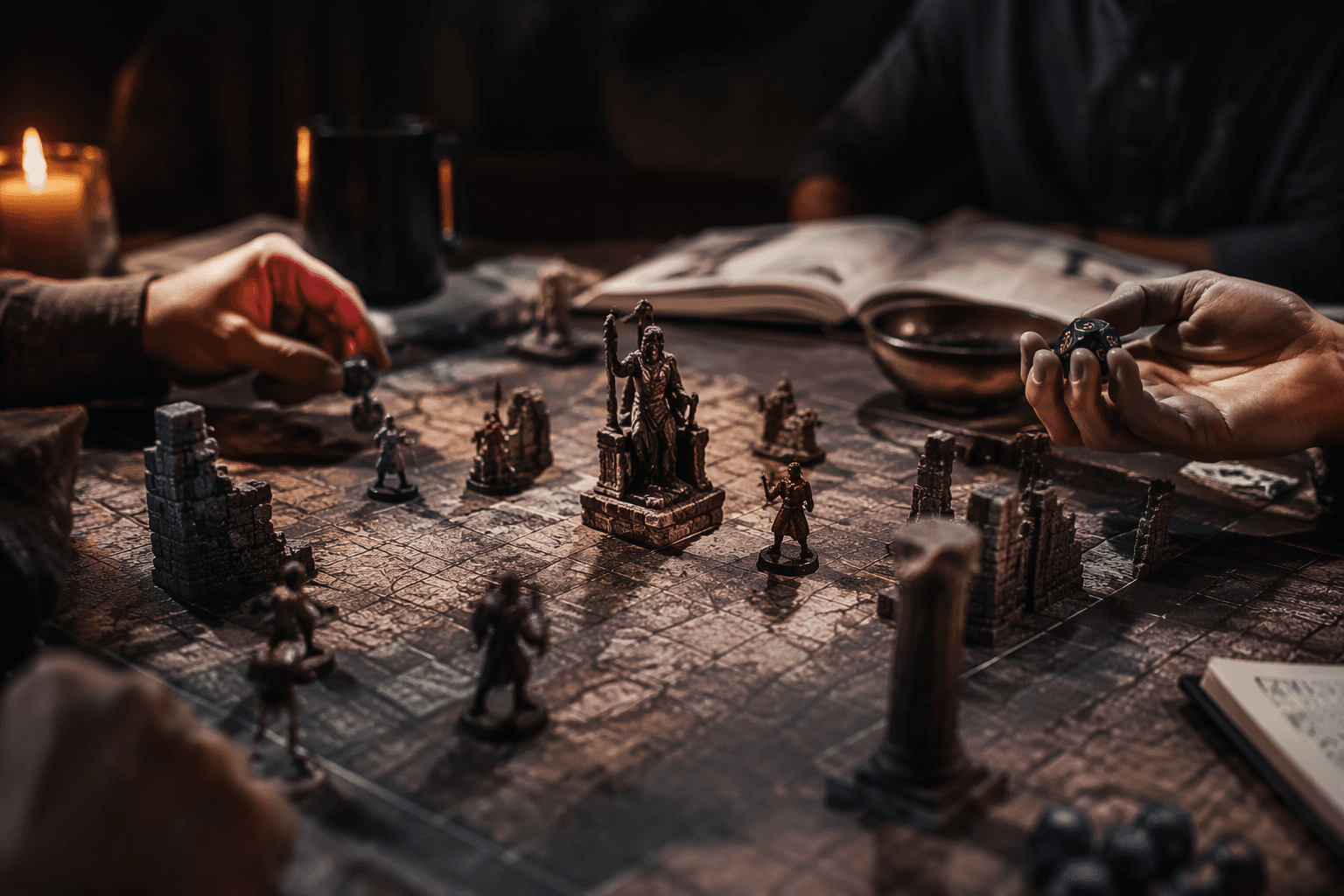
The chase rules are designed to be visual. They recommend narration first, with vivid descriptions of what the PCs are seeing and why one path is harder than another. If that helps the table, cards or a rough map can make the situation easier to read, and the guidance specifically favors a large-scale city map over a 5-foot grid when the scene covers broad ground. That is a useful reminder that this subsystem is built for momentum, not tactical micro-measurement.
That visual clarity also helps when the chase expands beyond one kind of scene. Pathfinder 2e’s subsystem chapter says subsystems can combine in interesting ways, so a chase can sit alongside influence, infiltration, vehicles, or hexploration. That makes it especially strong for heists, escapes, rival adventuring groups, and race-against-the-clock adventures where the scene needs more structure than improvised narration alone can provide.
A hexploration chase, for example, can have the party racing a rival group through each hex while facing obstacles along the way. In a city, the same framework can turn a rooftop pursuit into a political or criminal pressure cooker. In a vehicle chase, it can keep the scene moving without losing the feeling that every turn of the road matters.
Why the remaster-era GM Core matters
This is also one of the clearest examples of the remaster-era design direction Paizo put into GM Core. Paizo announced the Pathfinder Second Edition Remaster Project in 2023, and GM Core released on November 15, 2023. The book frames chases as part of its broader set of “subsystems for quick play,” which is exactly how a busy GM is likely to use them at the table.
That placement matters because it shows chases are not a gimmick tucked off to the side. They are part of the toolkit for running scenes that need immediate structure, clear stakes, and room for character expression. When you want pursuit to feel cinematic, the subsystem gives you the shape, the pacing, and the pressure to make every round count.
A good chase does not ask whether the fastest PC wins. It asks who can keep up when the path changes, the obstacle changes, and the whole table has to think like it is inside the scene instead of outside it.
This article was produced by Prism’s automated news system from verified source data, official records, and press releases, then run through automated quality and moderation checks before publishing. The system is built and supervised by the people who set the standards it runs under. Read our full AI policy.
Did this article answer your question?