Pathfinder 2e exploration mode bridges encounters and downtime
Exploration mode turns Pathfinder travel, scouting, and investigation into real table play, with 10-minute turns, named activities, and clear GM tools for pacing clues.
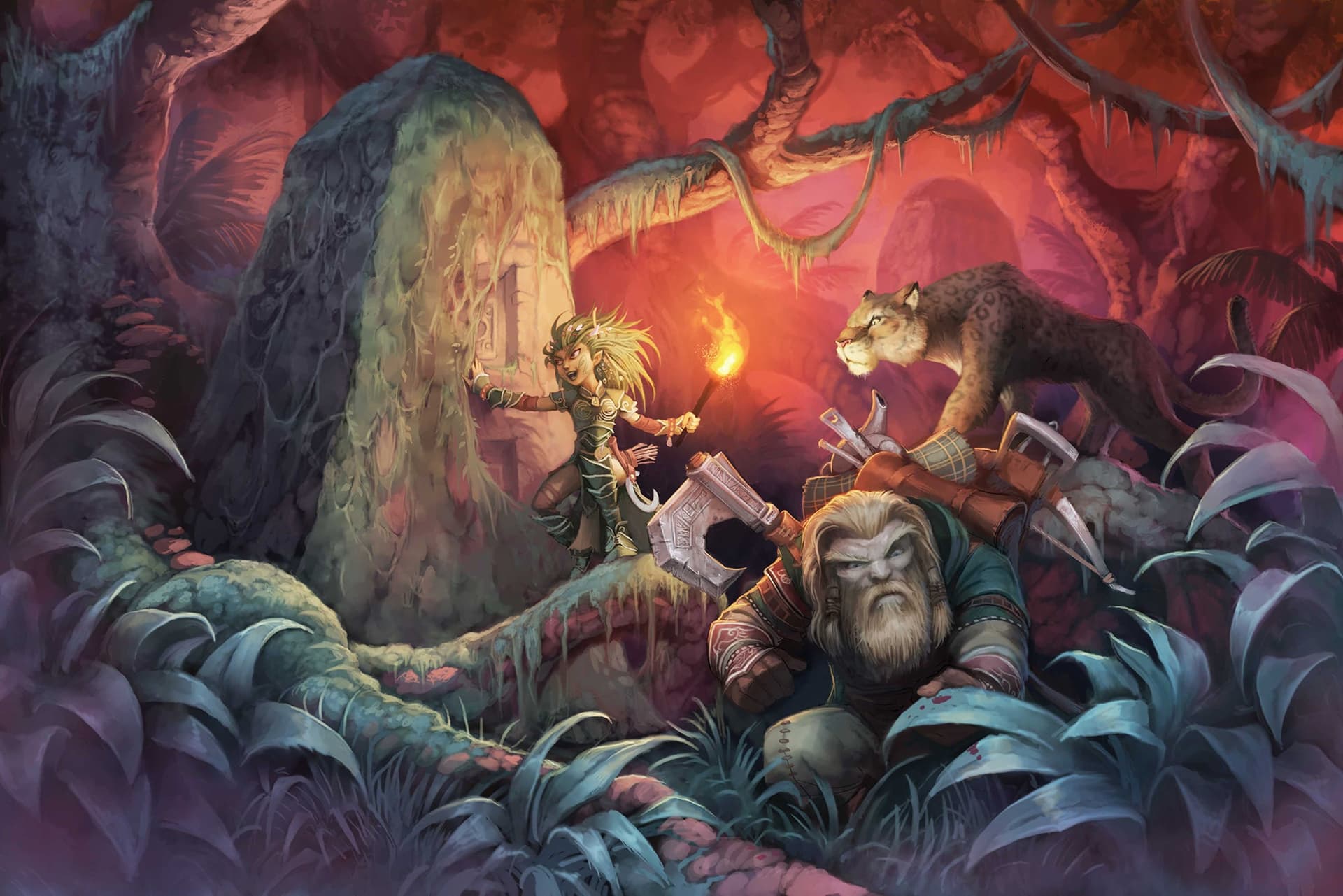
A Pathfinder 2e party creeping through a ruin while Avoiding Notice, Searching for traps, or Hustling to cover ground is already in exploration mode. It is the part of the game where the table stops hand-waving the journey and starts playing the space between fights. That is where the rules handle searching, sneaking, preparing, and deciding what to risk before initiative gets rolled.
What exploration mode actually does
Exploration mode is built for low-to-moderate risk play, not the tight, round-by-round pressure of encounter mode. The smallest unit is 10 minutes, though travel can stretch across hours or days, which gives the game a way to handle long movement without reducing every step to combat timing. In practice, that means a trip through a forest, a ruined keep, or a crowded city block can have structure without being cramped into rounds.
Paizo and Archives of Nethys present exploration as more free form than combat. The GM still determines the flow of time, but the players are not just saying, “we go north” and skipping to the next fight. They are choosing what they are doing while they go.
What the table declares between encounters
The key shift in exploration mode is that each player who wants to do more than simply travel picks an exploration activity. A character might Avoid Notice, Search for traps and secrets, Detect Magic, or Hustle when the group needs to cover ground fast. A player can also describe the action in plain language, and the GM decides which activity fits.
That simple rule changes the tone of the whole table. Instead of asking only where the party goes, you start asking how each character is approaching the problem in front of them.
- Avoid Notice helps a character move carefully and usually cuts travel to half speed.
- Detect Magic is useful, but it has practical limits tied to travel speed and does not automatically reveal every magical aura or object.
- Hustle is the choice for pressing forward when speed matters.
- Search keeps the party alert for clues, hazards, and hidden details.
In Paizo’s examples, exploration is the mode for looking for a rare book in a library, trailblazing through a spooky forest, fortifying a castle before a monster attack, or canvassing a city for a missing person. Those scenes are not downtime, and they are not fights.
Time and movement have real weight
Pathfinder does not leave overland travel in the fog. The travel-speed table gives a character with 30-foot Speed a pace of 300 feet per minute, 3 miles per hour, or 24 miles per day on flat, clear terrain. Difficult terrain cuts that in half, and greater difficult terrain reduces it to one-third, so the map itself starts to matter as much as the destination.
That same structure helps the GM pace checks without freezing the scene. If a travel task calls for a skill check, the GM might call for it once per hour, which keeps the rhythm moving while still giving the party regular pressure points. The rules also make the cost of caution visible: Avoid Notice slows travel, and Detect Magic works within the bounds of movement and circumstance rather than acting like a perfect radar sweep.
How GMs make exploration feel alive
Paizo’s guidance for running exploration scenes leans hard into sensory detail and clean pacing. Evoke the setting with vivid sights, sounds, smells, textures, and weather, then shift the passage of time so danger and anticipation have room to breathe. Pathfinder GM Core supports that approach with environmental detail tables organized by sight, sound, smell, texture, and weather, which makes it easier to turn “we travel north” into a scene with a shape.
The other half of the advice is restraint. Speed through uneventful stretches, use rolls to move the action forward instead of stalling it, and ask players to add details through their reactions. When a mystery is small enough to fit inside a hallway, a road, or a single neighborhood, exploration mode gives the GM a way to reveal it in steps instead of dumping everything at once.
Why the remaster put this front and center
Pathfinder Player Core and Pathfinder GM Core, released in November 2023 as part of the Remaster Project, gave the game a fresh foundation while staying largely compatible with existing Pathfinder Second Edition products. Paizo said the project was meant to fold in years of errata and player feedback.
During the playtest era, community discussion already treated it as the primary at-table mode, the default layer of play that sits between encounter mode and downtime.
This article was produced by Prism’s automated news system from verified source data, official records, and press releases, then run through automated quality and moderation checks before publishing. The system is built and supervised by the people who set the standards it runs under. Read our full AI policy.
Did this article answer your question?