Artemis II Crew Sends Back First Earth Photos Using Nikon D5 DSLRs
The Artemis II crew downlinked Earth photos shot on Nikon D5 DSLRs, with one frame showing Africa and a green auroral band visible from the capsule window.
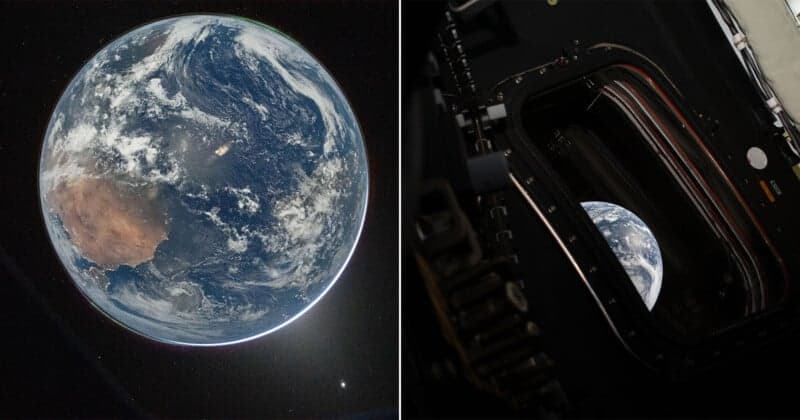
Two frames from Commander Reid Wiseman captured what Orion looks like as a camera platform. The first shows roughly a third of Earth framed through the capsule window like a porthole composition; the second pulls back to reveal the full Earth disk, with Africa and the Iberian Peninsula rendered in enough geographic detail to be immediately recognizable, and a green auroral band sitting near the 1 o'clock position in the frame. NASA's Artemis II crew downlinked both images on April 3, shot with Nikon D5 DSLRs carried aboard Orion.
The D5 selection reflects a straightforward calculation. Shooting through a spacecraft window in variable lighting from a moving capsule is not a controlled environment, and the D5's low-light credentials and spaceflight-proven durability made it the logical choice for a mission where there are no re-shoots. Wiseman released both frames as part of the first public image downlink from the mission.
The geographic legibility in that second frame is worth pausing on. Africa and the Iberian Peninsula, identifiable from orbit and captured hand-held through a small capsule aperture, says something concrete about what this body can resolve at the outer limits of a system. The auroral detail compounds it: that green band near the top of the frame was in the exposure, not introduced in post.
NASA framed the release with characteristic restraint: "Earth peeks through the capsule window, reminding us that a view like this relies on the ingenuity and hard work of countless people back home."
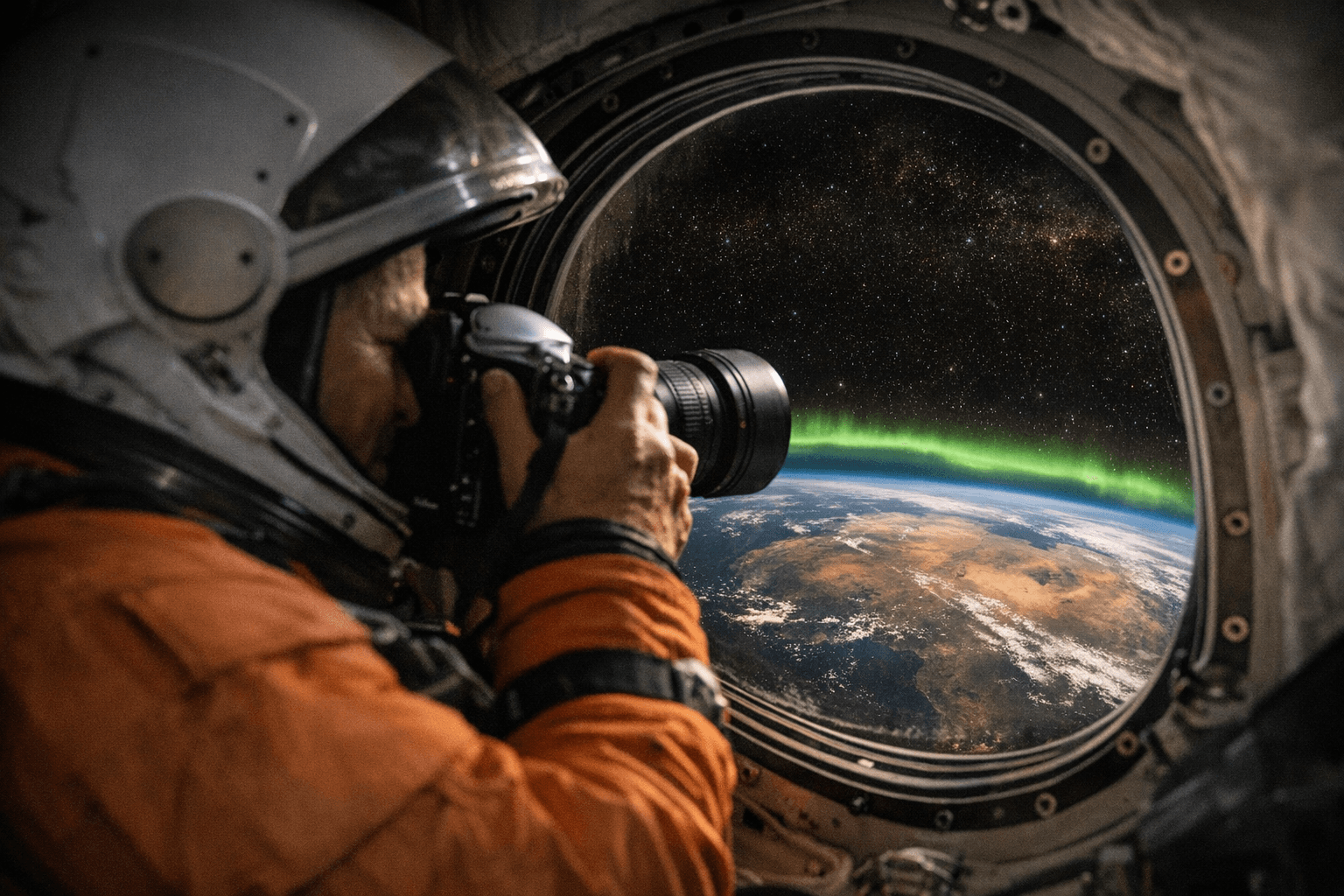
The more operationally significant detail for gear-watchers is what else is aboard Orion. Alongside the D5 bodies, the crew brought a Nikon Z9 mirrorless camera specifically to evaluate it in the spaceflight environment. The Z9 is being positioned as a candidate for the Handheld Universal Lunar Camera, known as HULC, a next-generation imaging system intended for future Artemis missions including Artemis III. These Earth images, striking as they are, also represent a step in a longer evaluation process: NASA is actively working out which camera platform will be in astronauts' hands on the lunar surface.
That context reframes what might otherwise read as a clean PR image drop. Wiseman's two frames document the current hardware baseline while Z9 testing aboard Orion may determine what succeeds it. For Nikon, having both a flagship DSLR and its flagship mirrorless system on the same mission is a meaningful operational endorsement at a moment when the DSLR-versus-mirrorless debate has settled almost everywhere except the most demanding professional niches.
The Artemis II downlink follows a long tradition of spaceflight photography serving dual roles at once: public outreach and technical documentation. The workflow behind these images, which bodies made the trip, which settings held up, is what space imaging professionals will be parsing long after the initial release cycle ends.
This article was produced by Prism’s automated news system from verified source data, official records, and press releases, then run through automated quality and moderation checks before publishing. The system is built and supervised by the people who set the standards it runs under. Read our full AI policy.
Did this article answer your question?