Canon Plans 6 to 8 New RF Lenses Per Year, Boosting APS-C Ecosystem
Canon VP Go Tokura confirmed a steady pace of 6 to 8 RF lenses per year at CP+ 2026, with third-party collaboration set to intensify as APS-C coverage lags rivals.
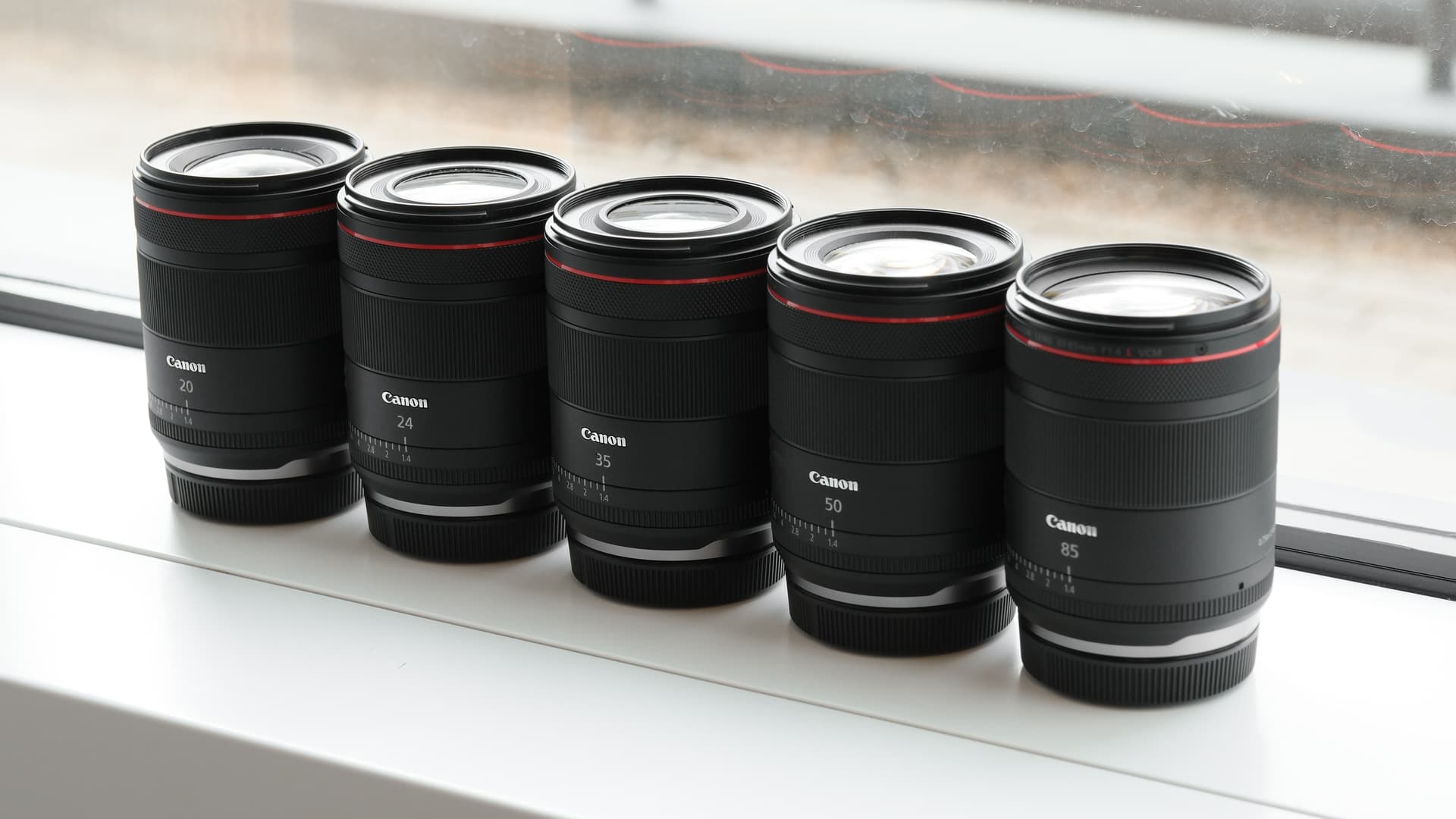
Sixty RF-mount lenses in seven years sounds impressive on paper, and Canon executive vice president Go Tokura wants photographers to know the output isn't slowing down. Speaking with Phototrend at CP+ 2026 in Yokohama, Tokura confirmed that Canon has "reached a pace of producing 6 to 8 new lenses per year," and stated that the company intends to hold that rhythm going forward. "We would like to maintain this pace and continue growing the lineup," he said, adding with a smile that Canon would "not release exactly 8 lenses to celebrate the eighth anniversary."
The announcement carries real weight for APS-C shooters. Canon's RF-S ecosystem, built for EOS R bodies like the R7 and R10, has long been the weak link in an otherwise competitive full-frame lineup. Where Fujifilm's X-mount and Sony's APS-C E-mount offer a deep bench of fast native primes, Canon RF-S users have largely made do with slower kit zooms, the 18-150mm f/3.5-6.3 IS STM being the workhorse option. A committed annual cadence from Canon's own engineering team, combined with a growing third-party presence, could start to close that gap.
Third-party expansion is arguably the more structurally interesting part of Tokura's remarks. "Collaboration with new third-party manufacturers will increase going forward," he said, while acknowledging that "there may be some restrictions due to our business strategy." Tokura also pushed back on the assumption that Canon's RF-S emphasis is a deliberate strategic priority, noting that the APS-C framing largely comes from observers watching which third-party makers have so far obtained RF licensing. "We don't really differentiate between full-frame and APS-C in that regard," he said. "I think this observation comes from an external perspective, based on the fact that third-party manufacturers are currently only involved in APS-C."

Whether Canon draws that distinction internally or not, the practical reality for APS-C RF users is that more glass is coming, from more directions. Patents have surfaced for RF-S pancake designs in the f/2.8 range, and industry observers are anticipating fast prime announcements, potentially RF-S equivalents of a 20mm f/1.4 or a 35mm f/1.8, that would give crop-sensor Canon bodies the kind of affordable, bright prime selection that Fujifilm users take for granted.
Canon's RF mount turned eight this year. With 60 lenses already in the catalog and a stated floor of six new releases annually, the ecosystem math is starting to work in Canon's favor. The real test will be whether the next wave prioritizes aperture speed and focal length variety for RF-S, or continues to concentrate resources on L-series glass for the full-frame faithful.
This article was produced by Prism’s automated news system from verified source data, official records, and press releases, then run through automated quality and moderation checks before publishing. The system is built and supervised by the people who set the standards it runs under. Read our full AI policy.
Did this article answer your question?