Chris Anderson reflects on witness photography and visual truth
Chris Anderson’s career is a sharp reminder that witness photography is about responsibility, not speed. His latest reflections cut straight at the gap between documentary truth and online spectacle.
Witness before virality
Chris Anderson has spent his career treating photography like a form of testimony, not a shortcut to attention. That matters now more than ever, because the modern image-maker can publish instantly, strip away context in a second, and still call it documentary. Anderson’s work pushes against that habit. It asks a harder question: if a photograph reaches the world immediately, what responsibility does the photographer still owe the people inside the frame?
That question sits at the center of his career, which has always been built around places and situations most viewers would never see up close. Born in Canada in 1970 and raised in west Texas, Anderson came up with a sensibility that feels rooted in both distance and exposure. He has moved through conflict zones, magazine assignments, and long-form projects without losing the basic instinct that made his earliest work hit so hard: the belief that images can carry visual information from underrepresented places when words alone will not do the job.
The Haitian boat that defined the standard
Anderson first gained international recognition in 1999, when he photographed 44 Haitian refugees aboard a 23-foot handmade wooden boat called the Believe In God as they tried to sail from Haiti toward the United States. The boat sank in the Caribbean during the journey, and the images went on to receive the 2000 Robert Capa Gold Medal, an award that recognizes the best published photographic reporting from abroad requiring exceptional courage and enterprise.
That story still lands because it is not just about access. It is about proximity, risk, and the moral weight of seeing. The Overseas Press Club of America said the judges agreed that Anderson’s brave work documenting the harrowing journey met the medal’s exacting standards, which is exactly the point: the picture was never simply dramatic, it was accountable. In an era when photographers can chase the loudest frame and flatten the rest, Anderson’s early career set a different benchmark. The job was not to arrive first. The job was to witness well.
That distinction matters because the image on the page was never detached from the people inside it. The Believe In God story is a brutal example of how documentary work can become a record of migration, danger, and survival all at once. It also explains why Anderson’s name stayed in the conversation. He did not build a reputation on a clever visual trick. He built it on images that held up under scrutiny.
From conflict zones to institutional trust
After that early breakthrough, Anderson kept moving deeper into the kinds of assignments that test a photographer’s nerve and judgment. He became a member of Magnum Photos in 2005, worked as a contract photographer for Newsweek and National Geographic, and served as the first photographer-in-residence at New York Magazine. That combination says a lot about how his work has been valued: by the news weeklies, by the long-form magazine tradition, and by one of the most respected documentary collectives in the field.
His coverage has included Afghanistan, Iraq, Lebanon, and Israel/Palestine, which places him squarely in the part of photography where the camera is never neutral and the edit can make or break the truth of a story. Magnum has described his later work as moving toward an “emotional moment,” while Anderson describes his own approach as “experiential documentary.” That phrase fits him because his pictures are not trying to stand above the scene. They are trying to place the viewer inside it, close enough to feel the pressure of the moment without pretending that closeness equals understanding.
For photographers working today, that is the useful lesson. Anderson’s career suggests a few practical rules that are still worth following:
- Do not confuse immediacy with meaning. If the picture is published instantly, the context has to be even stronger.
- Treat proximity as a tool, not a guarantee. A close frame can reveal tension, but it can also hide everything that gives the frame value.
- Let the work carry witness, not performance. Documentary credibility comes from consistency, not from chasing the most shareable angle.
When close-ups of power become a public argument
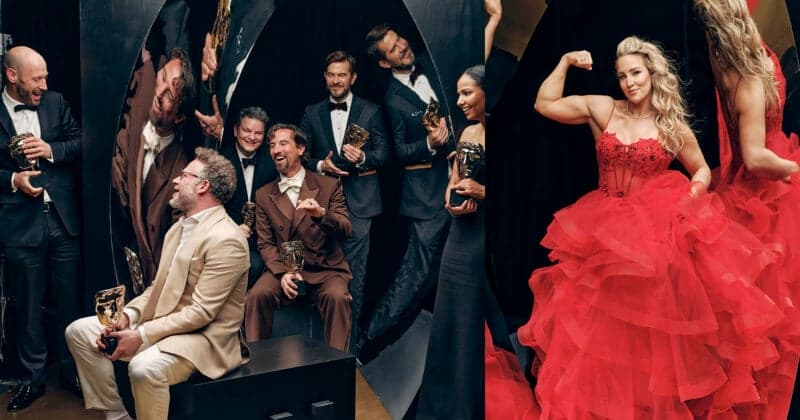
Anderson’s recent work shows how quickly those old documentary questions collide with online judgment. In 2025, he photographed Donald Trump’s inner circle for Vanity Fair, and the images set off debate online because of their unretouched, close-up style. Anderson defended them as consistent with his broader documentary practice, which is exactly the line he has always drawn between picture-making and polish. He is not selling a fantasy of distance or control. He is insisting that the frame should still show what it sees.
That same instinct helps explain why his forthcoming book, Index, scheduled for release in spring 2026, matters to readers of photography. Anderson has always worked in a space where publishing is part of the argument, not an afterthought. Whether he is showing battlefield tension, the wreckage of a migrant crossing, or the uncomfortable intimacy of political power, the question is the same: what does the image reveal once the gloss is gone?
He has also published several monographs already, including Nonfiction in 2003, Capitolio in 2009, Son in 2013, and Pia, which adds another layer to the way his archive reads. These are not trophy books. They are pieces of a larger argument about how a photographer builds trust over time, especially when the work keeps moving between public spectacle and private consequence.
What visual responsibility means now
Anderson’s career is useful precisely because it resists nostalgia. This is not a tale about a heroic old-school photographer and a ruined present. It is a challenge to today’s image-makers to decide whether they want speed, reaction, and virality, or whether they still believe photography can function as a witness. The internet has made publishing easy. It has also made it easier to strip meaning from the image before anyone has had time to think.
Anderson’s answer is the harder one. Publish if you must, but publish with discipline. Frame the story, not just the face. Keep the ethical burden of the photograph in view, especially when the subject is power, conflict, or displacement. That is what visual responsibility looks like when context collapses online: the photographer has to do the work the platform will not do for them.
That is why Anderson’s early Haitian boat pictures still feel so current. They were made in a world where witness had to be earned, and they still read like a rebuke to a culture that mistakes instant visibility for understanding.
Know something we missed? Have a correction or additional information?
Submit a Tip