Compact cameras surge as CIPA data shows mirrorless slowdown
Compact cameras outpaced 2025 through April, while full-frame and larger systems slid to about 80% of last year’s pace.

Compact cameras are no longer the sleepy corner of the market. CIPA’s latest April 2026 shipment data, published June 1, showed built-in-lens cameras running ahead of 2025 in each of the first four months, at 136%, 117%, 119% and 148% of last year’s monthly totals. The split is hard to miss: everyday cameras are gaining ground while the biggest interchangeable-lens systems are cooling.
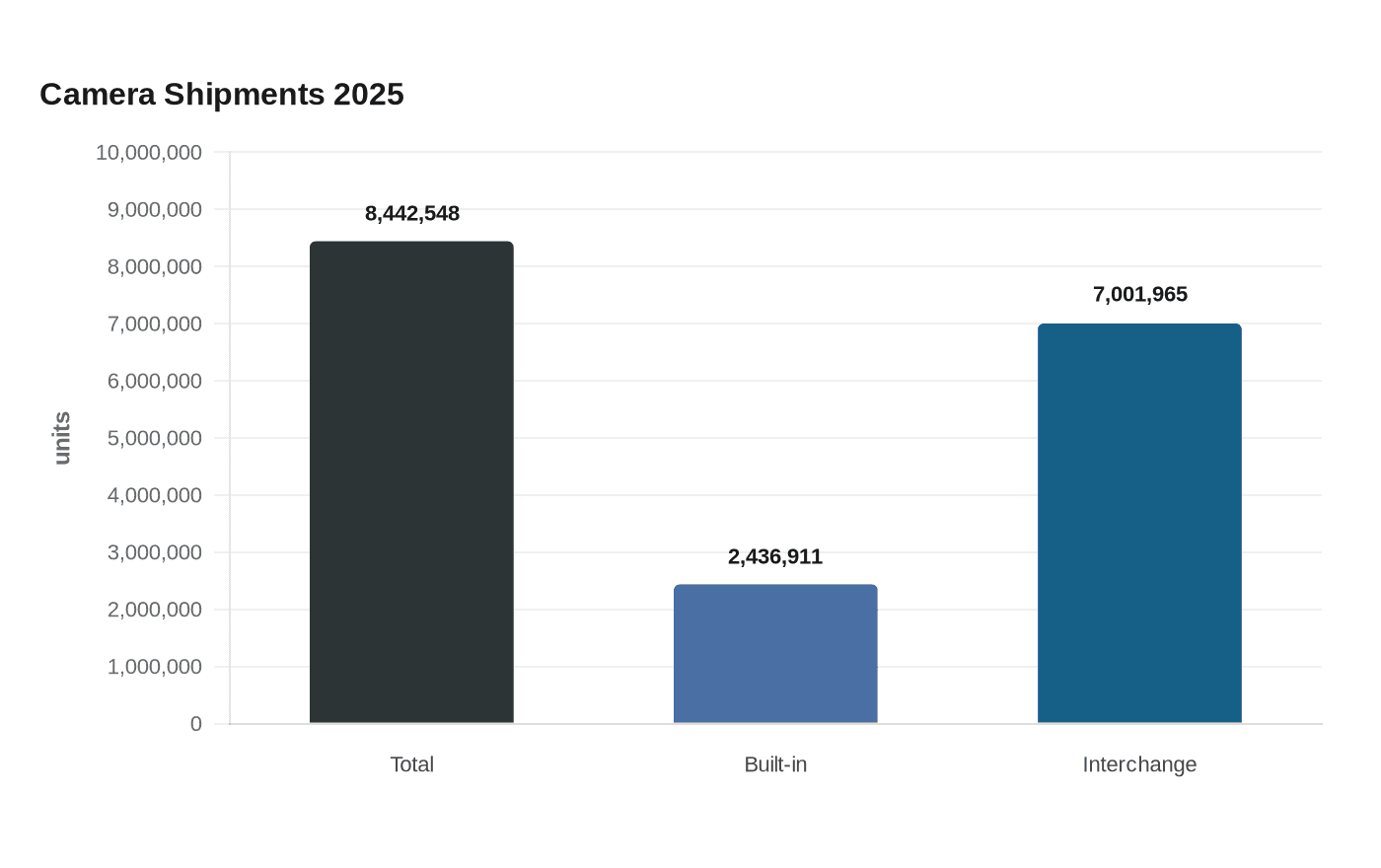
That matters because the broader market was already coming off a rebound. CIPA’s 2025 annual figures put total digital-camera shipments at 8,442,548 units, with 2,436,911 built-in-lens cameras and 7,001,965 interchangeable-lens cameras. That was the second straight year of growth, the first back-to-back increase in nearly 20 years. In its February 26, 2026 outlook, CIPA projected another 13.6% rise for built-in-lens models this year, to 2.77 million units, while mirrorless shipments were expected to slip 2.6% and total interchangeable-lens volumes to edge down.

The sensor-size breakdown explains why the market feels so uneven. Full-frame and larger cameras were down to about 80% of their 2025 first-four-month total, while APS-C and smaller systems were at 104.6% of last year’s pace and were growing in value even faster. In plain English, photographers are not simply buying less. A lot of them are buying smaller systems, and when they do spend, they are often spending up within that smaller category instead of stretching for a full-frame body and a lens bag that lives on the shelf.
The product cycle backs that up. Over the previous 12 months, 17 new cameras from major manufacturers hit the market, and seven of them had built-in lenses. Canon launched the PowerShot V1 on March 26, 2025 as a creator-focused compact, Nikon released the COOLPIX P1100 on February 5, 2025 with 125x optical zoom and 24mm to 3000mm equivalent coverage, and Ricoh announced the GR IV on August 20-21, 2025 as the next premium GR compact. At CP+ 2025 in Yokohama, Canon’s Go Tokura said the company was seeing “growing demand” for compact cameras and that video use was a key design factor.
For photographers, the takeaway is straightforward. Full frame still makes sense when you need system depth, low-light headroom and the lens lineup to match, but the current shipment data says the day-to-day market is rewarding portability, fixed lenses and cameras people will actually carry. That is the real shift: not nostalgia, but a practical vote for the camera that fits the bag, the budget and the shoot you make every week.
This article was produced by Prism’s automated news system from verified source data, official records, and press releases, then run through automated quality and moderation checks before publishing. The system is built and supervised by the people who set the standards it runs under. Read our full AI policy.
Did this article answer your question?