Edith Tudor-Hart, pioneering photographer and Soviet spy behind Cambridge Five link
Edith Tudor-Hart shot working-class Britain with a Rolliflex, then helped open the door to Kim Philby. Her camera and her politics were never separate.
Why Edith Tudor-Hart still matters
Edith Tudor-Hart is one of those photographers whose contact sheet reads like an intelligence file. She was a Bauhaus-trained documentary photographer who made some of the sharpest social images in 1930s Britain, and she was also a Soviet secret agent whose political ties reached into the Cambridge Five. That combination is the whole story: the pictures were never separate from the ideology, and the ideology shaped who got photographed, where she worked, and why her legacy stayed buried for so long.
The new biography, *A Woman Named Edith: Émigré, Photographer and Secret Agent - The Extraordinary Life of Edith Tudor Hart*, by Daria Santini, puts that double life back in focus. Yale University Press London lists it as a 368-page book with 25 black-and-white illustrations, scheduled for 5 May 2026. The scale matters because Tudor-Hart was never just a footnote to espionage history. She was a serious visual chronicler of labor, poverty, and anti-fascist struggle, and the spy ring connection only becomes more revealing when you understand the photography first.
From Vienna to the Bauhaus
She was born Edith Suschitzky in Vienna in 1908, and she first worked as a kindergarten teacher before turning to photography. In 1928 she studied at the Bauhaus in Dessau, where the idea of documentary clarity, formal discipline, and social purpose came with real force. That training stayed visible in her work later on: clean framing, hard evidence, and an unsentimental eye for working life.
Her path to Britain was shaped by politics as much as by art. She married the British doctor Alexander Tudor-Hart and moved to England, and according to the Wales refugee research project, she and her husband fled Austria in 1933 to escape persecution from the fascist regime. That exile is central to understanding her archive. Her photography developed out of displacement, and the camera became a tool for recording the conditions that fascism and industrial decline were producing around her.
A camera built for social truth
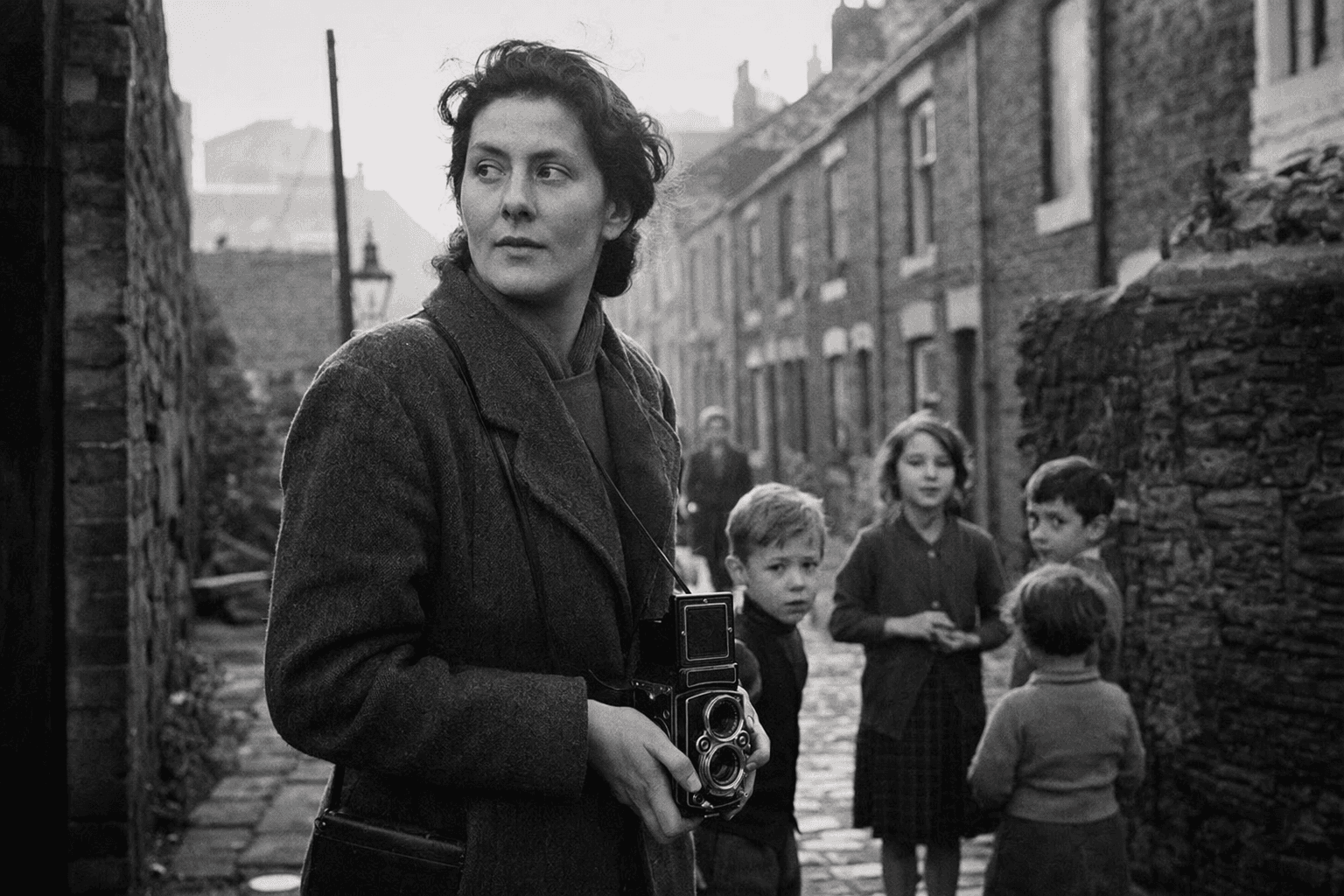
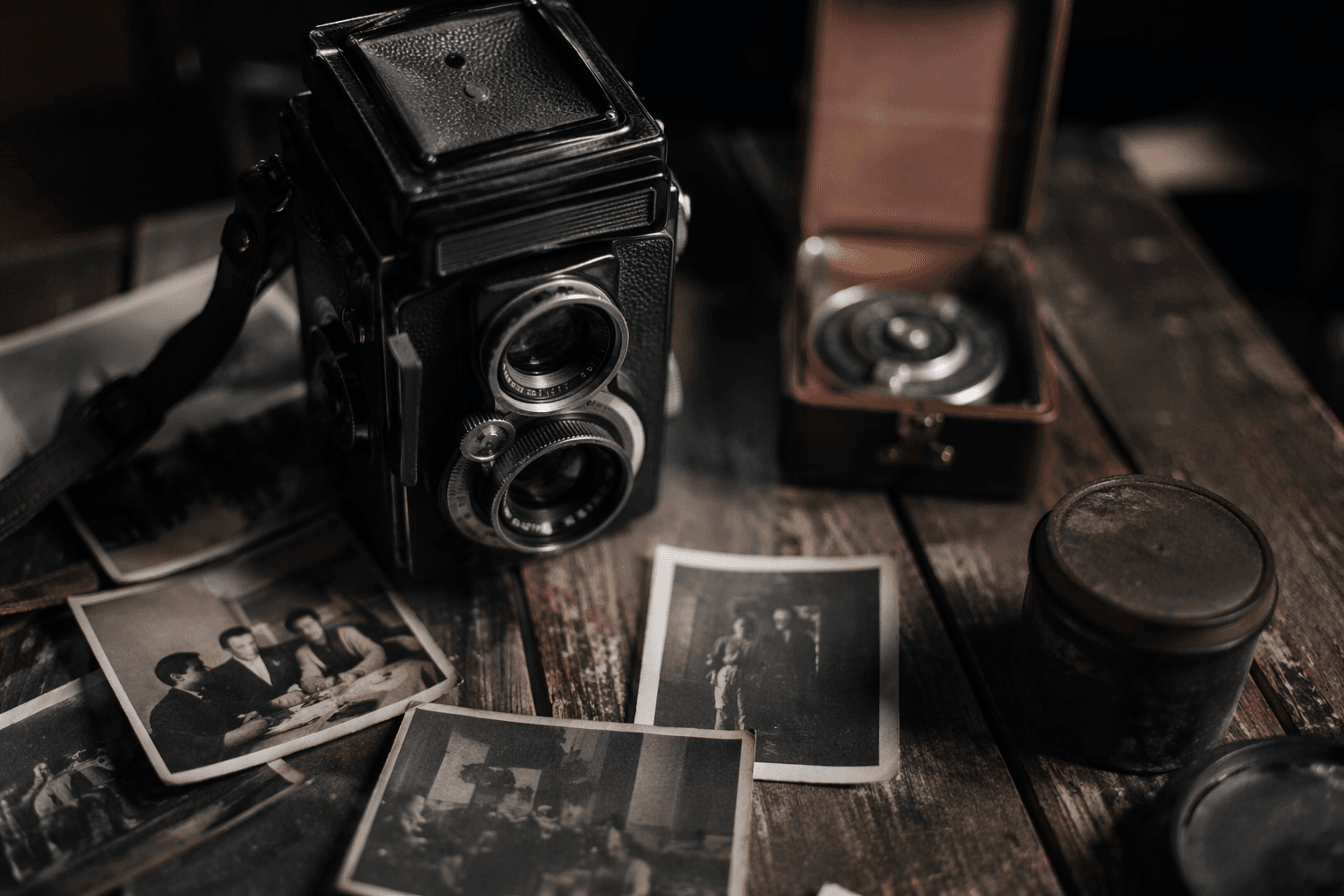
Tudor-Hart used a Rolliflex to document working-class life, poor housing, and anti-fascist realities in Vienna and London. That choice of subject was not incidental. The Science Museum Group describes her as an anti-fascist and Communist activist, and the National Galleries of Scotland notes that she compiled a remarkable archive of images of working people in London and later south Wales. In her hands, documentary photography was a political act, not a neutral one.
Her best work came from the places where hardship was visible without decoration. She photographed industrial decline, refugees from the Spanish Civil War, housing policy, and child welfare, with images published in *The Listener*. She also worked in London and in south Wales, including the Rhondda Valley, where labor, coal, and community formed the backdrop to daily life. If you want the key to her archive, it is simple: she was photographing the systems that shaped people’s lives, not just the people themselves.
That’s why her pictures still land. They carry the precision of a photographer who understood that documentary work can function as evidence. Tudor-Hart saw the medium as a way to communicate social truth and support anti-fascist and Communist beliefs, and the pictures show it. Her camera was not a side project to the politics. It was one of the ways the politics became visible.
How the Cambridge Five connection fits the picture
The espionage story became infamous because of one meeting in Vienna in 1933. Tate says Tudor-Hart met Kim Philby there and introduced him to her communist handler Arnold Deutsch, who then recruited him. Philby later became the most notorious member of the Cambridge Five, and that link is why Tudor-Hart keeps resurfacing in spy histories. She was not merely adjacent to the network. She helped connect people inside it.
The Hyman Collection adds even more detail to that clandestine role, saying Tudor-Hart recommended Litzi Friedmann and Kim Philby for recruitment and acted as an intermediary for Anthony Blunt and Bob Stewart when Soviet Embassy operations in London were suspended in February 1940. Those facts sharpen the picture of how embedded she was. Her life was not a clean split between photographer and agent, but a single, braided career in which art, politics, and intelligence work overlapped.
What makes that overlap so compelling is that it also helps explain the pictures. A photographer who is tuned to class struggle, exile, and anti-fascist politics will not see London the same way as a neutral observer. Tudor-Hart’s eye was formed by ideology, and that ideology helped direct her toward working people, precarious housing, and scenes of social pressure. The spy story is dramatic, but the documentary work is what gives it depth.
Why her legacy was obscured for so long
Tudor-Hart was among the most important documentary photographers working in Britain in the 1930s and 1940s, yet her name was long overshadowed by the secret life attached to it. That is partly the logic of espionage history, where the covert tends to swallow the visible. It is also a familiar problem in photography history: women who built serious bodies of work often had their careers compressed, minimized, or overlooked entirely.
The record shows that she remained active into the 1950s before eventually abandoning photography amid the difficulties faced by women photographers. That ending is telling. Her archive did not fade because it lacked substance. It faded because she was working across several fault lines at once: gender, exile, politics, and secrecy. Those are exactly the conditions that make a photographic legacy easy to flatten if you only tell one part of the story.
Where her work stands now
Institutional attention has started to bring her back into view. She appeared in the 2024 Ben Uri and Centre for British Photography exhibition *Uncharted Streets*, which ran from 17 January to 8 March 2024. She was also part of the Isokon Gallery exhibition *Through a Bauhaus Lens: Edith Tudor-Hart and Isokon*, which opened on 2 March 2024 and was scheduled to run until November 2025. That renewed attention matters because it places Tudor-Hart where she belongs: not on the margins of photography history, but inside its central arguments.
The cleanest way to understand Edith Tudor-Hart is this: she used photography to describe the world she was trying to change, and she used politics to decide what deserved to be seen. That is why her work still feels urgent. The images are documentary, but the life behind them is a reminder that the camera can be both witness and participant, and sometimes even a tool in the making of history itself.
This article was produced by Prism’s automated news system from verified source data, official records, and press releases, then run through automated quality and moderation checks before publishing. The system is built and supervised by the people who set the standards it runs under. Read our full AI policy.
Did this article answer your question?