Euclid captures largest visible-light photo of the Milky Way’s center
Euclid’s 324-megapixel view of the Milky Way’s core packs more than 60 million stars into one frame, a reminder that astrophotography is still a game of scale and patience.
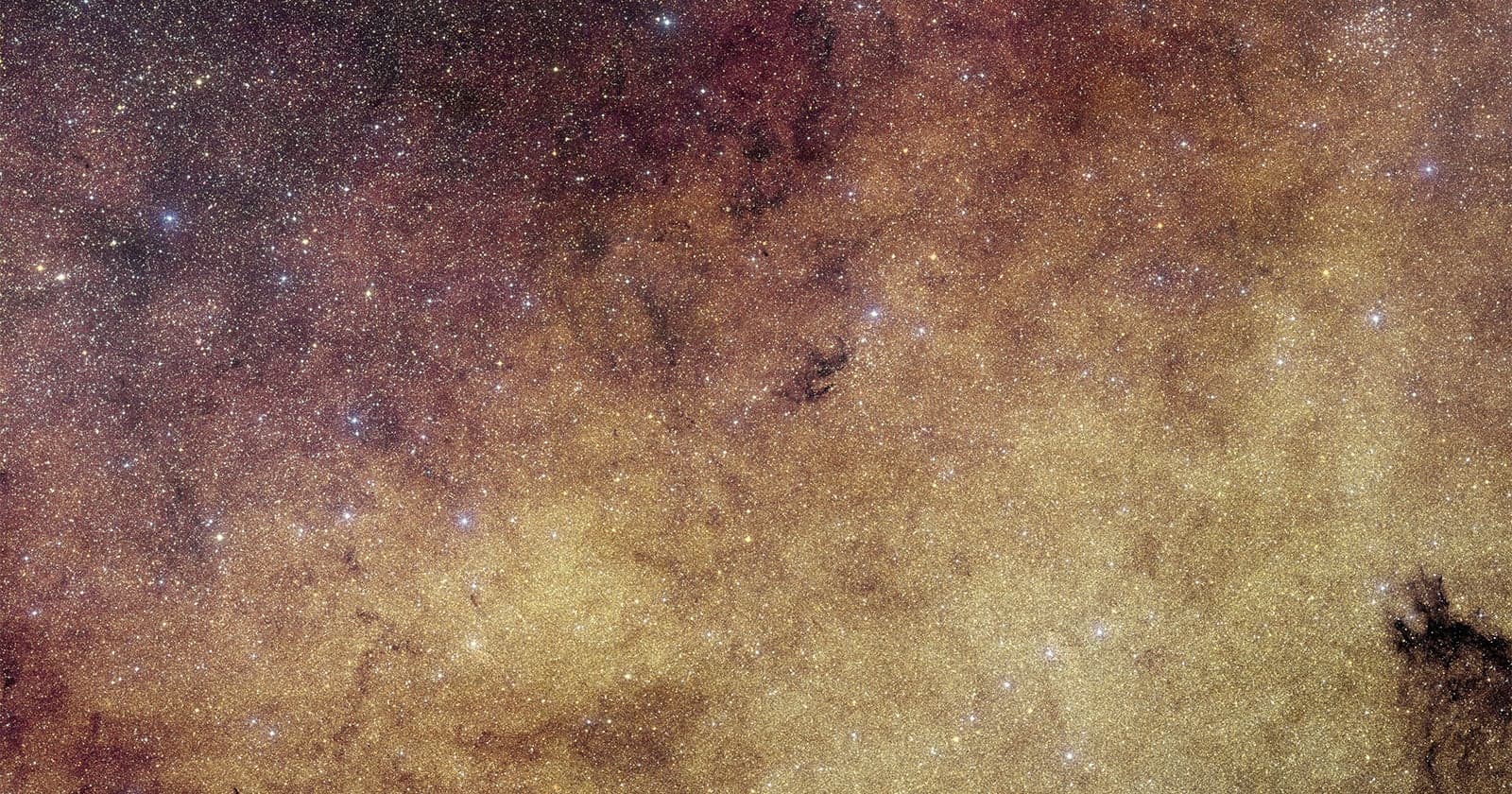
Euclid has delivered the largest high-resolution visible-light photo ever made of the Milky Way’s center, a 324-megapixel frame built from an 18,000 by 18,000 pixel image packed with more than 60 million stars. Taken on 23 March 2025 and released publicly on 24 June 2026, the image turns the galaxy’s crowded core into a lesson in what happens when a purpose-built instrument is aimed at a brutally busy scene.
The view is so dense that there is almost no empty sky left to rest the eye, which is exactly what makes it compelling for anyone who spends nights chasing detail in deep-sky frames. Euclid observed the target for about 26 hours across nine contiguous fields covering 4.8 square degrees, using only its visible-light instrument, VIS, a 600-megapixel camera. That is the astronomical version of disciplined mosaicing: long integration, careful field overlap, and enough resolution to keep structure intact instead of smearing it into a bright blur.
ESA says the bulge sits about 26,000 light-years from Earth and is made mainly of old, cooler stars, which gives the region its yellow cast. The dark lanes are not voids at all but dust-rich molecular clouds blocking background light, while blue stars and a faint red glow mark foreground spiral-arm structure and active star-forming regions. For photographers, that mix of color and contrast is the point. The frame shows how much information disappears when highlights, shadows, and dust all compete in the same scene, and how much comes back when the capture system is engineered to hold separation.
The Euclid Consortium says the Galactic Bulge Survey may help identify numerous new planetary candidates and measure the masses of roughly 60 previously discovered exoplanets through microlensing. That matters because the same crowded field that makes the image beautiful also makes it scientifically useful, letting researchers confirm planets and refine their physical properties. Euclid was designed mainly to map billions of distant galaxies for dark-energy and dark-matter research, so this portrait of the Milky Way’s center is a sharp reminder that the most ambitious imaging projects are still driven by the same instincts that pull hobbyists outside on a clear night: frame more, lose less, and keep enough detail in the file that the subject finally looks as big as it is.
This article was produced by Prism’s automated news system from verified source data, official records, and press releases, then run through automated quality and moderation checks before publishing. The system is built and supervised by the people who set the standards it runs under. Read our full AI policy.
Did this article answer your question?