FAA eases drone ban on journalists near DHS and ICE activity
A moving 3,000-foot drone no-fly zone near ICE activity has been replaced, giving journalists more room to work while keeping federal threat warnings in place.
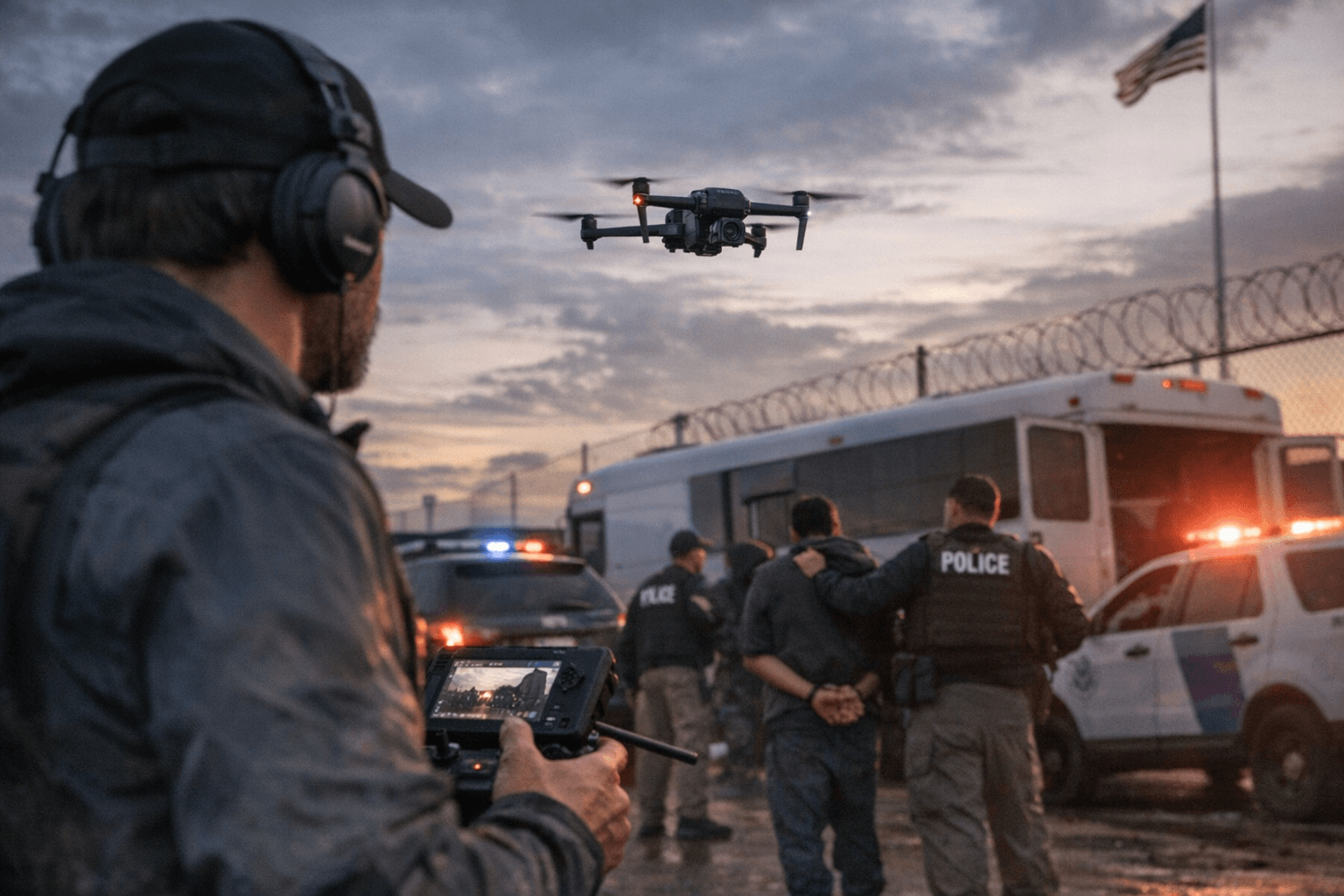
A 3,000-foot lateral, 1,000-foot vertical drone ban that could follow unmarked ICE vehicles across a city has been rolled back, easing one of the most restrictive federal limits journalists faced near immigration enforcement activity.
The Federal Aviation Administration replaced its earlier prohibition with a cautionary notice telling operators to avoid flying near covered mobile assets instead of imposing an outright ban. That matters for photojournalists and documentarians because the January 16 notice had created temporary flight restrictions around certain Department of Homeland Security, Department of Defense, and Department of Energy facilities and vehicles, with rules that were set to remain in place until October 29, 2027. Because those mobile assets could include unmarked or rented vehicles, the no-fly zone was effectively moving, and often impossible to map in real time.
Press-freedom groups said the rule made normal newsgathering unworkable. The National Press Photographers Association warned that the restriction was effectively invisible and impossible for members to comply with, even when they were covering stories unrelated to DHS. NPPA President Alex Garcia said the moving restriction made compliance impossible, while NPPA general counsel Mickey Osterreicher argued that turning lawful newsgathering into criminal exposure without notice raised due process and First Amendment concerns. A coalition that included NPPA, The New York Times, and The Washington Post pressed the FAA to drop the order, and the challenge also raised Fifth Amendment and vagueness objections.
Rob Levine, a Minneapolis photojournalist represented by the Reporters Committee for Freedom of the Press, took the fight to the U.S. Court of Appeals for the District of Columbia Circuit. He filed a petition for review on March 16, 2026, and the Reporters Committee filed a motion for interim relief on April 10. The FAA then rescinded the restriction in its entirety on Wednesday, April 16, replacing it with the narrower advisory. Levine called the reversal a “big win” and said he had been forced to ground his drones during a period of major significance for his community.
The updated notice still leaves risk on the table. It says the Department of War, Department of Energy, Department of Justice, and Department of Homeland Security may take action against drones they consider a credible safety or security threat. Even so, the change strips away the blanket rule that had chilled aerial reporting near government activity and restores at least some room for photographers to document fast-moving events from the air.
The precedent is especially important for Levine, who previously received a rare waiver in 2016 to fly over the Standing Rock protests in North Dakota and was the only photographer with aerial access there. That history shows how often drone access sits at the center of protest coverage and public-interest journalism, and why a moving, invisible restriction drew such fast resistance from the press.
This article was produced by Prism’s automated news system from verified source data, official records, and press releases, then run through automated quality and moderation checks before publishing. The system is built and supervised by the people who set the standards it runs under. Read our full AI policy.
Did this article answer your question?