Camera trap captures Brazil's smallest wild cat in Porto Alegre
Hidden cameras in Porto Alegre caught Brazil’s smallest wild cat on the move, a rare urban-edge record for a species with just 1.8 to 3.5 kilos of body mass.
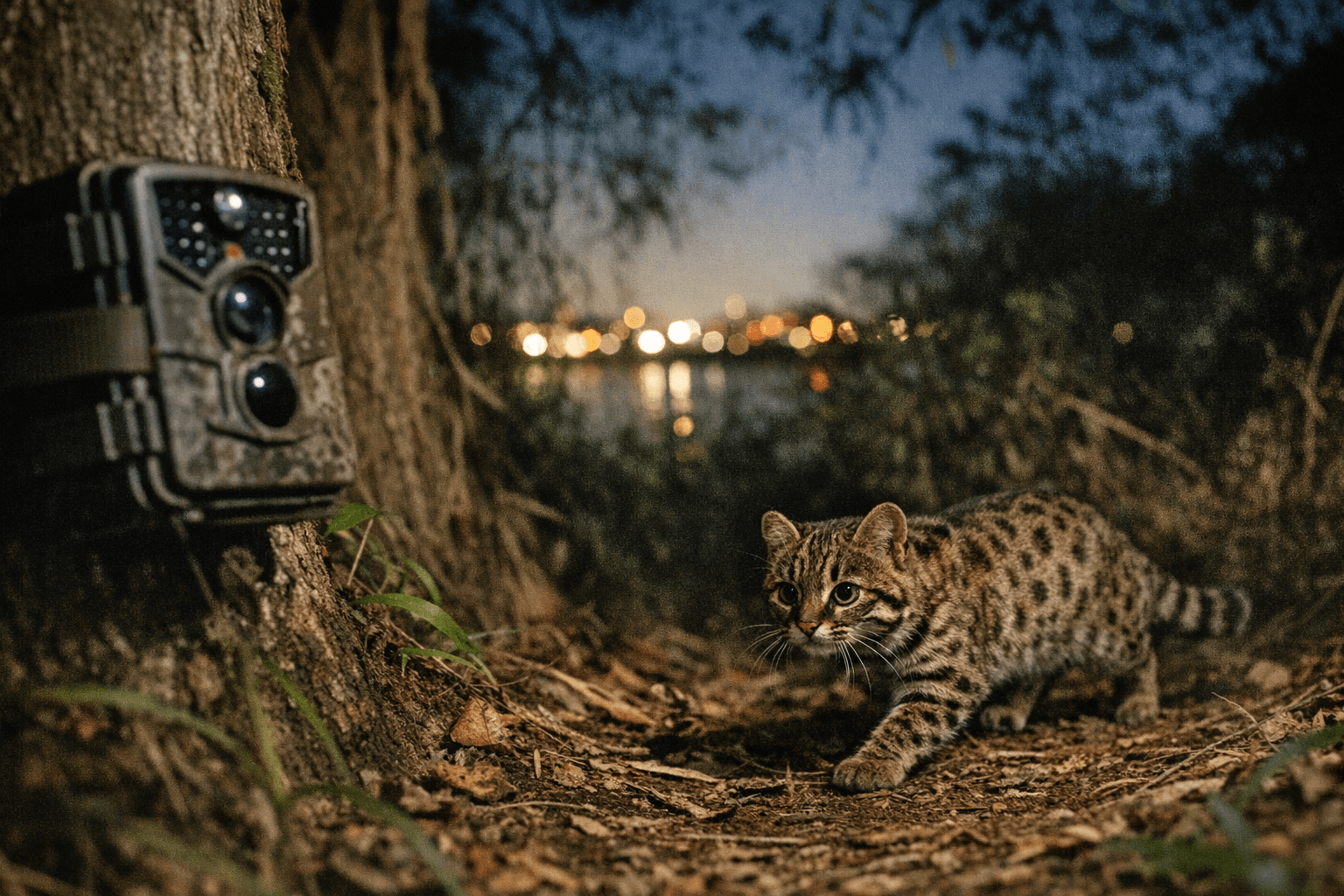
Hidden cameras in Lami, on the South Zone edge of Porto Alegre, caught Brazil’s smallest wild cat moving through a forested urban fragment. The animal was Leopardus guttulus, the gato-do-mato-pequeno, a rare sighting that turns a routine camera-trap setup into a sharp reminder that some of the country’s most elusive predators are living much closer to people than most photographers ever realize.
The cat is tiny by wild-feline standards, but it is built for business. Leopardus guttulus weighs about 1.8 to 3.5 kg and measures 36 to 54 cm in body length, not including the tail, making it only slightly larger than a domestic cat. Its yellowish to brown coat with dark rosettes is classic camouflage for the Mata Atlântica and parts of the Cerrado, and its hunting list runs from small rodents, birds, and lizards to larger prey such as coatis and pacas.
That combination of small size, stealth, and adaptability is exactly why camera traps have become so valuable. Felinos do Pampa, which monitors the cameras in the region, has been documenting how this solitary climber uses forest cover even as urban edges keep tightening around it. The species can be active both at night and during the day, a behavior that may help it avoid larger predators such as the ocelot. Another twist is melanism, the genetic trait that can produce entirely black individuals.
The conservation picture is far less tidy than the footage looks. Leopardus guttulus is listed as Vulnerable by the União Internacional para a Conservação da Natureza, which estimates the global population at 6,047 mature individuals and says the number is declining. The species was only recognized as distinct in 2013, after molecular studies showed it had diverged more than 1.5 million years ago. The IUCN also notes hybridization with Leopardus geoffroyi in Rio Grande do Sul, a problem that grows more serious as habitat destruction forces the two cats into closer contact.
ICMBio’s PAN Pequenos Felinos, covering the 2022 to 2027 cycle, includes Leopardus guttulus among six nationally threatened taxa and aims to cut extinction risk by expanding knowledge and reducing threats. The Porto Alegre record fits a pattern already seen elsewhere in Rio Grande do Sul: in February 2023, another gato-do-mato-pequeno was documented in Cachoeirinha, in a more than 250-hectare area between the freeway and Avenida Flores da Cunha. For photographers, the message is clear: the most important wildlife frame may be waiting in the places cities still leave just wild enough to hold on.
Know something we missed? Have a correction or additional information?
Submit a Tip