Photographer Jack Plant documents rare spirit bears in Great Bear Rainforest
Jack Plant’s spirit bear project shows why standout wildlife images take years: one teenage spark, relentless fieldwork, and deep respect for the land.
A photograph that started a long pursuit
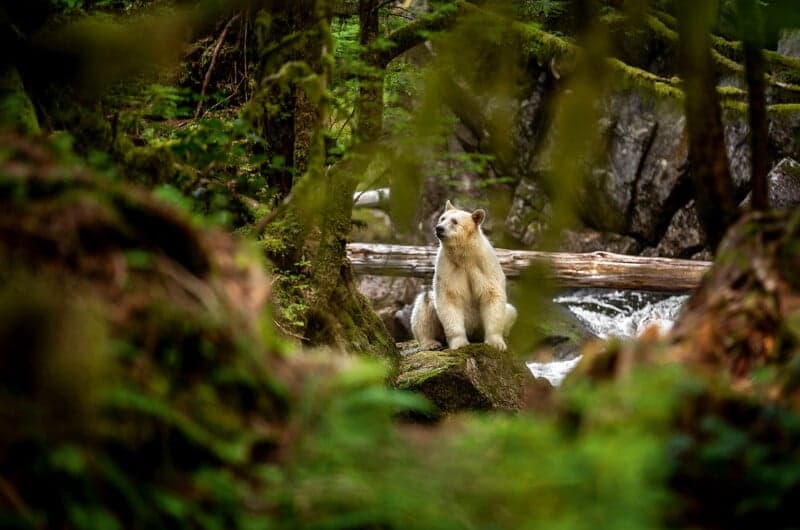
Jack Plant’s spirit bear work is a reminder that the strongest wildlife images are often built over years, not days. It began in 2011, when he saw a National Geographic cover photographed by Paul Nicklen and first encountered the Great Bear Rainforest and the white-furred Kermode bear that would shape his own project. That image did not just inspire admiration; it gave him a subject worth returning to again and again.
Plant’s long-running body of work, *Spirit of the Great Bear*, is bigger than a bear portrait. It folds the spirit bear, the rainforest itself, and the communities that know the region best into one immersive project. For photographers, that is the key lesson: a serious wildlife project gets stronger when it becomes about place, ecology, and relationships, not just a single frame.
Why the Great Bear Rainforest carries so much weight
The setting matters as much as the subject. The Province of British Columbia describes the Great Bear Rainforest as the largest intact temperate coastal rainforest in the world, and says it contains about 25% of the world’s remaining temperate coastal old-growth rainforest. National Geographic has described it as stretching more than 250 miles along the British Columbia coast, which gives you a sense of the scale Plant was working in.
That scale is part of the challenge and part of the reward. The forest is not a tidy wildlife park with predictable sightings. It is a sprawling network of fjords, inlets, and hidden ecosystems where patience matters more than luck, and where one good encounter can follow many empty days. The region’s conservation story also runs deep: planning began in 1996, interim land-use orders arrived in 2009, the Great Bear Rainforest (Forest Management) Act was assented to on May 19, 2016, and a new land use order followed in 2023.
The species is rare, but not mythical
The Kermode bear is often called the spirit bear, but biologically it is not an albino animal. British Columbia government research describes it as a white phase of the black bear, Ursus americanus, and notes that the white phase appears at varying frequencies of up to 10% in parts of the North Coast and Mid-Coast Forest Districts. A scientific panel report adds an important detail: some black-phase bears carry one copy of the Kermode gene, which helps keep the white-phase trait in the population.
That genetics explains why the bear can still appear, even if it remains uncommon. Plant says only about 100 spirit bears are thought to remain, and his own estimate may be even lower. In photography terms, that rarity changes everything: every sighting becomes a high-stakes field decision, and every frame carries conservation meaning beyond aesthetics.
How to work a project that demands patience
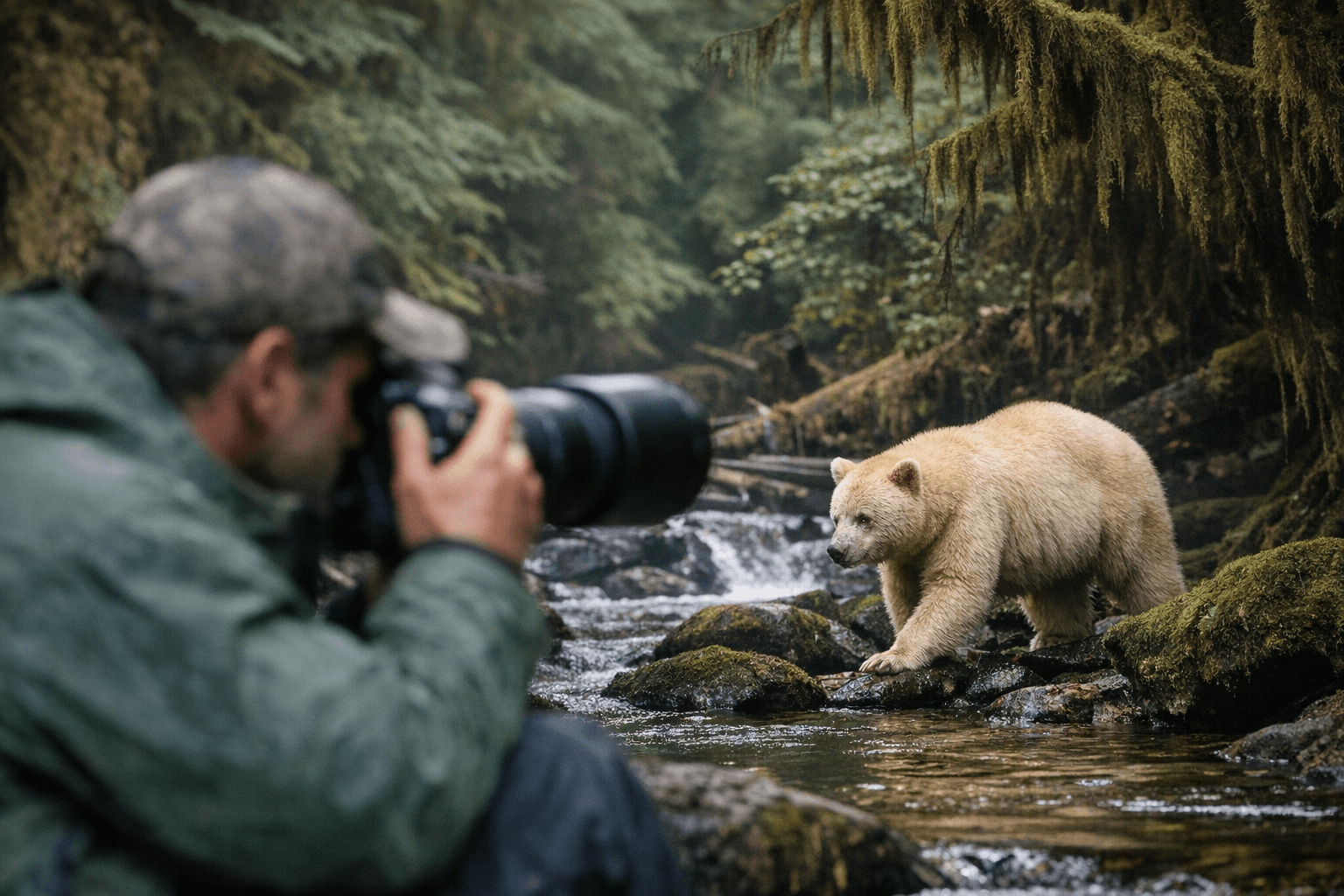
Plant’s process is a useful model for anyone planning a serious wildlife story. He did not build this project around a quick trip or a single lucky encounter. He built it around repeated returns, time in the field, and the acceptance that many days would produce nothing more than experience, trail knowledge, and a better understanding of where not to be.
What stands out most is how little of the work is about the shutter and how much is about preparation. The Great Bear Rainforest is huge, and Plant notes that many spirit-bear photos online are actually of a few well-known animals that appear in familiar locations. Finding new bears means knowing the land well enough to move beyond the obvious places, then staying disciplined when the odds are low.
- Commit to a subject that can hold your interest over years, not one season.
- Learn the terrain well enough to understand where wildlife movement is likely, not just where it is convenient.
- Accept that unproductive days are part of the edit, not a sign the project failed.
- Build for a body of work, so one image supports a larger story about habitat, behavior, and conservation.
A project like this rewards a long-game approach:
Why the human side of the story matters
Plant’s work became more than a wildlife chase because he worked with local knowledge holders and was adopted by Hereditary Chief Charlie Mason of the Kitasoo/Xai’xais First Nation in Klemtu. That relationship changed how he approached the land, the animals, and his own behavior in the field. The result was not just a different access strategy; it was a different ethic.
That matters in a place where cultural and ecological stewardship are intertwined. National Geographic has described the white bears as sacred to First Nations people, and British Columbia’s 2023 land use order said the goal was to improve protection of First Nation forest and cultural values while advancing the long-term protection of aquatic ecosystems, biodiversity, wildlife, and social and economic benefits. For photographers, that is a clear reminder that the best wildlife work in these regions depends on respect, not extraction.
What the 2023 stewardship context adds to the story
The Great Bear Rainforest is not frozen in time. In 2023, British Columbia said Coastal First Nations, the Nanwakolas Council, and the Ministry of Forests were working together to expand stewardship measures for habitat important to grizzly bears, Kermode bears, and black bears. That sits on top of the 2016 Act and the earlier land-use framework built through government-to-government negotiations.
For image-makers, this wider policy context matters because it shapes where wildlife can survive and where stories like Plant’s can continue. A photograph of a spirit bear is compelling on its own, but it becomes stronger when you understand the governance, stewardship, and Indigenous leadership that help make the subject possible. The image is the final result; the real story is the system behind it.
The deeper takeaway for wildlife photographers
Plant’s project shows why meaningful wildlife photography rarely comes from a single trip or a single target species. It comes from choosing a subject with depth, staying with it long enough to understand its behavior, and learning the human history wrapped around the animal’s habitat. In the Great Bear Rainforest, that means seeing the spirit bear not as an isolated trophy subject, but as part of one of the world’s most important temperate coastal ecosystems.
That is the long-game reality of the work: years of inspiration, research, travel, and patience can come together in one compelling image, but only if the project is built on trust, restraint, and a real commitment to the place itself.
This article was produced by Prism’s automated news system from verified source data, official records, and press releases, then run through automated quality and moderation checks before publishing. The system is built and supervised by the people who set the standards it runs under. Read our full AI policy.
Did this article answer your question?