Fujifilm dominates Japan’s camera rankings as compact models surge
MAP Camera’s May list put four Fujifilm bodies in the top five, with the X100VI still No. 1 as compact, style-led cameras kept pulling serious demand.
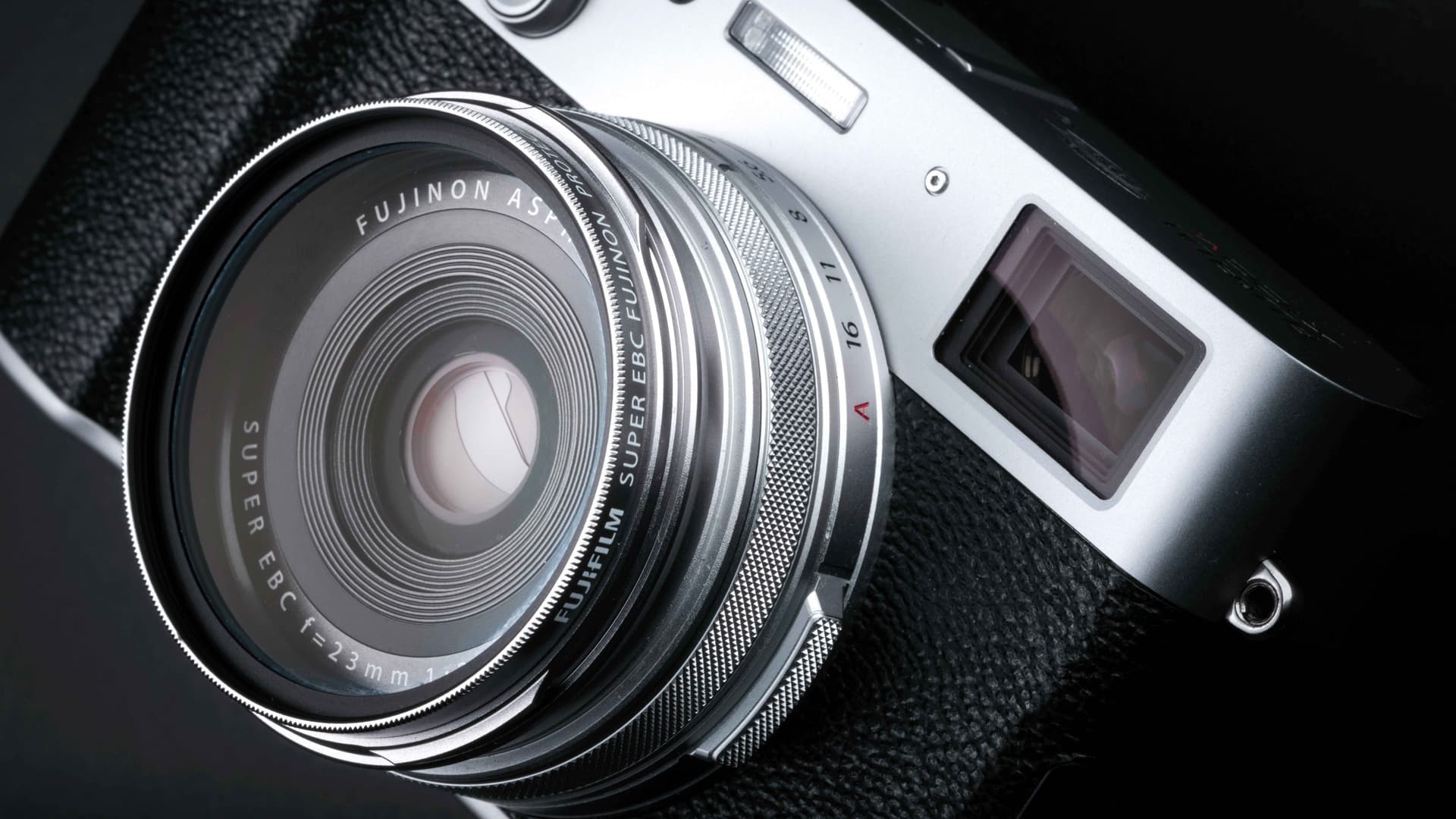
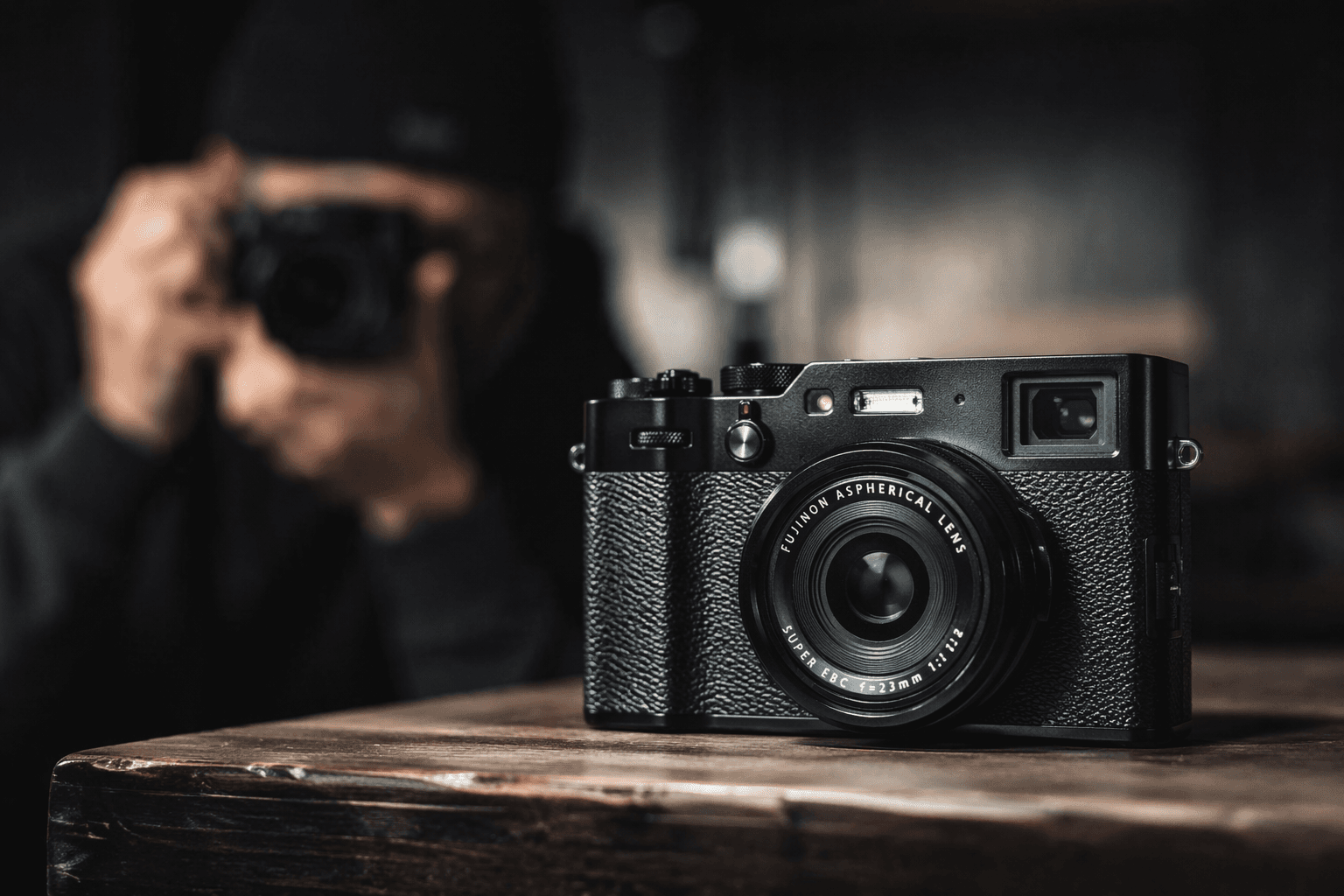
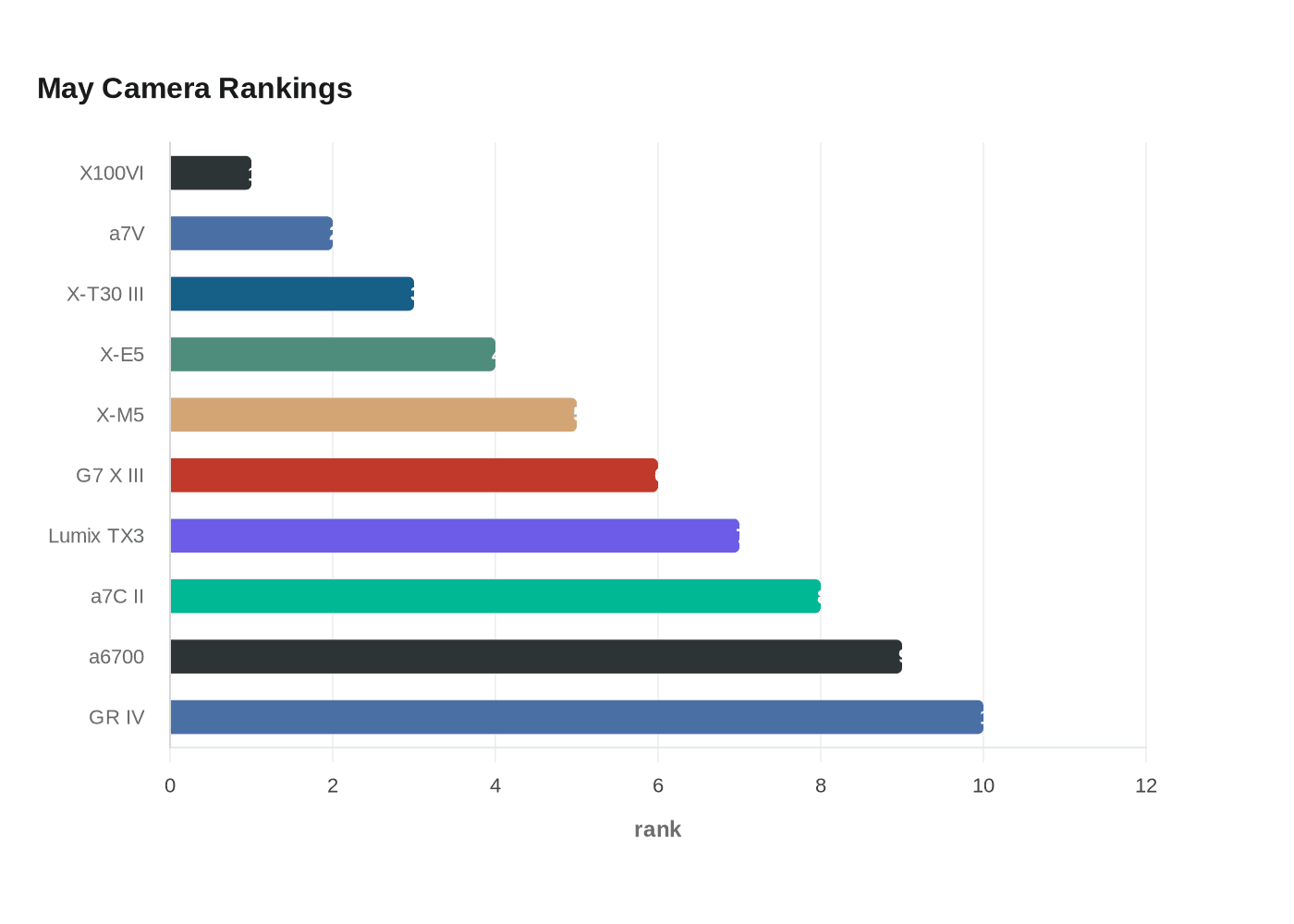
MAP Camera’s May rankings read like a market signal for anyone watching what Japanese buyers actually want. The Fujifilm X100VI held first place, the Sony a7V came in second, and Fujifilm filled the next three spots with the X-T30 III, X-E5, and X-M5. Four of the top five were Fujifilm models, which is a heavy concentration even for a brand that has turned retro design and small bodies into a selling point.
The rest of the top 10 reinforced the same pattern. Canon’s PowerShot G7 X III landed in sixth, Panasonic’s Lumix TX3 was seventh, Sony’s a7C II and a6700 followed in eighth and ninth, and Ricoh’s GR IV rounded out the list at 10th. That mix matters because it shows shoppers are not only chasing big full-frame bodies. They are spending on compact, pocketable cameras with a clear identity, whether that means the fixed-lens X100VI, the street-ready GR IV, or Fujifilm’s smaller interchangeable-lens bodies.
For buyers trying to time a purchase, the rankings pointed in a straightforward direction: compact camera fever was still alive in Japan, and the demand sat squarely on models that are easy to carry and easy to justify. The Sony a7V’s second-place finish also showed there was still healthy appetite for newer full-frame mirrorless, but the broader list suggested that portability and style were driving a lot of the money. In a market like Japan, where retail sell-through often foreshadows wider demand, that kind of spread usually means the popular cameras stay popular for a while.
Fujifilm’s grip on the list was not happening in a vacuum. The company said on May 12 that its fiscal year ended March 31, 2026 with consolidated revenue of ¥3,356.969 billion and operating income of ¥350.210 billion. External summaries of those results put imaging segment revenue at ¥627.1 billion, with operating income of ¥160.0 billion, and Fujifilm said its Professional Imaging business benefited from the GFX100RF, X half, X-E5, and X-T30 III.
The X100VI is the clearest case study in why the rankings stayed tilted. Fujifilm officially announced the camera on February 20, 2024, and later said preorder volume ran 3 to 4 times that of previous X100 models. By June 2026, the camera was still out of stock, the X-E5 had recently been in stock, and the black X-M5 had faced shortages. That is the reality behind the May list: when a compact Fujifilm body gets hot, it does not just sell well, it can stay hard to find, and that keeps used prices firm while the trend keeps running.
This article was produced by Prism’s automated news system from verified source data, official records, and press releases, then run through automated quality and moderation checks before publishing. The system is built and supervised by the people who set the standards it runs under. Read our full AI policy.
Did this article answer your question?