Josh S. Rose chases the fleeting moment in dance photography
Josh S. Rose’s best images come from a process, not luck: empathy, exact gear choices, and years of chasing the split second when performance turns electric.
The moment Rose keeps chasing
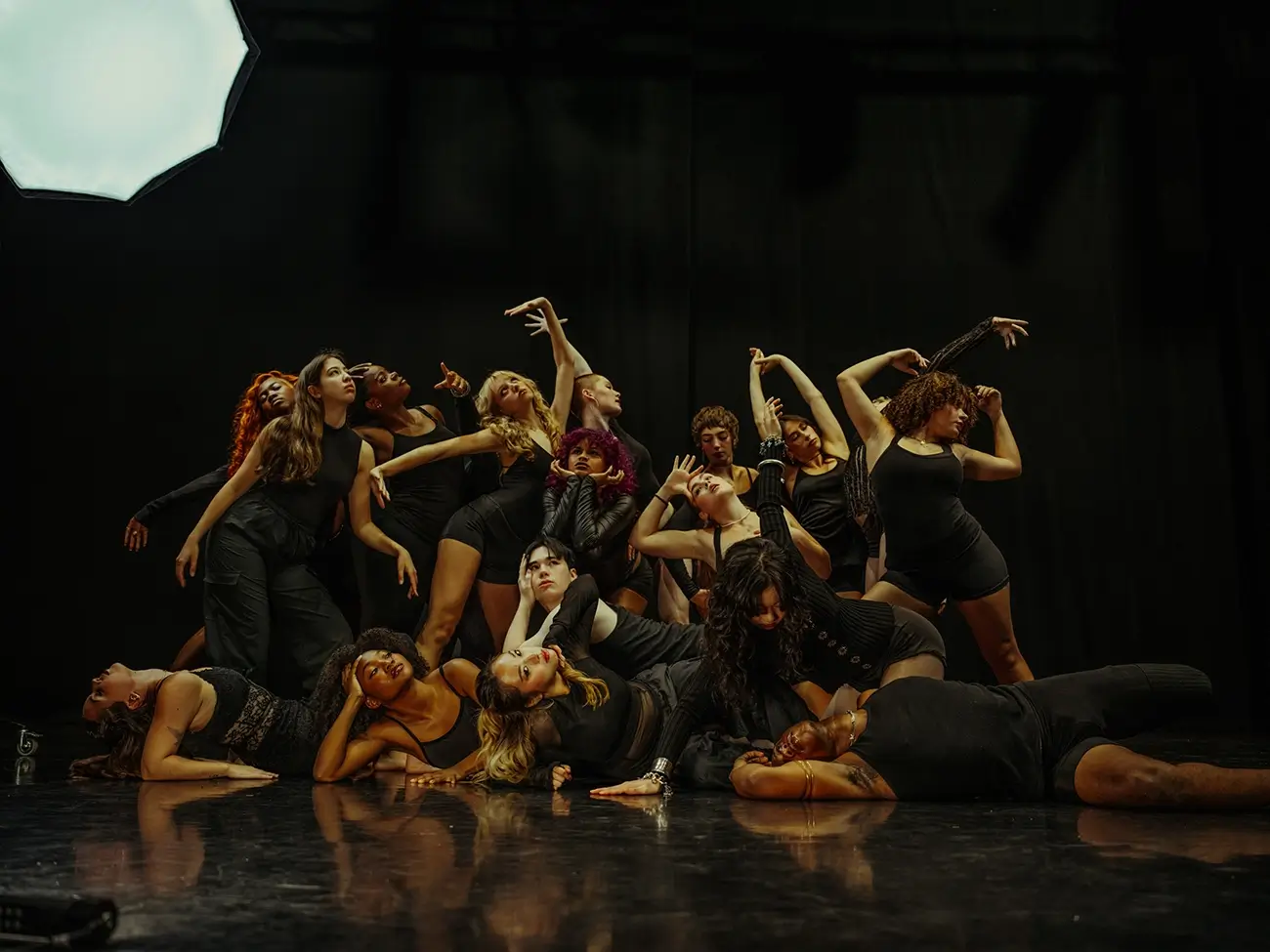
Josh S. Rose built his eye around a rush most photographers know well: the instant a fleeting moment turns into a finished image. As a kid at a racetrack park, he watched film get developed after each race, then felt the charge of seeing winners announced moments after the exposures were processed. That early feedback loop still runs through his dance photography, where the goal is not just to freeze movement but to catch the emotional snap inside it.
Rose calls his approach “technical romanticism,” and that phrase fits because his work depends on equal parts feeling and control. He is not chasing a single perfect frame so much as a repeatable way of staying ready when the action peaks and disappears.
Build taste that lasts longer than gear cycles
Rose is a multidisciplinary artist working across film, photography, installation, writing, and drawing, and his practice bridges visual and performing arts. His work moves through movement, emotion, and image, which helps explain why his photography feels like part of a larger artistic vocabulary rather than a standalone assignment stream. Recognition has followed that range, with his work surfacing in award shows, film festivals, and major publications.
That breadth shows up in the projects attached to his name. He created a 140-foot mural called “NYC Tableau” for Lincoln Center in New York City, and his recent work list includes Soft Life, Prayers, Row Your Boat, Shells, Festival in Motion, Death Wish, Inside Baseball, and America at Work. He is not building a career around a single subject or a single medium; he keeps widening the frame, which is one reason the work still feels alive.
Let emotion lead, then move fast
Rose has said the first photograph he ever fell in love with was Carl Mydans’ Fog Coming In, Swansea, Wales, made in 1955. That matters because it points to a taste for atmosphere and emotional pull, not just technical neatness. He has also described empathy as part of his methodology, and he treats making a picture as a quick exchange between feeling something and making technical adjustments.
That rhythm is the practical lesson. If the emotional hit stays in your head but never reaches the camera, the image dies before it starts. Rose’s method is about collapsing the gap between instinct and execution so the reaction becomes the frame, not just the inspiration.
Choose gear by the job, not by loyalty
Rose’s bag changes with the assignment, and that flexibility is a big part of why his work can move between art, environment, and performance without feeling compromised. For artistic and environmental work, he centers on a Hasselblad X2D with 25mm, 38mm, and 90mm f/2.5 lenses. That setup suits a slower, more deliberate way of seeing, where composition and tonal nuance matter as much as timing.
Performance work pushes him in the other direction. He switches to a Nikon Z9 with 14-24mm, 24-70mm, and 70-200mm zooms, where speed and framing range are the priority. A Nikon Zf stays in the bag as an everyday and backup camera, while vintage lenses like Leica Summicron and Super-Elmar glass, a Helios, and a Nikkor 43-86mm pre-AI zoom add character when the image wants a different texture. The point is not collecting toys. It is matching the tool to the visual language.
Trust is part of the lighting plan
Dance photography is never just about being in the right place. It depends on relationships, and Rose’s work leans hard on trust built over time. Many assignments come through longtime collaborators or recommendations, which makes sense in a field where choreography, lighting, and blocking can shift constantly from one production to the next.
Lenio Kaklea’s The Birds is a strong example. The piece came to the United States for the first time and was performed at Geffen Contemporary at MOCA in Los Angeles, and Rose was recommended for the job by choreographer and artist Dimitri Chamblas. That kind of referral does more than open a door. It puts the photographer close enough to anticipate movement instead of simply chasing it.
Build a process you can repeat 100 times a year
Rose reportedly shoots 100 to 200 times a year, which means discipline is not optional. He rotates camera bags depending on the assignment, uses filters and ear protection to stay focused, and tailors his kit to the physical realities of each shoot. That is the unglamorous side of longevity, and it is probably the most useful part of his practice for anyone trying to stay motivated over the long haul.
What keeps the work sharp is not constant reinvention. It is a repeatable system that preserves energy for the instant that matters. Rose keeps returning to performance, to motion, to the charged moment when a body hits its mark and the camera has to answer immediately.
That racetrack memory still explains the whole arc. Rose began by watching film come back to life after each race, and he has spent the decades since building a practice around that same electric pause between action and revelation, still chasing the fleeting moment before it disappears.
This article was produced by Prism’s automated news system from verified source data, official records, and press releases, then run through automated quality and moderation checks before publishing. The system is built and supervised by the people who set the standards it runs under. Read our full AI policy.
Did this article answer your question?