NBA Finals spotlight women rising in elite sports photography
The NBA Finals are showing a real shift: women are not just covering elite sports, they are staffing it, shaping its pipeline, and claiming the most demanding assignments.
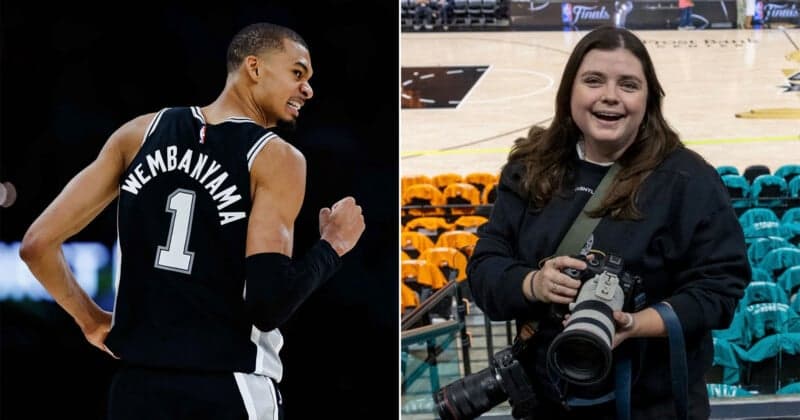
The NBA Finals have become more than a stage for the game. They also show how sports photography is changing, with women like Samantha Owens stepping onto the baseline for the biggest assignment in the sport. That shift is not a novelty. It reflects years of mentoring, staffing decisions, beat work, and access that have built a deeper pipeline into the highest levels of the profession.
The Finals are the clearest test
Samantha Owens, a staff photojournalist for the San Antonio Express-News in San Antonio, Texas, is covering her first NBA Finals. That matters because the Finals are not a prove-it assignment in the abstract, they are a stress test for every part of the job: anticipation, remote shooting, caption speed, and the ability to turn pressure into clean, usable frames.
What makes Owens important is not just that she is there. It is that her presence feels connected to a broader norm shift, where women are increasingly showing up on the sport's biggest sidelines as working pros, not as exceptions. The story is no longer about whether a woman can handle the assignment. It is about how the profession got to the point where more women are being handed those assignments in the first place.
Ohio University has become a visible pipeline
Ohio University’s visual communication program is one of the clearest examples of how that pipeline now works. The school has publicly identified Maddie Meyer as a Getty Images chief photographer and Sarah Stier as another Ohio-trained Getty photographer covering major sports events. That is not a small credential bump. It is a sign that the road from classroom to championship floor now runs through serious beat experience and into the world’s most recognizable photo agencies.
The range of work matters too. Ohio University reporting says Stier and Meyer cover top sports such as the NBA Finals and the U.S. Open, which tells you exactly what kind of photographer the market is rewarding: someone who can move from one marquee event to another without losing accuracy or pace. Getty’s official Paris 2024 gallery also credits Sarah Stier on swimming images, and that lines up with the larger picture of both Stier and Meyer being assigned to aquatics at the 2024 Paris Olympics. In other words, these are not isolated placements. They are sustained, high-pressure assignments across sports and seasons.
That pattern continues with Emilee Chinn. Getty’s editorial materials for Milano Cortina 2026 show the Winter Olympics ran from February 6 to 22, 2026, and Getty editorial galleries, along with university reporting, show Chinn covering the Games in Italy before later working the 2026 NBA playoffs. That kind of mobility is the modern model: a photographer proves they can deliver in one arena, then gets trusted in another.
The names behind the door that opened
If you want to understand why this progress has weight, look at Elsa Garrison. Getty’s portfolio page identifies her as the first woman staff photographer at Getty Images, and a 2026 University of Missouri profile says she has spent nearly 30 years there covering the Olympics, World Series, Super Bowl, NBA Finals, U.S. Open, FIFA World Cup, and NCAA Final Four.
That resume is the opposite of tokenism. It shows endurance, range, and trust at the highest level. It also shows what staffing really means in sports photography: once an outlet like Getty commits to a staff photographer and keeps that person on major events for decades, the work ripples outward into who gets seen, who gets hired, and what young photographers think is possible.
Mary Schroeder’s career puts the historical stakes in even sharper focus. Michigan journalism and sports hall-of-fame sources say she joined the Detroit Free Press in 1979 and began covering Detroit’s pro sports arena in 1983. Those same sources say she was the only female photographer in the country covering sports full time for a major newspaper when she entered that arena. That is the kind of fact that should stop anyone from treating today’s visibility as a sudden trend. The change was built, slowly, through persistence, legal fights over access, and mentorship across generations.
What the current pipeline actually looks like
The most useful thing about this story is that it does not romanticize the path. It shows a profession that is becoming more organized about talent development. The National Press Photographers Association now runs a mentorship program that matches mentees with mentors by geography and interest, including sports photography. That is the kind of structure that helps a student or young freelancer move from hoping to knowing someone to actually getting guided into the right rooms.
For an aspiring sports photographer, the roadmap looks a lot more practical than glamorous:
- Start with a real beat, not random highlight chasing. The photographers named here did not jump straight from class to the Finals. They built work at newspapers, agencies, and major event coverage.
- Treat mentorship as infrastructure. The NPPA program matters because it connects people by geography and specialty, which is exactly how this business still works.
- Learn to handle elite-event workflow. Finals, the U.S. Open, the Olympics, and the World Series all demand fast editing, disciplined captioning, and a clean handoff to editors.
- Build an edit that proves range. The jobs going to Stier, Meyer, Chinn, and Owens are not narrow one-sport gigs. They are assignments that reward flexibility and repeatable quality.
Recognition still matters too. The Pro Football Hall of Fame photo contest is in its 58th annual year, and its structure crowns a Photograph of the Year from category winners. That kind of competition gives strong action and feature work a public proving ground, which is exactly where a lot of emerging sports photographers learn whether their timing, composition, and storytelling can hold up.
The bigger point is simple. The baseline at the NBA Finals looks different now because the profession looks different now. Women are not appearing there as a headline trick. They are there because the pipeline, the staffing, and the mentorship finally support that reality, and the images coming off those sidelines are better for it.
This article was produced by Prism’s automated news system from verified source data, official records, and press releases, then run through automated quality and moderation checks before publishing. The system is built and supervised by the people who set the standards it runs under. Read our full AI policy.
Did this article answer your question?