Ondu unveils handmade lightweight 8x10 field camera for wet plate work
Ondu’s new 8x10 field camera weighs about 3.5 kilograms, and its maker says it is the camera he always wanted for himself.
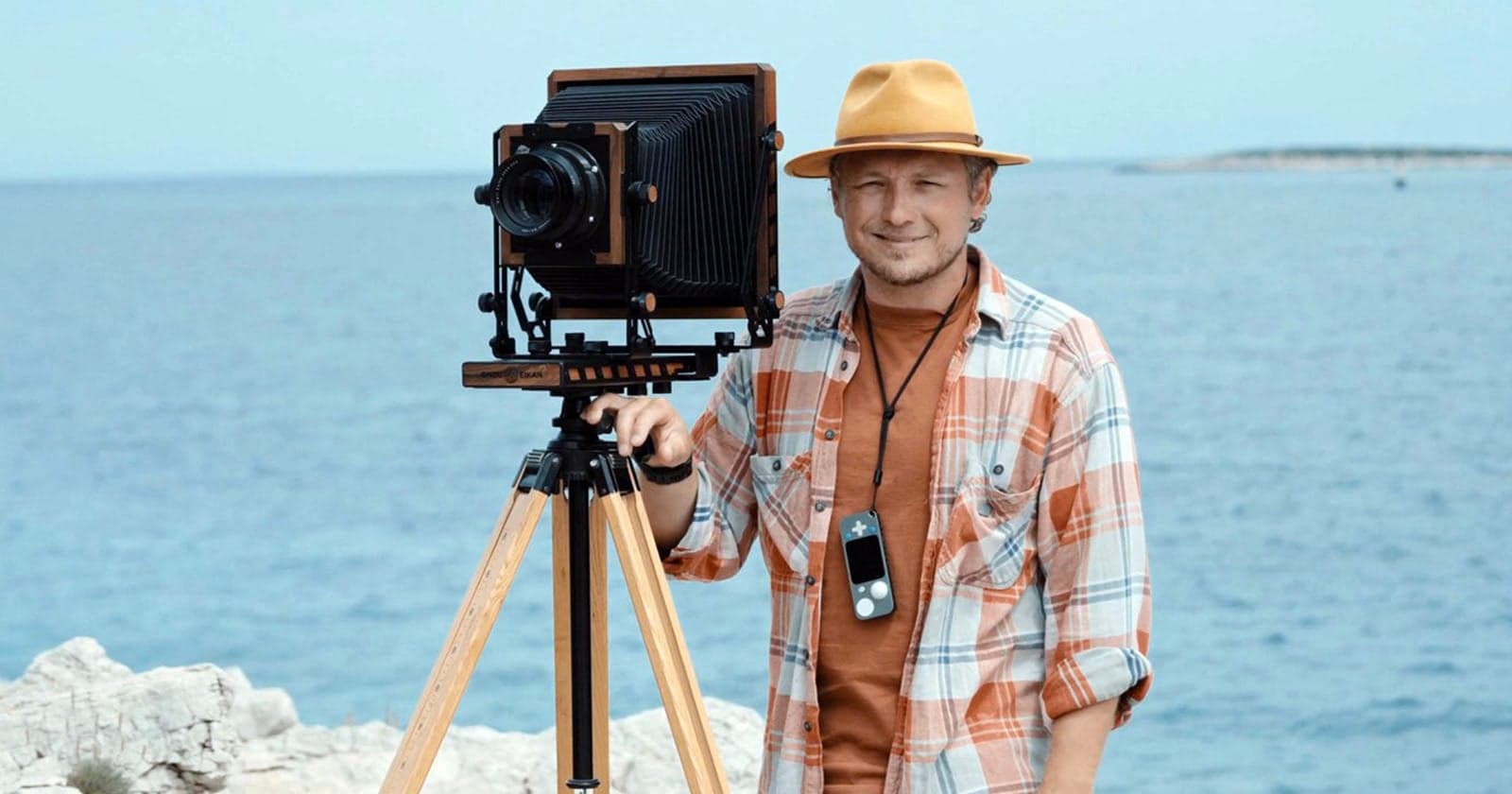
The hardest part of an 8x10 camera is not making it function. It is making it portable enough to carry into the field without sanding away the slow, deliberate feel that makes large format worth the trouble in the first place. Elvis Halilović, the Slovenian photographer, designer and carpenter behind Ondu, has now pushed that idea into a handmade camera built for wet plate work.
Halilović said the Ondu Eikan 8x10 was the camera he had long wanted to own himself. He had already built a prototype in 2018, but he was unhappy with it because it looked too much like the large-format cameras already on the market. The final version came after seven or eight months of focused development, with a sketch that reportedly came to him while hiking. That is a very Ondu origin story: part workshop, part field notebook, part stubborn refusal to settle for a copy.
The result weighs about 3.5 kilograms, light for an 8x10 field camera and heavy enough to remind you that this is still a serious slab of kit. Halilović worked with roughly 15 different parts suppliers to pull it together, using CNC machining, laser cutting, aluminum, wood, metal and a limited number of 3D-printed components. ONDU describes the Eikan 8x10 as a lightweight large-format field camera meant to preserve the “full presence” of 8x10 photography while cutting out unnecessary weight and complexity.
That balance matters because Ondu has always lived in the space between craft object and working tool. The Eikan line already includes 4x5 and 4x10 versions, with ONDU listing the Eikan 4x5 Standard at about 1,500g, the 4x5 Range at about 1,600g and the Panoramikku 4x10 at about 1,970g. The company says the cameras use locally sourced walnut, anodized aluminum and other mixed materials, and its wet plate holders come in 4x5, 5x7, 8x10 and 4x10 formats.

That design arc runs back to Ondu’s start in 2013, when its first Kickstarter campaign brought in more than $100,000 and helped move the company into a dedicated workshop. Before cameras, the brand’s roots were in geodesic domes and sustainable living, which explains why the Eikan feels less like a one-off product drop than the latest step in a maker’s long experiment.
It also lands at the right moment. Wet plate collodion dates to 1851, and large-format and wet-plate photography have drawn renewed interest over the last two decades, even as the market stays tiny. The Eikan 8x10 does not pretend to be mass-market gear. It is a field camera built for photographers who still want the weight, the pace and the presence of the process itself.
This article was produced by Prism’s automated news system from verified source data, official records, and press releases, then run through automated quality and moderation checks before publishing. The system is built and supervised by the people who set the standards it runs under. Read our full AI policy.
Did this article answer your question?