PetaPixel guide shows how to elevate macro photography with focus stacking
Focus stacking is the real macro upgrade here, but the bigger lesson is compositional: control the frame, the background, and the story, not just the magnification.
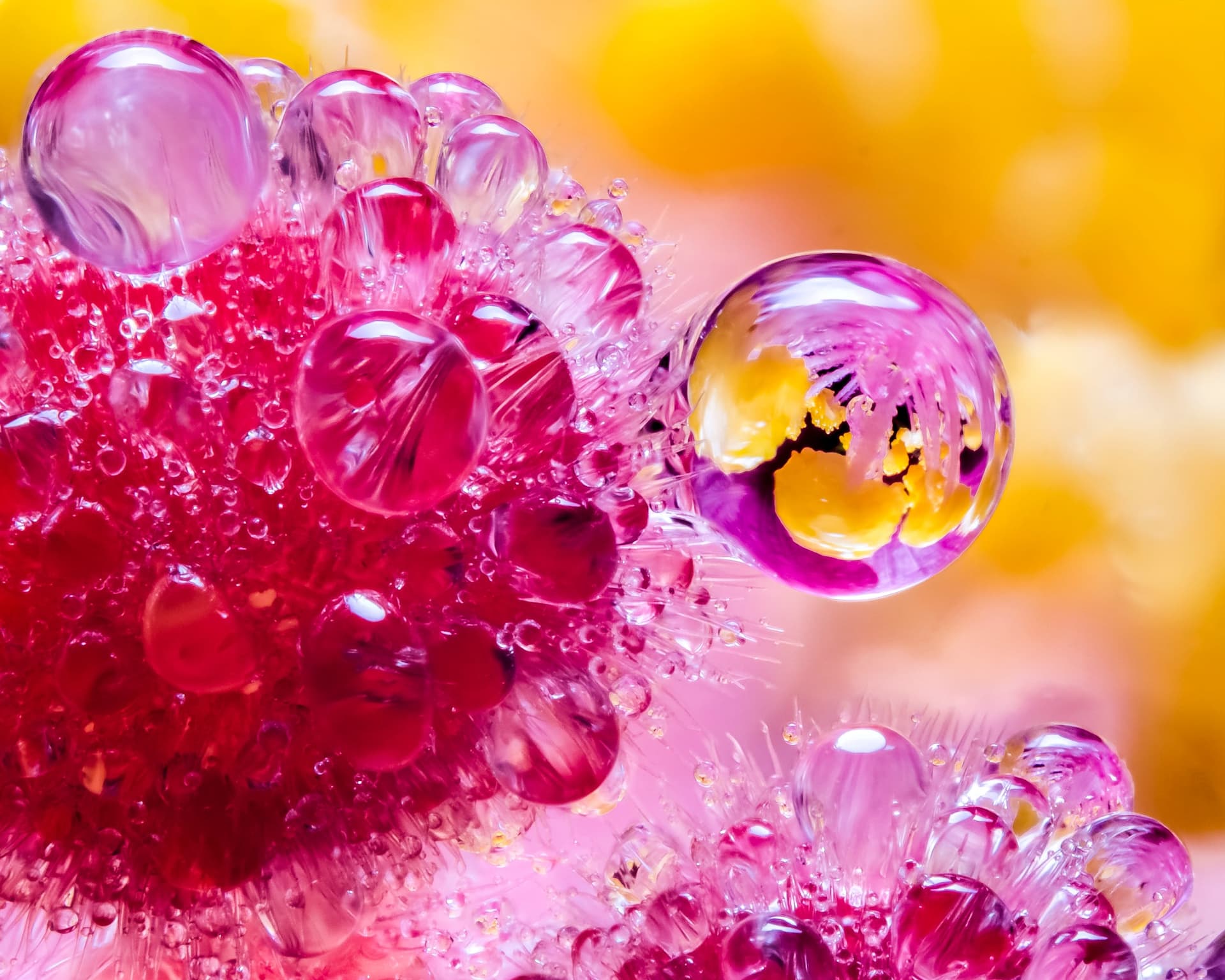
The smartest macro work is not about getting closer, it is about making a tiny frame feel intentional. The guide pushes past the usual obsession with insect hairs and tack-sharp edges, and makes the case that memorable macro images come from composition, depth, and storytelling, not just magnification.
That is the shift that changes everything. Once you start thinking like you are arranging a miniature landscape, a portrait, or a piece of fine art, the subject stops being a specimen and starts becoming a scene.
Focus stacking is the first real tool that opens the door
The technical centerpiece is focus stacking, and it is exactly what macro photographers reach for when a single frame cannot hold enough depth. Nikon describes it as layering separate photographs taken at different focus points into one image with greater depth of field, while Adobe’s Photoshop documentation points to Auto-Blend Layers with the Stack Images blend method for combining shots made at different focus distances.
In practice, the process is straightforward but unforgiving. You build a carefully planned series of exposures, shift the focus ring in small increments through the subject, and capture each slice of detail sharp somewhere in the stack. When the files are aligned and blended, the result can preserve textures and planes of detail that would be impossible to hold in one exposure.
That is why stacking matters so much in macro. A flower petal, an insect eye, or a tabletop arrangement may all look simple from a distance, but at macro scale the depth is often too shallow to render the subject cleanly from front to back without help.
A practical stacking workflow
1. Set the composition first.
Do not start by stacking random frames and hoping the software saves you. Decide where the subject sits in the frame, where the background falls, and which areas need to stay clean so the eye has somewhere to rest.
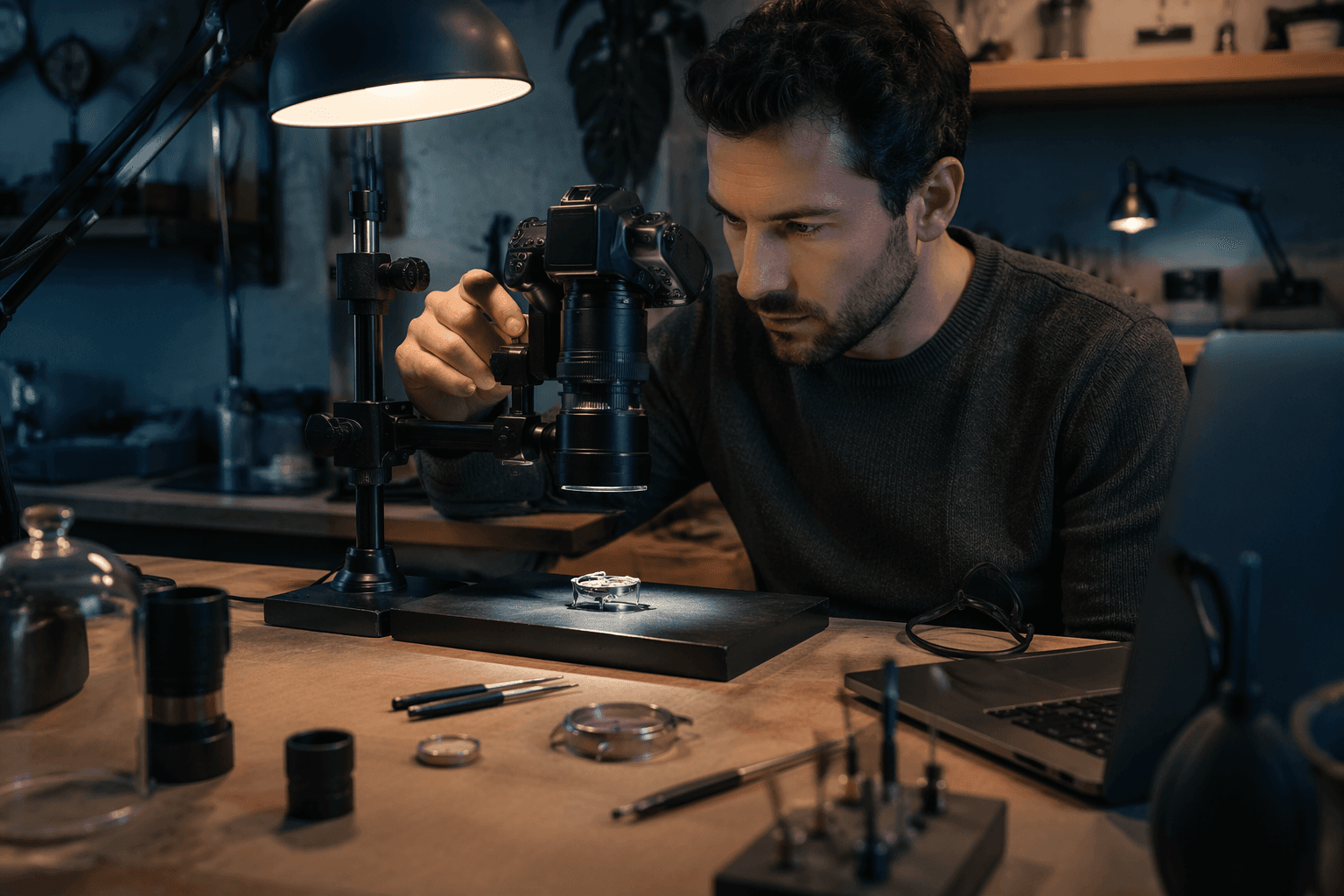
2. Work from the nearest focus point to the farthest.
Canon’s focus-bracketing guidance describes the stack that way, and that sequence is the easiest way to think about it in the field. Start at the closest critical detail, then move through the subject until you reach the far edge of the depth you want.
3. Keep the steps deliberate.
The guide emphasizes a planned series of exposures rather than loose, casual firing. The cleaner the progression through focus, the easier it is to blend later without odd gaps or soft transitions.
4. Blend the stack cleanly in software.
Adobe’s Stack Images method is built for this job, and it is the point where the field work pays off. If the source frames are aligned and the focus progression makes sense, the composite can look far more natural than a single frame with an ultra-thin depth of field.
Modern camera features make the process less painful
Nikon’s focus-shift shooting is worth paying attention to because it removes a lot of the fiddly mechanics that used to make stacking feel like a studio-only trick. Nikon says its D850 and Z-series bodies can automate focus-shift shooting, which cuts down on moving parts and helps avoid parallax compared with older slider-based setups.
That is not just a convenience feature. In macro, where tiny subject movement and tiny camera movement can both ruin a stack, automation buys consistency. It also makes the process more accessible when you are working handheld-adjacent, on a table, or in a cramped setup where a rail is more hassle than help.
Sharpness is only useful if the frame has structure
The guide’s bigger argument is that sharpness by itself does not make an image worth looking at. Strong macro compositions need intentional framing, controlled backgrounds, and a clear structure that leads the viewer through the picture instead of letting the eye bounce around looking for a point of entry.

That is where macro overlaps with other disciplines. Landscape photography teaches you to build layers and depth. Portraiture teaches you where to place attention and how to let negative space breathe. Fine art teaches you that the frame should feel designed, not merely recorded. In macro, all three lessons matter at once.
The floral tabletop example in the guide makes that point well. A scene like that can look crowded and chaotic if you photograph it as a single flat close-up, but when you capture it slice by slice and merge the stack, the final image can feel coherent, dimensional, and deliberate. The subject is still small, but the image now has room for rhythm, separation, and visual pause.
Why this matters beyond one technique
This is the part that turns the guide from a how-to into a useful reset for the genre. Macro photography is often sold as a gear-heavy specialty, but the real upgrade is usually compositional discipline. If the background is messy, if the layers do not make sense, or if there is no place for the eye to rest, no amount of resolution will rescue the image.
That is also why the genre keeps pulling in serious attention outside the usual camera crowd. Close-Up Photographer of the Year calls itself an international prize for close-up, macro, and micro photography, and CUPOTY 8 includes 11 categories, a £2,500 cash award, a £1,350 Macro Kit prize bundle, and a deadline of Sunday, July 12, 2026. Every entrant also gets a free £19.99 ebook, which is a pretty tangible reminder that macro now has a real ecosystem around it, not just a niche following.
The cultural side matters too. Levon Biss has shown how far the genre can reach when it is treated as both art and evidence. His Microsculpture exhibition has traveled to over thirty countries, and his Extinct & Endangered: Insects in peril project photographed 40 insect specimens from the American Museum of Natural History over three years. That project was later viewed by over 12 million visitors in New York over more than two years, which is the kind of number that tells you macro can hit well beyond photography circles when the work is strong enough.
That is the real takeaway from this guide: macro becomes shareable when it stops being a record of tiny things and starts feeling like a complete visual world. Focus stacking gives you the depth, but composition decides whether anyone remembers the image after the first glance.
This article was produced by Prism’s automated news system from verified source data, official records, and press releases, then run through automated quality and moderation checks before publishing. The system is built and supervised by the people who set the standards it runs under. Read our full AI policy.
Did this article answer your question?