Photographers question VSCO terms over AI and broad content rights
Photographers flinched at VSCO’s AI language, but the real issue is the broad license: creator promotion, sharing, and machine-learning use before June 22.
The wording that set off alarms in VSCO’s terms was not just about AI. It was the part that seemed to hand the company broad rights over a creator’s name, image, voice, likeness, and content, which is exactly the kind of language photographers read twice when a platform starts talking about machine-learning models.
That reaction came after photographer Simon Migaj spotted the language in VSCO’s updated Terms of Use, which are set to take effect on June 22, 2026. The license section says VSCO can use certain content for Creator Promotion and to develop, train and improve AI or machine-learning models. Read cold, that sounds expansive. In practice, it is the sort of license a hosted service needs to display uploads, generate thumbnails, sync content across devices, and keep the app working at all.
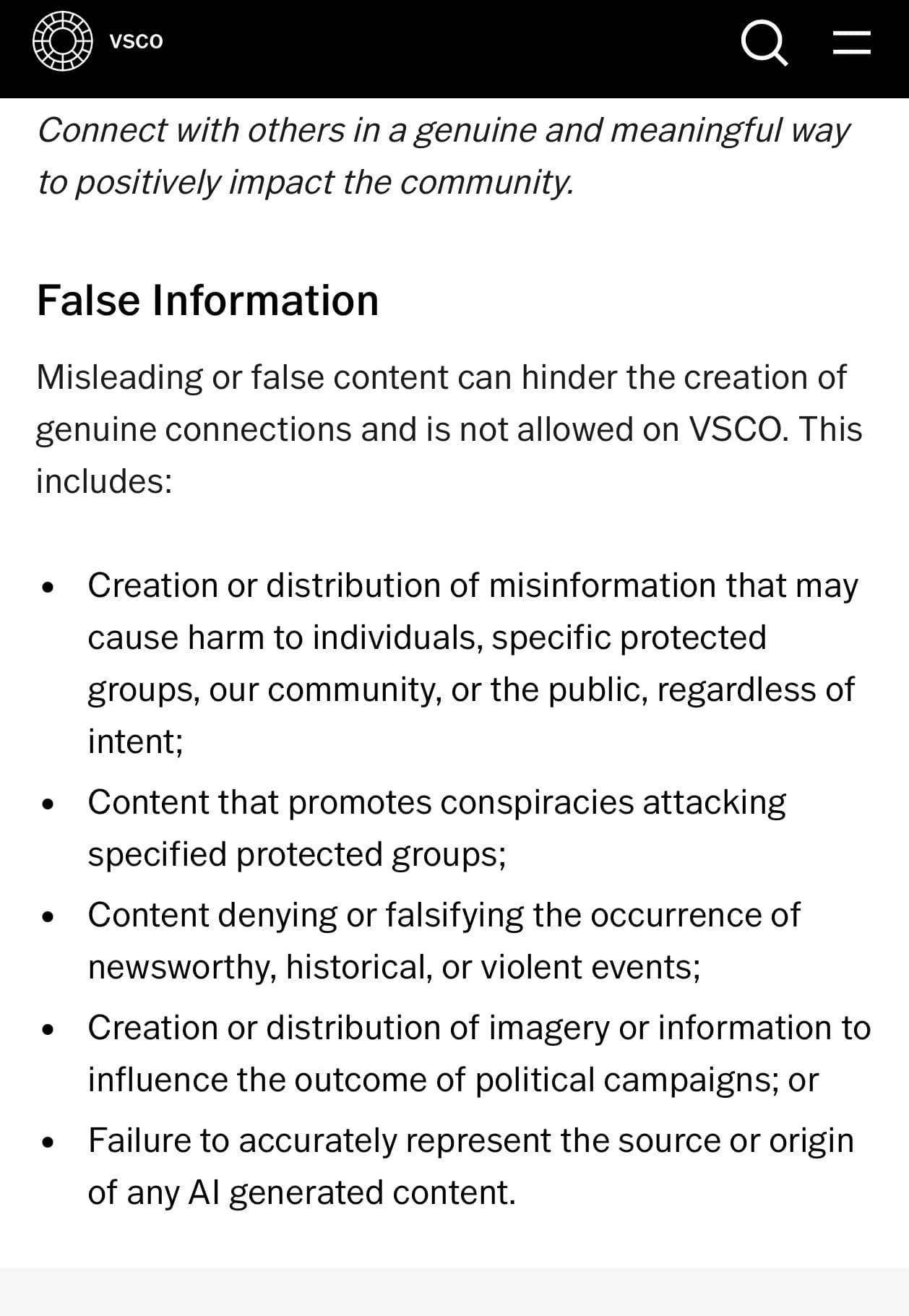
The company has also made the AI direction harder to miss. VSCO’s Community Guidelines now serve as the usage policy for any VSCO products or services that incorporate generative AI, and its support materials say creator content can be shared both in-app and off-platform for SEO optimization and creator-driven sharing. VSCO also says it requires partners to agree not to use creator content edited or shared on VSCO to train partner AI models. That does not erase the anxiety, but it does narrow one of the biggest fears photographers have about their work being recycled into someone else’s model.
The gray area is not whether VSCO can host a photo. It is how broad the license reads when it is packed with terms like perpetual, irrevocable and sublicensable. That is where creators get uneasy, because the legal language can look wider than the everyday use case. VSCO’s own 2025 transparency report said its policy updates were meant to reflect the evolving needs of creators, including AI products and services, clearer terms around AI features and related use of content, and Creator Content Standards. The company has also pushed AI Lab, a high-fidelity AI photo editor for photographers, with tools such as remove, upscale, simplify, prompt, restore, denoise, dehaze, hairstyle and isolate.
The best comparison is Adobe’s terms backlash in June 2024, when creators bristled at broad language before Adobe clarified that it does not train generative AI on customer content and that Firefly is trained on licensed content such as Adobe Stock and public-domain material. VSCO is not being accused of stealing photos so much as asking photographers to trust a platform whose legal terms, editing tools, community features and AI plans now sit under one roof. That is the real workflow issue: if you upload work, the license is the part that decides how far the platform can reach.
This article was produced by Prism’s automated news system from verified source data, official records, and press releases, then run through automated quality and moderation checks before publishing. The system is built and supervised by the people who set the standards it runs under. Read our full AI policy.
Did this article answer your question?