Photographers Spend Two Months in Kenya Hide, Capturing Wildlife Close-Up
Two months in a Kenya hide turned wildlife photography into a lesson in patience, timing, and reading animal behavior at eye level.
The real advantage of the hide
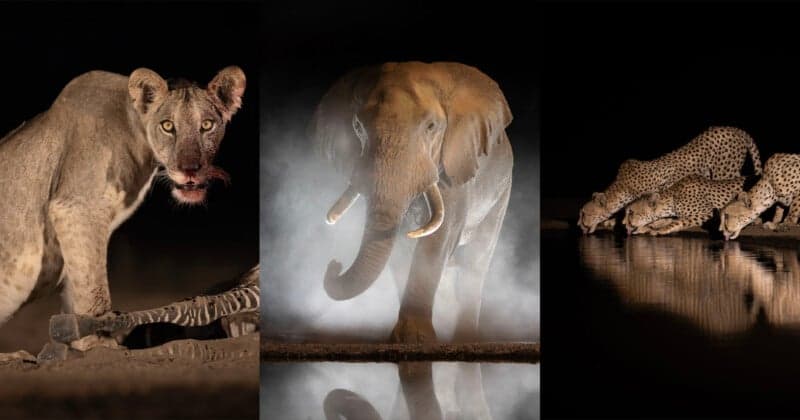
Mark and Jaren Fernley spent two months at Shompole Conservancy in Kenya, and that long stay is the key to understanding what made the project work. They were not chasing one dramatic moment and packing up. They were building a method around a place, using hides through Untamed Photo Safaris to photograph wildlife at extremely close range without disturbing it.
That difference matters. A few nights in a hide can deliver a handful of good sightings, but two months gave the Fernleys time to notice patterns that a short visit would never expose. They learned how animals moved through the area, when they came to the waterhole, and how different individuals reacted to moonlight, dust, and the water itself.
How the two hides shaped the images
The setup at Shompole Conservancy was not one-size-fits-all. The Fernleys worked from two different hides, each built for a different kind of behavior. One sat low to the ground beside an open waterhole, putting the camera right at the level where wildlife naturally enters the frame. The other was more enclosed, designed to entice shyer species that might not approach an exposed position as readily.
That distinction is useful for any wildlife shooter trying to think beyond gear specs. A hide is not just a place to sit. It is a fieldcraft decision. The low hide rewards bold, predictable movement at the water’s edge, while the enclosed hide gives you a better chance with animals that need more cover and less visual pressure before they commit.
Low hide at the waterhole
The low hide beside the open waterhole is where proximity becomes the story. Lions, leopards, and other animals can pass just a few feet away, close enough to create a perspective that feels intimate instead of observational. Because the photographer is hidden and sitting at eye level, the image is shaped by the animal’s natural approach rather than by a vehicle window or a long lens from a distance.
That setup also changes how you think about framing. Instead of trying to compress a scene from afar, you start watching how animals enter the light, how their bodies align with the shoreline, and how the waterhole becomes part of the composition. The result is often more immersive than a telephoto frame because the environment and the subject share the same breathing room.
Enclosed hide for shyer species
The more enclosed hide serves a different purpose: it lowers the pressure on animals that might hesitate at a wide-open setup. That matters because wildlife photography is often less about forcing a subject to appear and more about creating conditions where the subject feels safe enough to behave naturally.
In practical terms, this kind of hide teaches restraint. You are not trying to rush the encounter or chase a cleaner angle from outside. You are waiting inside a controlled field setup until the wildlife decides to use the space on its own terms, and that patience is exactly what makes the images feel authentic.
What two months teaches that a few nights cannot
The biggest lesson from the Fernleys’ stay is not simply that they got close. It is that duration changed what they could see. Over two months, the hide stopped being a viewing blind and became a research post of sorts, a place where repeated observation turned into understanding. They could compare one night to the next, notice when dust changed the way light behaved, and see how moonlight altered the mood of the waterhole.
That kind of immersion is a skill many photographers underestimate. Short trips often produce images. Longer stays produce context. Once you know the rhythms of a location, you can anticipate behavior rather than react to it, and anticipation is usually what separates a lucky frame from a thoughtful one.
The sensory side of the work matters too. In a functioning hide, the photographer is not just seeing wildlife. They are hearing footsteps, drinking, breathing, and the layered sounds of the night around them. That full-body awareness sharpens timing because it gives you cues before the subject is fully in frame.
Why the close perspective changes the photograph
Hides are powerful because they erase the usual distance between photographer and subject without crossing the line into disturbance. When a lion walks into the pool of light only a couple of meters away, as Jaren Fernley experienced, the camera is no longer recording a remote animal. It is documenting a moment of shared space, with the photographer hidden enough to avoid changing the animal’s behavior.
That is why a hide can outproduce a long lens from a vehicle in the right situation. The lens may be long, but it still announces your presence through movement, silhouette, and positioning. In a hide, the animal often ignores the observer entirely and behaves as it would on its own, which is exactly what gives the frame its force.
Practical lessons you can carry into your own wildlife work
- Stay longer than feels necessary. The first few sightings tell you what is there, but repeated nights reveal how the place actually works.
- Study the light, not just the subject. Moonlight, dust, and the angle of the waterhole all change how animals appear and how they behave.
- Match the hide to the species. An open, low setup favors confident visitors, while a more enclosed blind can help with shyer animals.
- Wait for natural behavior. The best frame often comes when the animal is no longer reacting to your presence at all.
- Treat the hide as a listening post. Footsteps, drinking, and breathing are not background noise. They are timing cues.
Ethics sit at the center of the method
The most valuable part of this approach is that the camera becomes a witness rather than an intruder. The animals are not being pushed, baited into stress, or forced to accept a photographer’s demands. They are coming to a familiar place, the waterhole, and interacting with it on their own terms while the photographer stays hidden and still.
That ethical baseline is what makes the close-up images possible in the first place. The more the animals trust the scene, the more natural the behavior becomes, and the stronger the photographs feel. In that sense, the Fernleys’ two-month stay is less a story about endurance than a blueprint for disciplined wildlife work: build trust with the location, respect the animals’ rhythms, and let the scene unfold without forcing it.
The lesson from Shompole Conservancy is simple but hard to practice. Close wildlife photography is not just a matter of reaching farther with glass. Sometimes it is a matter of sitting lower, waiting longer, and learning so well that the animals stop noticing you at all.
This article was produced by Prism’s automated news system from verified source data, official records, and press releases, then run through automated quality and moderation checks before publishing. The system is built and supervised by the people who set the standards it runs under. Read our full AI policy.
Did this article answer your question?