Photography Show Tips, How to Make Trade Shows Worth the Trip
The biggest wins at a packed photo expo come from planning, not wandering: target the right booths, test gear fast, and skip the time sinks.
Make the trip count before you leave home
A photo show like The Photography & Video Show is not the kind of place you want to “just see what’s there.” With 250+ brands on the floor and 350+ talks and demos spread across four days, the NEC in Birmingham can swallow a day before you have even found the booths that matter to you. Ivor Rackham’s main point is simple: if you treat the show like a casual stroll, you will leave tired, overloaded, and probably none the wiser about what to buy.
The best first move is logistics. The NEC sits next to Birmingham International railway station and Birmingham Airport, which makes train and flight travel far easier than trying to drive in, circle the site, and then power through a full day on your feet. If you do drive, an overnight stay changes everything. The venue is marketed as the UK’s largest exhibition centre, with around 440 acres of space, and that scale is exactly why a same-day round trip can burn your energy before you have tested a single lens.
Accommodation matters more than people admit. There are 2,000 hotel rooms immediately outside the campus and another 6,500 in Birmingham city centre, just 10 minutes away on the train, so you do not need to gamble on a punishing schedule. If you want to leave with useful notes, not just a bag of flyers, arrive rested enough to think clearly.
Do your research before you hit the hall
The smartest visitors already know what they are looking for before they reach the show floor. Read the exhibitor list, identify the brands or accessories that could actually solve a problem for you, and contact companies in advance if you can. Getting a named person to speak with can turn a rushed booth chat into real advice, especially when you want a straight answer on compatibility, handling, or pricing.
That matters because this is not a tiny local fair. The Photography & Video Show calls itself the UK’s biggest collection of photography and video brands in one place, and the 2024 Birmingham run drew 250+ global brands. With that much choice, walking in blind is the fastest way to waste time. A rough list of priorities beats a bag full of brochures every time.
If you need to compare a specific body, lens, tripod head, bag, or lighting setup, write down your questions in advance. Ask about the exact use case you care about, whether that is travel, wildlife, portrait work, video hybrid shooting, or a studio upgrade. The goal is not to collect opinions from everyone on the stand. It is to get enough clarity to know whether a piece of gear belongs on your shortlist.
Go straight to the booths that can change your shortlist
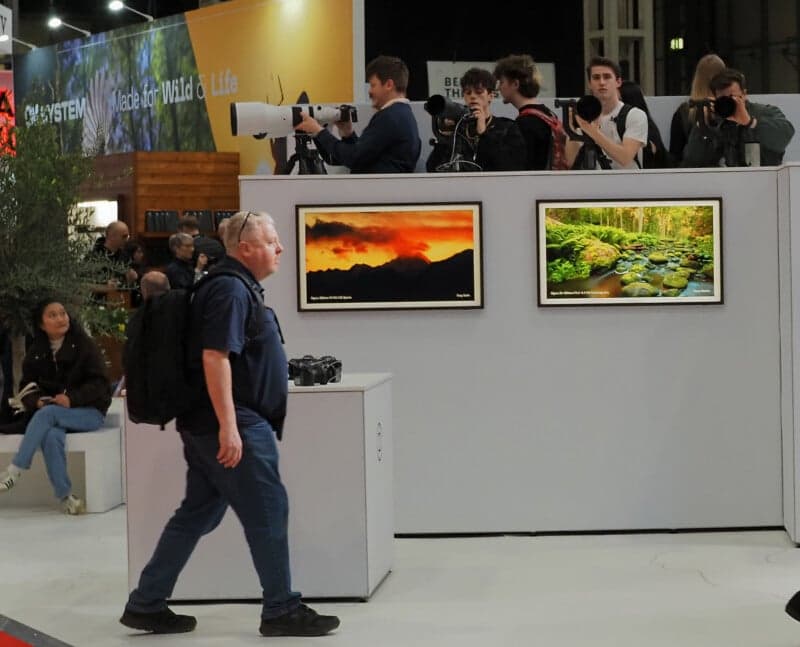
Big names will pull you in first, and for good reason. Canon, Nikon, Fujifilm, Sony, OM System, Lumix, Sigma, and Adobe are the obvious magnets at a show like this, and they usually have the crowd, the talking points, and the newest products that many visitors came to see. But the show floor reward is often not in the loudest booth. It is in the stand you almost skipped.
Rackham’s experience was that the most interesting stalls were often the smaller businesses, not the familiar blockbuster displays. That is where you are more likely to find innovative products, niche accessories, and solutions that do one job especially well. In a crowded market, the small stand that solves a problem in a clever way can be more useful than the headline launch everyone is queuing to photograph.
That is why you should prioritize in layers. Start with the brands that might genuinely change your purchase decision, then build in time for smaller makers you would never find by scrolling online. The best shows are the ones where you leave with one unexpected discovery that ends up saving you money, space, or frustration for months.
Test cameras and lenses like you are already using them
A trade show is not the place to admire a camera behind glass. It is the place to make it prove itself. Pick up the body, mount the lens, check the grip, work the menus, and see whether the controls make sense without studying the cheat sheet. If you are weighing two systems, do not rely on spec sheets alone. You need the feel of the body, the placement of the dials, the speed of the menu navigation, and the way the lens balances in your hand.
Use your own checklist and move fast. Look at autofocus behavior, image stabilization claims, button layout, viewfinder comfort, and whether the lens feels workable for a full day of shooting. If a booth is busy, you can still get value in a short time by asking the right question first: does this system fit the kind of photography you actually do?
A packed show floor can tempt you into marathon demos, but that is usually where time disappears. Short, purposeful tests are better than long, vague conversations. If a product still feels right after a quick real-world check, you have learned something. If it feels awkward in the first 90 seconds, that is useful too.
Skip the show-floor traps that drain the day
The hardest part of a photo expo is not finding things to see. It is avoiding the parts that look productive but rarely move your buying decisions forward. Endless swag, long queues for low-value demos, and wandering from booth to booth without a plan can eat up hours at The Photography & Video Show, especially when there are 350+ talks and demos competing for your attention.
Not every talk needs your time. Choose sessions that answer a real problem, introduce a tool you may buy, or cover a workflow you already use. If a demo is generic, crowded, or too broad to help you decide anything, keep moving. The point of attending is to leave with stronger judgment, not a stack of free stickers and a sore back.
That is also why pacing matters. The show is busy, noisy, and draining, especially if you usually work in quieter spaces. Build in breaks, sit down when you can, and treat the day like a working shoot rather than a shopping trip. The people who get the most out of the NEC are usually the ones who conserve enough attention to make one last smart decision at the end of the day.
Know when the trip is worth repeating
One of Rackham’s sharpest observations was the strong sense of déjà vu compared with the 2021 visit, with much of the layout unchanged. That does not mean the show lacked value, but it does mean you should not assume every annual expo deserves the same commitment. If the lineup, speakers, or product mix have not changed enough, your time may be better spent somewhere else.
That history gives the show context too. The Photography Show launched in 2014 after replacing Focus on Imaging, which ran for 24 years and drew more than half a million visitors over its history. From 2025, the show began alternating between Birmingham and London, so venue and timing now matter even more when you decide whether to make the trip. For a major marketplace like this, freshness is everything.
The winning formula is not complicated: arrive prepared, move with purpose, and keep your attention on gear and advice that can genuinely improve your work. At a show built around 250+ brands and hundreds of sessions, the real advantage goes to the visitor who ignores the noise and treats the floor like a carefully planned buying mission.
This article was produced by Prism’s automated news system from verified source data, official records, and press releases, then run through automated quality and moderation checks before publishing. The system is built and supervised by the people who set the standards it runs under. Read our full AI policy.
Did this article answer your question?