Pulitzer-winning photojournalist David Swanson returns to work after cancer battle
After a feeding tube, a tracheotomy and a 60-pound loss, David Swanson was back on Los Angeles assignments, from a film premiere to anti-ICE protests.
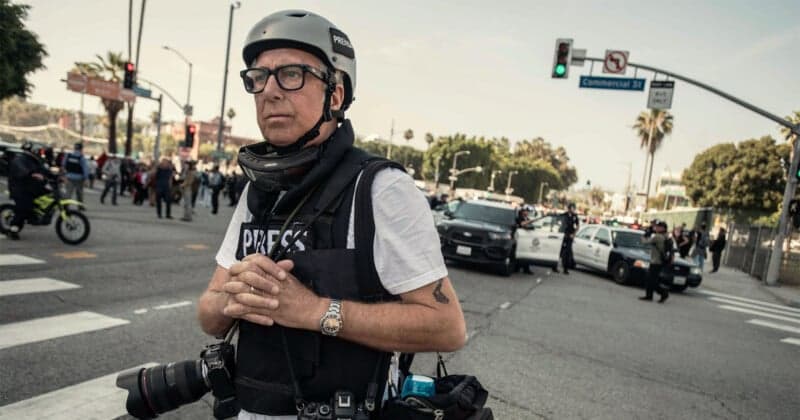
David Swanson was back behind the camera in Southern California, and the sight of a Pulitzer winner working news again after tongue cancer says as much about photojournalism as any gear release or newsroom reshuffle. Since late April, Swanson has been covering a film premiere, Jane Fonda endorsing Tom Steyer in a California governor’s race story, a gubernatorial debate, anti-ICE protests in Los Angeles and wildfire coverage, with an early-June imaging scan still ahead to see whether the disease is gone.
Swanson’s comeback followed a brutal stretch that began with a diagnosis of squamous cell carcinoma of the tongue on November 14, 2025. His fundraiser update said he had a feeding tube inserted into his stomach and a tracheotomy in January 2026, and that he had not been able to eat solid food since New Year’s. Radiation started on February 4, 2026 at UCLA in Westwood, five days a week for seven weeks, with chemotherapy added once a week. By the time he was back on assignment, he had lost 60 pounds.
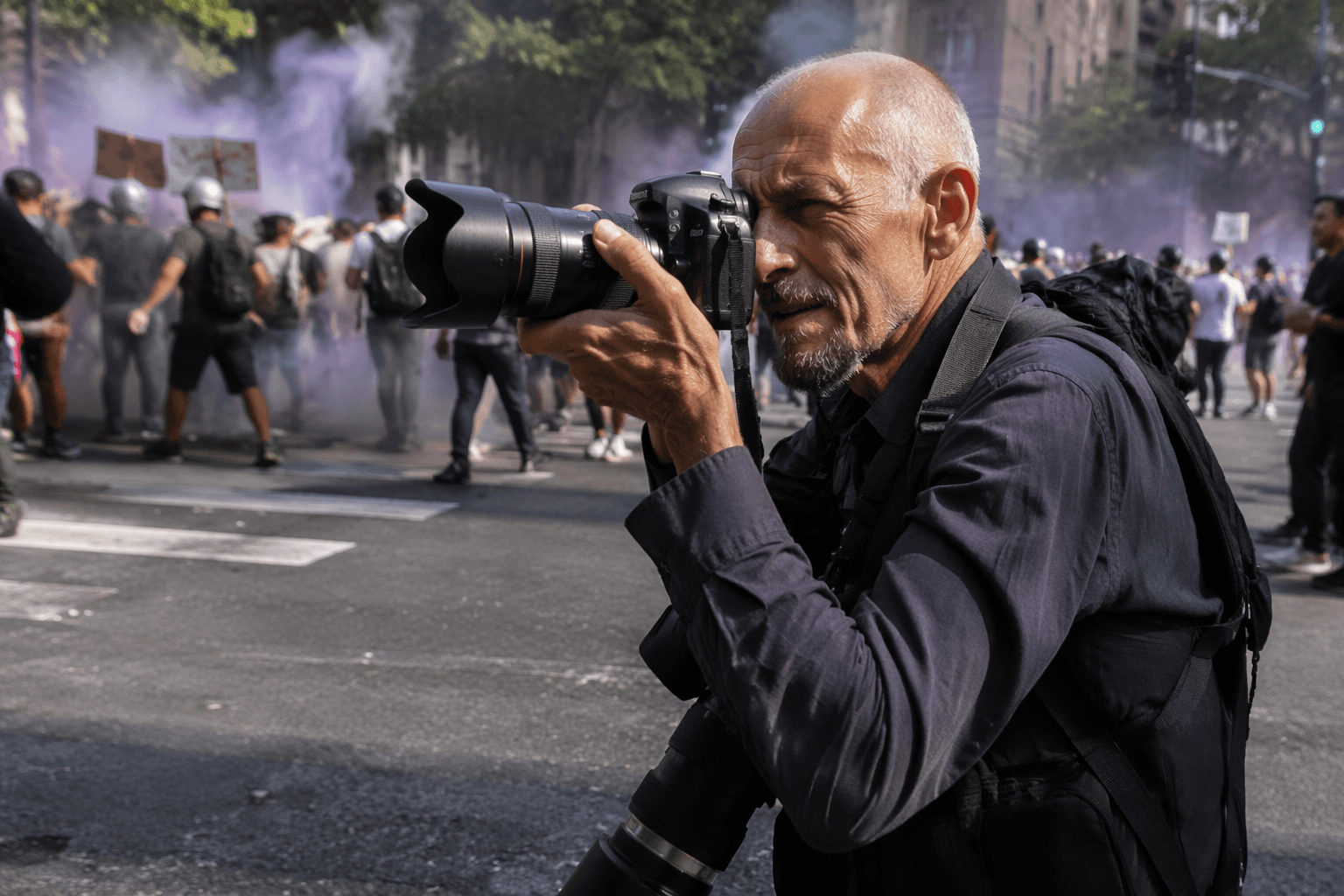
That return mattered because Swanson was not easing into a quiet retirement run. He moved to Los Angeles in 2019 after 33 years at The Philadelphia Inquirer, where he was part of the team that won the 2012 Pulitzer Prize for Public Service for coverage of pervasive violence in Philadelphia schools. The prize recognized a broad effort that used stories, editorials, cartoons, photographs, graphics, videos, databases and multimedia presentations, with the winning work beginning March 27, 2011. Swanson later turned much of that career into audio with Just the Photographer, a podcast that serves as both an oral record of war zones, disasters and red-carpet work and a keepsake for his daughter.
His back catalog explains why his return carried weight. Swanson was embedded with the 10th Mountain Division in Afghanistan in 2003 and with U.S. Marines in Iraq in 2004, when he was shot in the arm. His work has also been honored by World Press Photo, and his assignments have ranged from Ground Zero after September 11 to the Haiti earthquake and repeated wildfire coverage in California. When he covered Los Angeles protests last year, he said he wore a helmet and ballistic goggles and kept water and snacks close by, a practical field routine for a job that does not pause for danger.
That is what makes Swanson’s recovery story feel like a photographer’s story, not a health bulletin. After the feeding tube, the tracheotomy and the 60-pound loss, he was back in the field, still chasing moments in smoke, crowds and campaign rooms, with the camera already back in his hands.
This article was produced by Prism’s automated news system from verified source data, official records, and press releases, then run through automated quality and moderation checks before publishing. The system is built and supervised by the people who set the standards it runs under. Read our full AI policy.
Know something we missed? Have a correction or additional information?
Submit a Tip