Retired teacher turns grandson’s spaceman photos into handmade pop-up book
Wendy Irwin turned one spaceman snapshot into a pop-up heirloom, showing how sequencing, craft, and compositing can make family photos feel like stories.
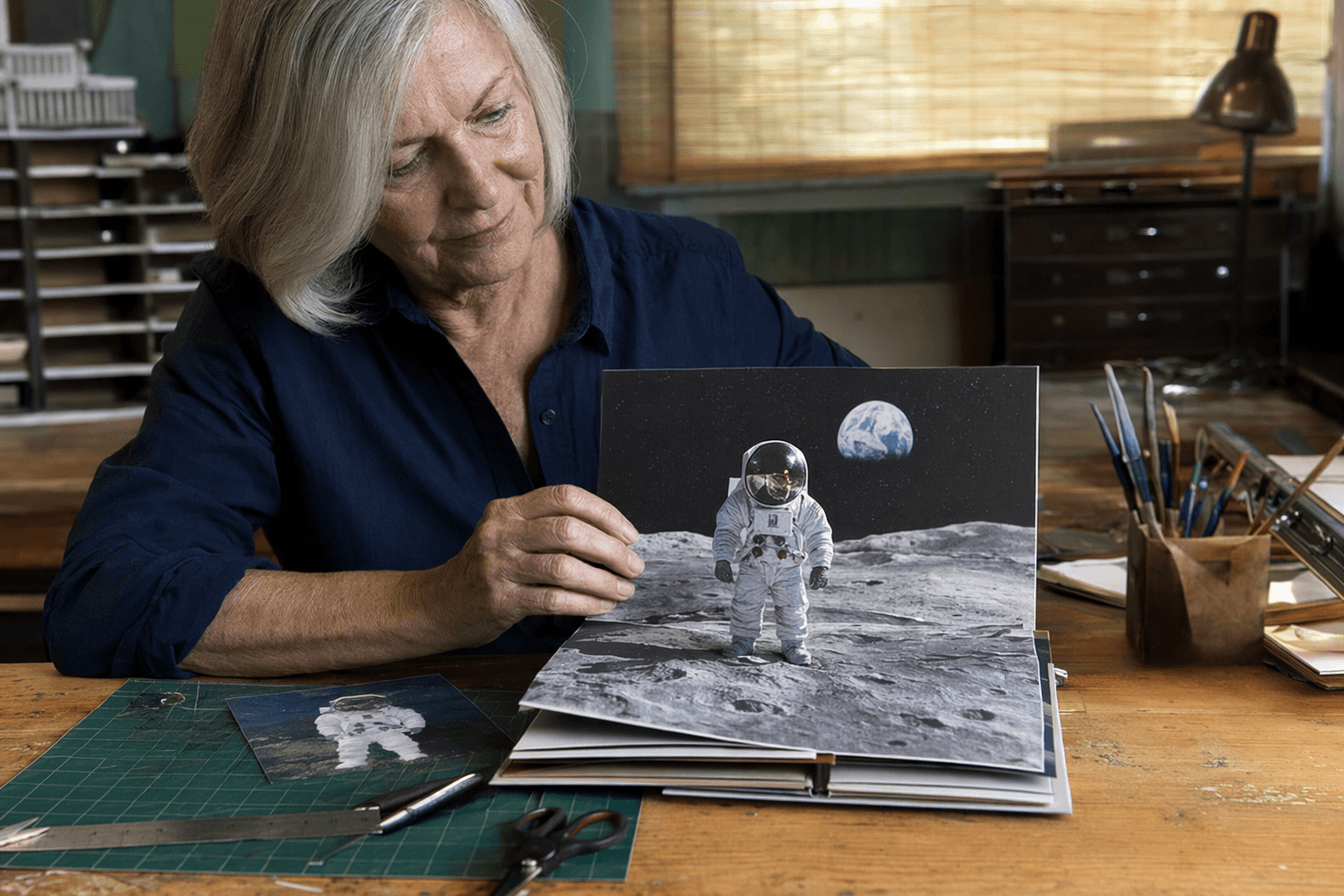
A spaceman picture became a book
Wendy Irwin did not start with a grand concept. She started with Humphrey in a homemade spaceman outfit, photographed at Cheadle Moon, and turned that single moment into a story about adventures “to the moon and back.” That is the useful lesson here: a family photo becomes far more powerful when you treat it like the opening frame of a sequence, not just a file to sit in a camera roll.
Irwin, a retired art-and-design teacher, has been taking pictures since childhood. Her uncle John gave her her first SLR camera, and after retirement she joined a local camera club, where she learned Photoshop skills and became more serious about compositing. That background matters, because Humphrey’s Adventures - to the Moon and Back is not a one-off craft project. It is the natural result of someone who knows how to make an image carry a mood, then build a physical object around that mood.
Why the moon trip mattered
The spark came during Cheadle Moon, a community arts festival in Cheadle, Staffordshire, which ran from 15 March to 5 April 2024. The event marked the 80th anniversary of the death of Mary Adela Blagg, who was born in 1858 and died in 1944. The festival used Luke Jerram’s 6-metre Museum of the Moon installation inside St Giles the Abbot church, and the town filled out the theme with talks, workshops, and other lunar events.
That setting gave Irwin the right visual cue. Humphrey wore a spaceman suit and posed by the moon installation, and Irwin saw not just a cute portrait but the start of a narrative. She later recreated the costume at home using old overalls, papier-mâché, shower tubing, and other handmade props. That mix of on-location photography and homemade set building is what gives the finished work its charge: it feels observed, but also invented.
Sequence is the real trick
The strongest part of the project is not any single frame. It is the way the images move from one to the next. Irwin’s book works because it gives the child a role, gives the costume a purpose, and lets each picture push the story forward. If you are building your own family project, think in beats, not standalone portraits.
A simple sequence can do more than a perfect hero shot. Try this approach:
- Start with the setup, the ordinary moment before the costume or adventure begins.
- Move to the transformation, where the child steps into character.
- Add a travel frame, a view that suggests motion or distance.
- End with a payoff, a return, a laugh, or a quiet moment that feels like a closing page.
That is exactly why a handmade pop-up book feels stronger than a folder of prints. Each page asks the viewer to turn, pause, and continue. The physical action becomes part of the storytelling.
Designing for emotion, not polish
Irwin’s own description of her work as “creative and composite images” explains the tone of the project. She is not chasing clinical realism. She is aiming for a handmade sense of wonder, and that aligns neatly with the influence of Mr Benn, the British children’s TV series that first aired on BBC television in 1971 and 1972. The original Mr Benn Red Knight book by David McKee appeared in 1967, and the character’s appeal came from stepping through a changing room into another world.
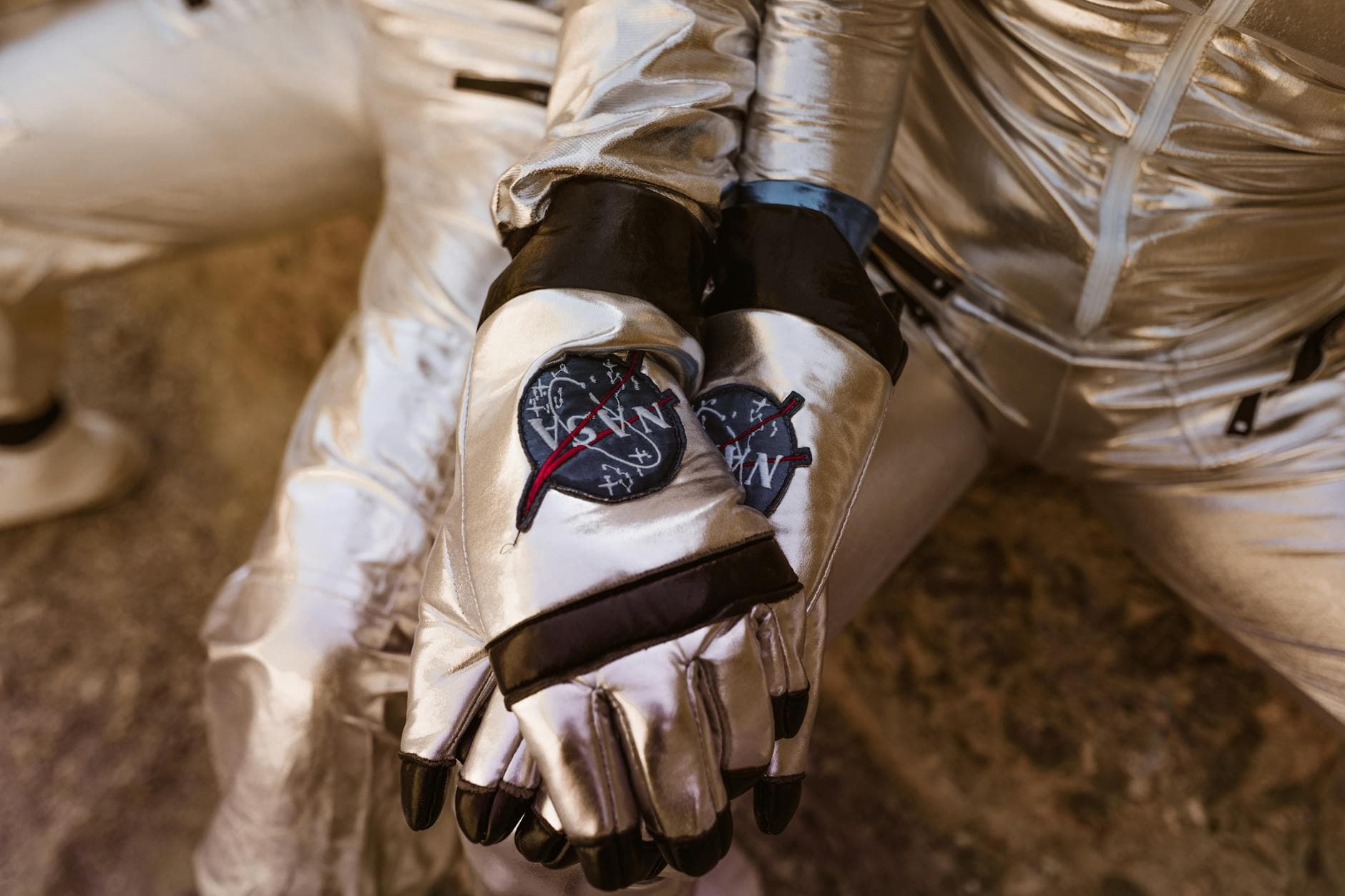
That same theatrical leap is built into Irwin’s pictures. Humphrey is not just dressed up; he is entering a scene. The result is whimsical without being flimsy, because the storytelling is rooted in real family memory and a real place. For photographers, that is the takeaway: emotion comes from staging a believable transition, not piling on effects.
From file to heirloom
Humphrey’s Adventures - to the Moon and Back matters because it turns photography into an object you can hold. A pop-up book changes the relationship between image and viewer. You are not swiping through pictures on a phone, where the sequence can collapse into noise. You are opening pages, discovering depth, and encountering the child’s imagination in a format that demands attention.
That is where family photography gets interesting again. A handmade object carries signs of care, time, and intention that digital delivery rarely matches. Irwin’s use of collage, craft, and image-making turns portraits into something closer to a keepsake than an album. For anyone tired of beautiful photos disappearing into storage, that is a reminder worth taking seriously.
How to borrow Irwin’s approach
The project is most useful as a working method. If you want to turn a child portrait into something with staying power, the ingredients are not complicated, but they do need discipline.
- Pick one strong visual hook, such as a costume, prop, or location.
- Photograph the child as a character, not just a subject.
- Build a sequence that has movement, consequence, and an ending.
- Use compositing only where it deepens the story.
- Print the work and think about how pages will open, reveal, and close.
Irwin’s camera-club background shows why this works. Photoshop skills are useful, but only if they support a stronger idea. Her photography becomes memorable because the editing, the costume, and the hand-built props all serve the same purpose: making the image feel like an adventure that actually happened.
A story that keeps growing
Humphrey is already more than one photo subject. Irwin’s later talks and club listings point to a broader sequence of playful constructed images, including a title like Humphrey’s Away with the Penguins. That suggests a continuing body of work, with the grandson becoming a recurring character rather than a one-time model.
That is a smart move for any personal project. Once you find a character, costume, or visual language that works, keep returning to it. The repetition builds meaning. The viewer stops seeing a single cute picture and starts seeing a world.
Irwin’s book is a practical reminder that the best family photography does not have to end with a print on the wall. It can become a handmade narrative, shaped by sequencing, built with craft, and designed to be opened again and again.
This article was produced by Prism’s automated news system from verified source data, official records, and press releases, then run through automated quality and moderation checks before publishing. The system is built and supervised by the people who set the standards it runs under. Read our full AI policy.
Did this article answer your question?