Sigma starts farming rice in Aizu to support local identity, agriculture
Kazuto Yamaki is putting Sigma’s Aizu identity into the rice paddies, linking lensmaking, local agriculture, and the company’s sole production base in one move.
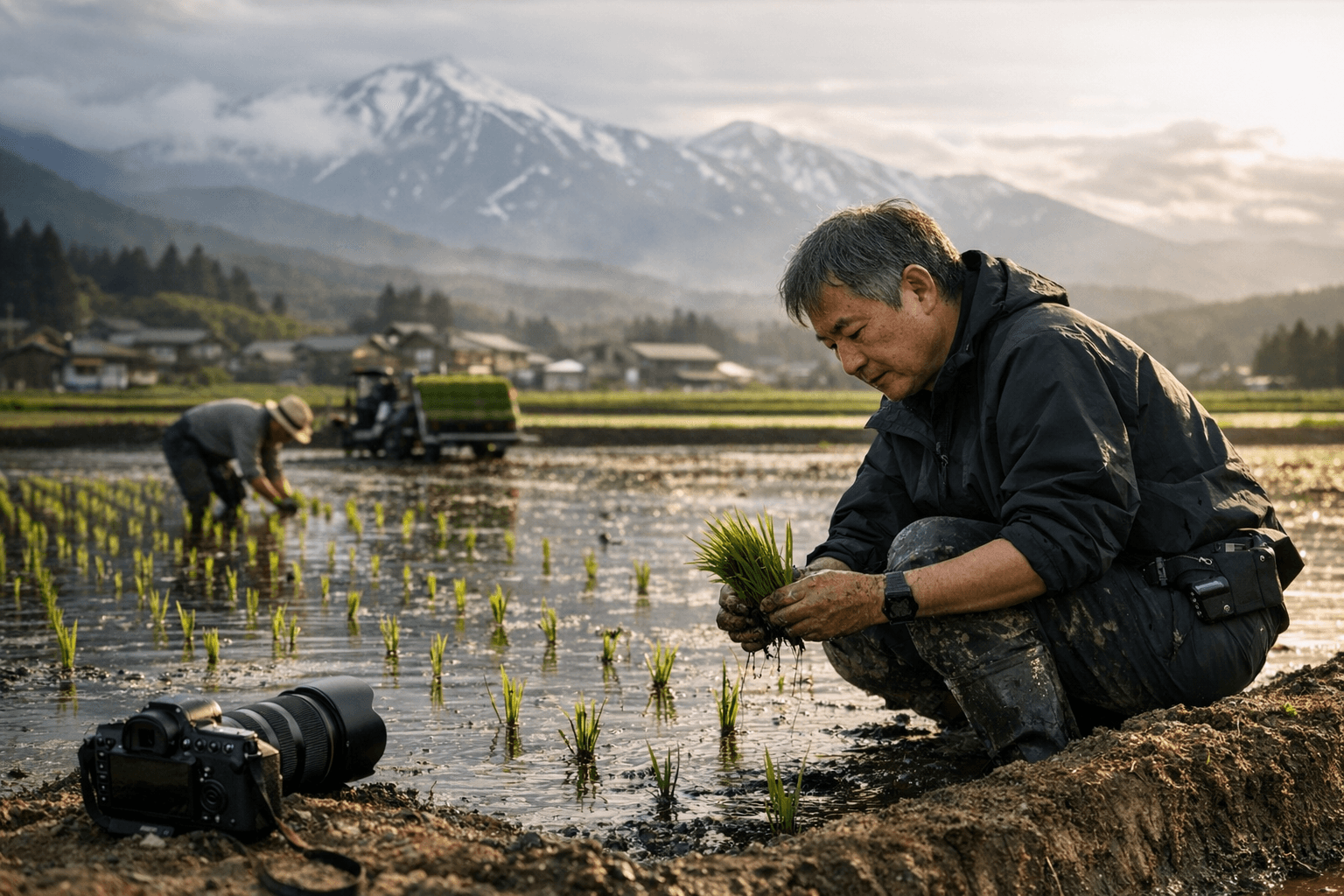
Kazuto Yamaki has turned Sigma’s “Made in Aizu, Japan” identity into something you can measure in hectares. Sigma established Sigma Aizu Farm Corporation on April 1, 2026, with rice cultivation in Aizu at the center of the project, and the company says the harvest is expected to help feed employees at the Aizu factory and at Sigma’s Kawasaki headquarters starting in autumn 2026.
That matters because Sigma is not treating this as a publicity stunt. The company says all of its lenses and cameras are manufactured in Aizu, and the Aizu factory has been its sole production base since 1973. In practical terms, Yamaki is tying the brand’s optics business to the land around it, where rice paddies and traditional woodland still define the landscape. Sigma says farmland abandonment and a declining workforce are already putting local agriculture and scenery at risk, so the farm is meant to give back to the community and help preserve the region’s way of life.
For photographers, the value here is not the novelty of a camera maker growing rice. It is what the move says about Sigma’s culture. Sigma has spent years building trust as one of the most visible independent lens makers in the market, and that reputation depends on more than sharp MTF charts and competitive pricing. A company that keeps production in Aizu, invests in the surrounding area, and treats the region as part of its identity is making a long-term bet on continuity, not quarterly optics. That is the kind of brand behavior buyers notice when they are deciding whether a third-party lens maker is just chasing market share or actually building something durable.
The broader agricultural backdrop makes the decision easier to understand. Japan’s farmland totaled about 4.3 million hectares in 2024, more than 30 percent below its 1961 peak, and the core agricultural workforce fell from 2.4 million in 2000 to about 1.1 million in 2024. Against that decline, a company in precision manufacturing stepping into rice production looks less quirky than grounded. It is Sigma recognizing that a factory does not exist in a vacuum, especially in Aizu, where local identity runs through samurai history, traditional townscapes, lacquerware, and mountain scenery as much as it does through industrial output.
Yamaki’s farming move is a reminder that manufacturing brands can still be deeply regional. In Sigma’s case, the rice paddies around Aizu are part of the same story as the lenses leaving the factory floor, and that makes the company’s independence feel rooted in place rather than marketing copy.
Know something we missed? Have a correction or additional information?
Submit a Tip