Sony a7 V Review: A Sizeable Step Forward, But Is It Enough?
Sony's a7 V hits 30fps bursts and delivers 4K/60p oversampled from 7K at 33MP. Whether that justifies an upgrade depends sharply on what you actually shoot.
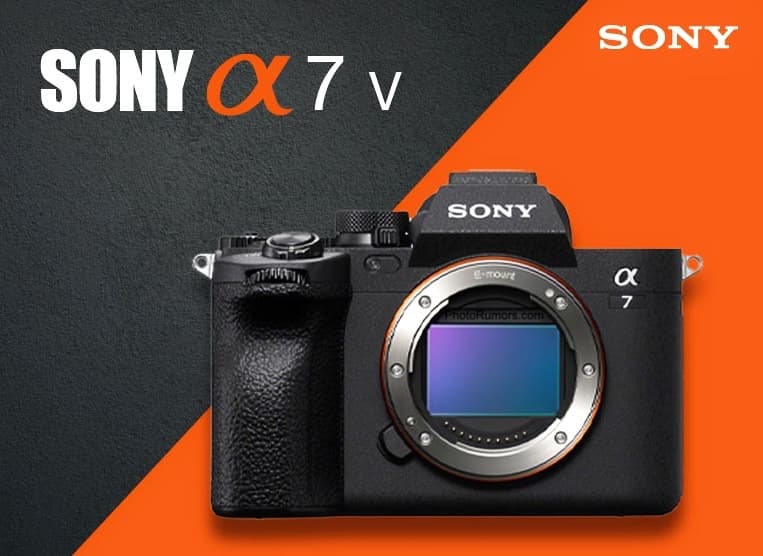
Thirty frames per second, silently, from a 33MP full-frame sensor sitting in a body priced around $2,900. That is the headline capability nobody predicted the a7 V would deliver when Sony first started teasing it, and it is the number that most clearly separates this camera from its predecessor. Whether that figure translates into a meaningful upgrade for your specific shooting life is the more interesting question, and the answer is genuinely split depending on where you land as a photographer.
The Sensor Architecture Behind Everything
Nearly every performance gain in the a7 V traces back to one engineering decision: moving to a partially stacked BSI sensor design at 33MP. The latest sensor brings a dynamic range benefit for photographers who need to really push their files, while also delivering a speed improvement over its predecessor, giving smoother, better quality footage and less rolling shutter distortion at its fastest burst rates. That is a meaningful combination. Prior generations of Sony's full-frame lineup tended to make photographers choose between resolution and speed; the partially stacked architecture narrows that gap without the full cost premium of a true global-shutter design like the a9 III.
For context, DPReview's dynamic range testing found essentially no shadow cost to an image shot at ISO 400, brightened to match an image shot at ISO 6400 with the same exposure settings. That kind of exposure latitude is the difference between rescuing a backlit wedding shot in post and throwing it away entirely.
Rolling Shutter: The Silent Shutter Finally Becomes Usable
This is the most practically significant upgrade for anyone shooting events, street, or fast-moving subjects. The a7 IV paid a price for its move to a higher-res sensor when it came to video: it took longer to read out, so it exhibited more rolling shutter. That is not a problem for the a7 V, whose partially stacked sensor reads out significantly faster, reducing rolling shutter and allowing full-width 4K/60p capture.
In real-world terms, this means the electronic shutter transitions from a situational compromise to a reliable default. DPReview reviewer Lambert describes the partially stacked sensor behavior in plain terms: less rolling shutter distortion when panning, so the silent shutter becomes a default option instead of a compromise. He still flags artificial lighting flicker as a reason to keep the mechanical shutter available, and notes a durability bump in the shutter rating compared to the a7 IV, which matters for anyone shooting high-volume event work. For a wedding photographer firing 2,000 frames across a reception, that shutter longevity improvement is not a footnote.
Autofocus: Out-of-the-Box Excellent, Deeply Tunable
Autofocus strikes a good balance between capability and tunability: there are countless options to fine-tune behavior to get exactly what you want, but performance out-of-the-box is so good that fine-tuning is a question of achieving a final, perfect polish, rather than being a necessary step you have to overcome. The AI subject detection suite covers humans, animals, and vehicles, and the tracking in DPReview's side-by-side comparisons holds lock through erratic movement convincingly.
In real-world use, the a7 V counts as a significant upgrade over the a7 IV with regard to autofocus with moving subjects, sitting at least on a par with the Canon EOS R6 Mark III and Nikon Z6 III. If your subjects are primarily static, birds on perches rather than in flight, portraiture in a controlled studio, that improvement will matter far less to you day to day.
Video: 4K/60p Oversampled, Multiple Frame-Rate Paths
The 4K/60p footage is downsampled from 7K with full pixel readout and no pixel binning, producing very high quality footage. That oversampling approach means the sharpness and moiré resistance you get at 60p rivals what many cameras can only deliver at 24p. Combine that with the rolling shutter improvements and the a7 V becomes a genuinely compelling hybrid tool for run-and-gun documentary work or social content production where a second camera operator is not an option.
The multi-faceted video feature set includes oversampled 4K options across multiple frame rates, and the faster sensor readout supports smoother slow-motion capture. Where the a7 V is less convincing is as a primary cinema tool; the competition from dedicated video-centric bodies is real, and Sony's own FX line continues to target that buyer more directly.
Ergonomics and Interface: Better, But Still Sony
Sony's interface still is not the reviewers' favorite, and can feel cluttered and unruly at times, especially as features and interdependencies continue to grow. But it can be learned and customized easily enough that this will not be a concern once you have spent time with it. The physical handling improvements are incremental rather than dramatic; if you already shoot with a Sony body, the muscle memory transfers cleanly. If you are coming from Canon or Nikon, the menu logic will require a deliberate learning investment.
Image Quality: Skin Tones, Highlight Roll-Off, and the "Good Enough" Question
DPReview's studio scene assessments and sample galleries test the a7 V across skin tones, complex lighting, and highlight roll-off. The consensus: this is a camera where image quality is "good enough" to stop being a limiting factor for most working photographers, and the gains from here are increasingly about how confidently you can shoot fast subjects without worrying the files will be compromised by distortion or noise. The 33MP resolution sweet spot sits comfortably between the bulk of the a7R V's 61MP files and the more action-oriented lower-resolution bodies; it is a practical choice for anyone who edits, delivers, and moves on rather than printing billboard-sized crops.
Should You Upgrade? A Direct Checklist
The honest answer to "is better than before good enough?" depends entirely on your current body and primary use case. DPReview called the a7 V a "surprisingly large step forward," but surprising relative to expectations does not mean universally necessary.
Upgrade from an a7 III or a7 IV if:
- You regularly shoot fast action and want 30fps without mechanical shutter noise
- Rolling shutter in video or electronic shutter mode has cost you usable shots
- You need the confidence to push shadow recovery aggressively in post
- You shoot high volume and want the improved shutter durability
- Your hybrid work demands 4K/60p oversampled from 7K quality without a dedicated cinema body
Hold your current body if:
- Your subjects are primarily static and autofocus increments do not affect your keeper rate
- You need resolution above 33MP (the a7R V remains the answer there)
- Your primary video work demands the feature depth of a cinema-dedicated tool
- You are an a7 IV owner whose rolling shutter issues are minimal with your current workflow
The mirrorless market in 2026 is tight. The bigger gains the a7 V delivers are about how confidently you can shoot fast subjects without worrying that files will be warped. For action photographers and hybrid shooters running one body across stills and video, that confidence is worth real money. For everyone else, the a7 IV or even a well-specced a7 III remains a formidable tool that the a7 V does not embarrass by a dramatic margin. Know which problem you are actually solving before you put down nearly three thousand dollars.
This article was produced by Prism’s automated news system from verified source data, official records, and press releases, then run through automated quality and moderation checks before publishing. The system is built and supervised by the people who set the standards it runs under. Read our full AI policy.
Did this article answer your question?