Thypoch Simera 50mm f/1.4 review praises Leica-style feel, sharp optics
Thypoch’s Simera 50mm f/1.4 aims at Leica M shooters who want classic handling, modern sharpness, and a price that doesn’t sting.
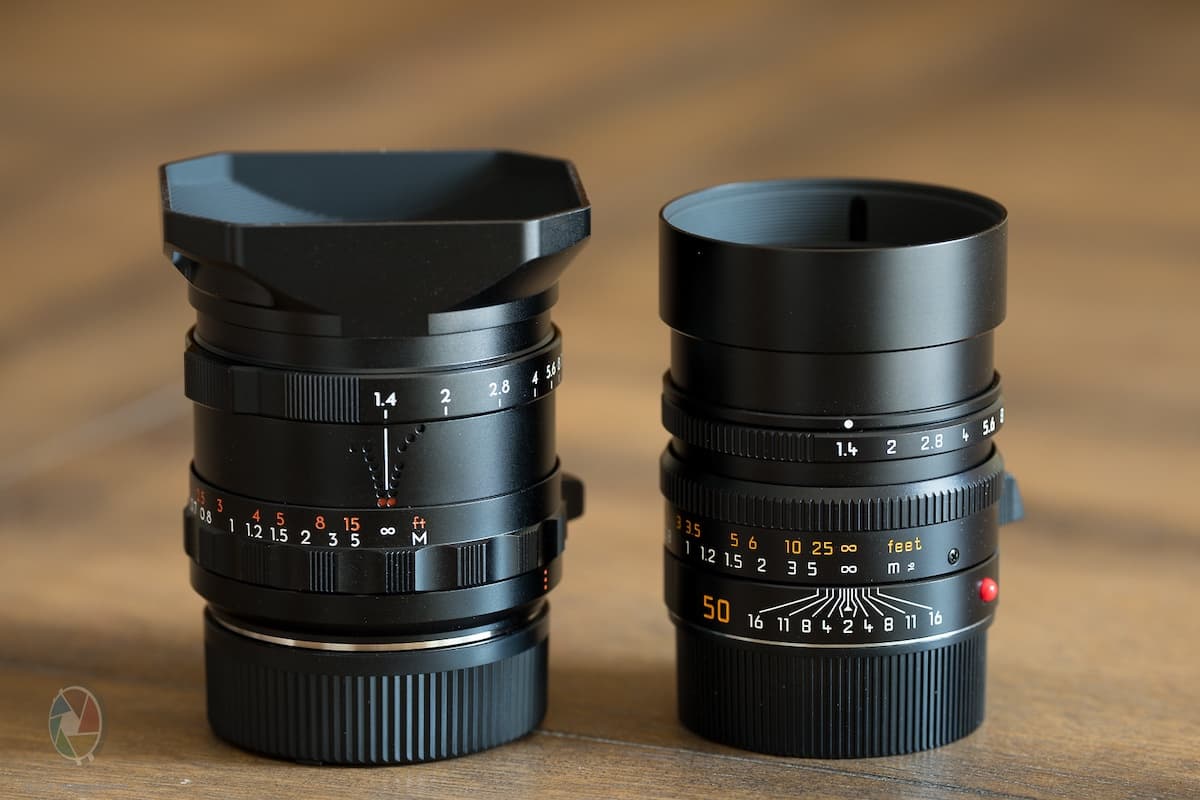
**The Simera 50mm f/1.4 is the kind of lens that makes a Leica M user stop and do the math.** If you want the tactile, mechanical shooting experience without paying Leica money, Thypoch has built something that lands squarely in that gap: a fully manual 50mm with vintage flavor, clean optics, and enough refinement to feel deliberate rather than budget.
Why this lens exists
Thypoch announced the Simera 50mm f/1.4 on August 21, 2024, and pitched it as the normal-lens completion of the Simera family, which already had 28mm f/1.4 and 35mm f/1.4 versions. That matters because the 50mm is the focal length most rangefinder shooters eventually rely on when they want one lens to do the everyday work. Thypoch clearly designed it for M-mount users first, then extended the same Simera identity into other systems later.
The launch price told the real story: $749 in the M-mount version, or €709. For Leica-style glass, that is the whole appeal in one number. You are not buying a badge here. You are buying the shooting experience, the build quality, and the rendering behavior at a price that leaves room in the budget for actually using the lens instead of just admiring it.
The spec sheet is more thoughtful than flashy
On paper, Thypoch did not cut corners in the obvious places. The Simera 50mm f/1.4 uses an 8-element, 6-group optical design with one aspherical element, one ED element, and three HRI elements. It also uses a floating-element design, which is exactly the kind of engineering move that usually separates a charming manual lens from one that stays disciplined as you work closer.
The close-focus distance is one of the best parts of the design. Thypoch lists a minimum focus distance of 0.45 meters, which is unusually close for a rangefinder lens. The company even built in a resistance point at 0.7 meters to remind you when to stop relying on the rangefinder and switch to EVF-style focusing for closer work. That is a smart little detail, because it acknowledges how photographers actually use these lenses rather than pretending every subject lives at infinity.
The aperture is another strong point. Thypoch uses a 14-blade diaphragm and says the lens transmits at T1.5, with round bokeh as part of the package. The lens ships in black and silver, and the included hood is square, matching the Simera family’s compact, old-school visual language.
The handling is where the Simera makes its case
Chris Niccolls’ PetaPixel review, shot in Japan, leans heavily on the real-world feel of the lens rather than treating it like a lab exercise. That is the right way to judge a lens like this, because the Simera’s appeal lives in the hand as much as in the file. Niccolls describes it as solidly machined with smooth mechanical operation, precise rings, a smooth focusing action, a declick option on the aperture ring, and a pleasing depth-of-field scale.
That combination is what buyers are really paying for when they compare it against more expensive Leica-branded options. The Simera does not just imitate the look of a classic M lens. It seems to behave like one, with the kind of resistance, precision, and tactile feedback that make manual shooting feel intentional instead of fiddly.
There is a practical upside to that too. If you actually enjoy focusing by hand, the Simera rewards the kind of methodical shooting that slows you down in a good way. Street, travel, documentary work, portraits at moderate distances, and general everyday use are all obvious fits because the lens invites you to work the focus ring, watch the scale, and trust the camera in your hands.
The optical character is cleaner than the name might suggest
This is not a soft, dreamy vintage homage pretending to be sharp enough. Niccolls found the Simera impressively clean, with very little flare, minimal ghosting, and only minor chromatic aberration concerns. That is the key buyer decision point for anyone torn between character and modern correction: the Thypoch gives you the handling and the atmosphere of a classic manual lens without giving up the crispness that modern shooters expect.
That balance is also why the Simera stands apart from the usual “character lens” trap. You do not have to forgive the optics just because the barrel feels nice. The lens seems built for photographers who want the rendering to be controlled, not chaotic. If you have ever bought a vintage-inspired lens only to discover it looks beautiful in the shop and messy in backlit real-world shooting, the Simera is aimed at fixing exactly that frustration.
The tradeoffs are real, and they matter
The Simera is not a perfect fit for everyone, and the review is honest about the friction points. It does not transmit 6-bit coding, so EXIF convenience is limited. For some Leica M shooters, that is a small annoyance; for others who like their files neatly labeled and metadata clean, it is a genuine workflow drawback.
The supplied hood is also described as a little loose on the bayonet mount. That is the sort of thing you notice every time you go to mount or remove it, and it is exactly the kind of detail that separates a lens you tolerate from one you trust. Niccolls also notes that the lens can feel bulky for an M-mount 50mm. That does not make it unmanageable, but it does mean this is not a tiny, disappear-in-the-bag normal lens.
The close-focus capability is useful, but it comes with a reminder: the rangefinder has limits. If you are used to treating a 50mm like a one-size-fits-all tool, the Simera asks you to stay aware of where rangefinder focusing ends and closer-focus workflow begins. That is not a flaw so much as a consequence of the lens trying to do more than old-school M lenses usually could.
Who it really beats, and who should still buy Leica or Voigtländer
The Simera 50mm f/1.4 makes the most sense if you want the M-mount experience first and the prestige second. Compared with the usual Leica and Voigtländer alternatives, it looks like the value play for photographers who care about feel, build, and optical discipline, but do not want to pay a premium just to get those traits in a brass-colored shell.
A Leica lens still makes sense if you are buying into the badge, the ecosystem confidence, and the traditional market value of the name. A Voigtländer still makes sense if you want a well-known manual-focus path with its own established look and handling. But the Simera lands in a very attractive middle ground: it feels premium enough to use seriously, and priced low enough that it does not demand reverence.
That is why the lens has drawn attention since launch, and why the later review lands where it does. Thypoch took the Simera idea from the 28mm and 35mm versions, finished the trio with a 50mm, gave it a 0.45-meter close focus, a 14-blade diaphragm, a floating-element design, and a price of $749, then wrapped it in solid machining and smooth controls. If your idea of a good M-mount lens is one that rewards touch, stays sharp, and does not punish your wallet, this is exactly the kind of answer you were hoping to find.
This article was produced by Prism’s automated news system from verified source data, official records, and press releases, then run through automated quality and moderation checks before publishing. The system is built and supervised by the people who set the standards it runs under. Read our full AI policy.
Know something we missed? Have a correction or additional information?
Submit a Tip