Vivian Glozman’s worn paddle shows why pickleball gear wears out
Vivian Glozman’s paddle demo is a reminder that sound can be the first sign a paddle is past its prime.
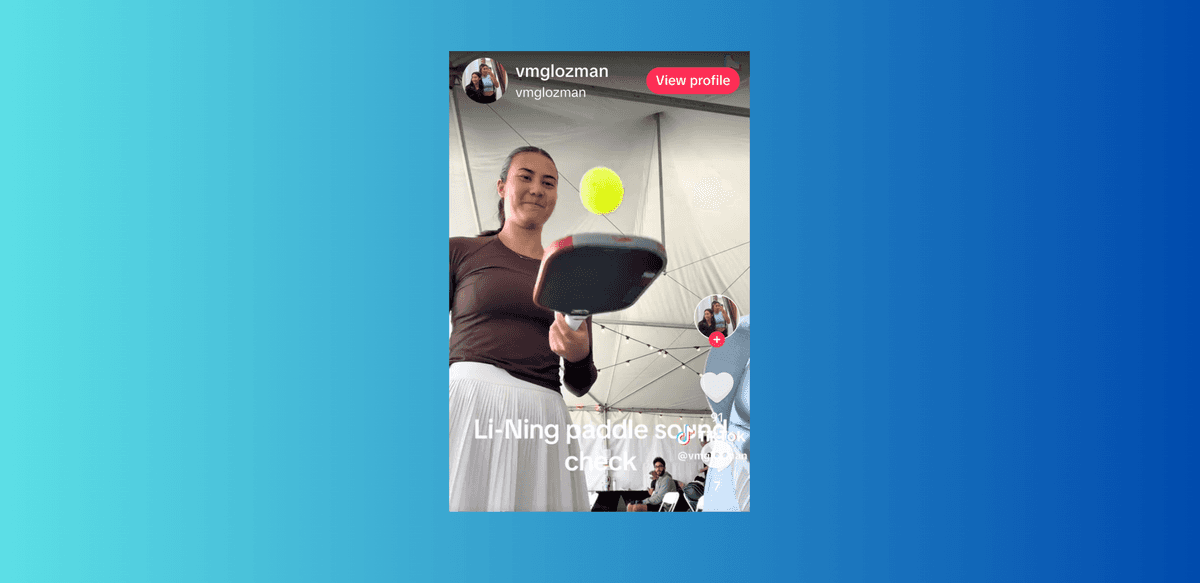
A paddle can look fine and still be finished. Vivian Glozman’s side-by-side sound test with a fresh paddle and the Li-Ning paddle she believed had failed is a practical reminder that gear break-in ends, wear begins, and the warning signs are not always visible.
Why the sound test matters
The easiest mistake is waiting for a total collapse. In Glozman’s case, the difference was obvious in the bounce: the newer paddles gave off a more muted, higher-pitched sound, while the worn paddle came across deeper and more hollow. That shift is not just a curiosity for gear nerds. It is often one of the earliest clues that a paddle is changing from a lively, dependable tool into something that no longer plays the same.
That matters even more at the pro level, where players hit harder and more often than most rec players ever will. Repeated use changes the internal structure of the paddle, and when that happens, performance can fade before the face looks obviously damaged. For tournament players, that can turn into a competitive liability fast.
What core crushing looks and sounds like
The term to know is core crushing. Selkirk’s educational material describes it as the collapse of the polypropylene honeycomb structure inside the paddle. Once that structure starts breaking down, the paddle can develop dead spots, lose rigidity, and stop returning the same pop on contact.
The sound change is usually part of the story. A healthy paddle tends to give a normal thud or a crisp, controlled response. A failing one can sound hollow, muted, or even twangy. If your paddle suddenly feels less solid in hand and the ball no longer comes off the face the way it used to, you may be hearing the problem before you can see it.
Why this is especially relevant now
This is not just about one worn paddle or one pro clip. Modern pickleball gear, especially Gen-3 and polypropylene-core paddles, can wear down in ways that affect both feel and sound. That is why paddle testing and approval systems have become such a bigger part of the sport’s conversation.
USA Pickleball’s Equipment Standards Manual says equipment must meet specifications that support fair competition and consistent performance. The organization also introduced an enhanced PBCoR testing standard in Q4 2024 to measure and limit the trampoline effect, the extra speed and force a paddle can generate when its response gets too lively. USA Pickleball also maintains an official approved-paddle database, which gives players a way to check whether their equipment is listed for play.
The stakes rose again in 2025, when mandatory paddle testing applied to players competing in Pro, Champions Pro, and Masters Pro Main Draw events at the National Championships. That policy made one thing clear: a paddle is not just gear, it is a compliance issue.
What Glozman’s example tells regular players
Glozman’s test caught the problem before she took that paddle into competition, and that timing is the lesson for everyone from retreat players to weekend tournament grinders. You do not need to be on the APP or playing a final to care about paddle integrity. If the sound shifts, the face feels less stable, or the sweet spot starts to seem smaller, the paddle deserves a closer look.
A practical check can be simple:
- Tap the paddle lightly and compare it to a newer paddle if you have one.
- Listen for a deeper, more hollow tone than usual.
- Feel for dead spots where the ball no longer rebounds cleanly.
- Watch for uneven wear, especially if one area of the face seems to lose response faster than the rest.
- Compare current performance with how the paddle felt when it was new, not just with how it felt last week.
That last point matters because wear is often gradual. By the time the change feels dramatic, the paddle may already be far enough along to affect match play.
Replacement timing is part of playing smart
For travelers heading to pickleball retreats, lessons, or tournament weeks, paddle maintenance should sit alongside shoes, overgrips, and hydration. A paddle that has lost integrity can make a lesson feel off before it starts and can be even worse in a bracket where every rally matters. If you are stepping into higher-level play, do not assume your current paddle is still tournament-ready just because it has not cracked.
The smartest time to replace a paddle is before it becomes a problem on court. If the face sounds dead, the feel has changed, or the paddle seems hollow, that is the moment to investigate. Waiting for a visible break is a bad gamble, because the first sign of failure is often acoustic, not cosmetic.
Why the Li-Ning detail caught attention
The paddle Glozman showed appears to be a Li-Ning Hyperpower model, and that matters because Li-Ning is building a broader presence in pickleball equipment. Its current lineup includes Hyperpower 10, Hyperpower 30, Hyperpower 80S, and Hyperpower 90S, which signals a brand leaning harder into the sport’s fast-moving equipment market.
There is also a legality angle. At least one third-party paddle database lists a Li-Ning Hyperpower model as USAP approved and using a 14mm core. That is useful context for players who assume a paddle’s brand name alone tells the whole story. Approval status, core construction, and actual condition all matter, and a paddle that starts to fail can become a problem even if it once checked every box.
Why the timing of Glozman’s clip made it resonate
Glozman is not just any player showing off worn gear. She and Casey Diamond won mixed doubles at APP Seattle in March 2026, which put her in the middle of an active pro run when the paddle demo circulated. Her official website also lists upcoming 2026 clinics in Roseville, Monterey, and Santa Clara, keeping her firmly in the teaching-and-competition spotlight that so many retreat players follow closely.
That combination gives the lesson extra weight. A player who is winning matches and running clinics is also showing the same equipment reality everyone else faces: paddles age, core structure changes, and performance drifts before disaster arrives.
The bottom line for your own bag
A paddle is not immortal, no matter how good it felt on day one. If you play often, hit hard, or travel for high-volume sessions, you need to treat sound and feel as maintenance tools, not just impressions. When the bounce gets deeper, the response gets duller, or the face starts to feel hollow, the safest move is to stop guessing and check the paddle before it costs you points, a lesson, or a tournament slot.
In today’s game, paddle sound is more than background noise. It is one of the earliest clues that your equipment is no longer keeping up with you.
This article was produced by Prism’s automated news system from verified source data, official records, and press releases, then run through automated quality and moderation checks before publishing. The system is built and supervised by the people who set the standards it runs under. Read our full AI policy.
Did this article answer your question?