Double Fish Guide Helps Buyers Choose the Right Ping Pong Table for 2026
Buy the table for your space and your level, not the logo. The real money-savers are bounce, thickness, footprint, and weather-fit.
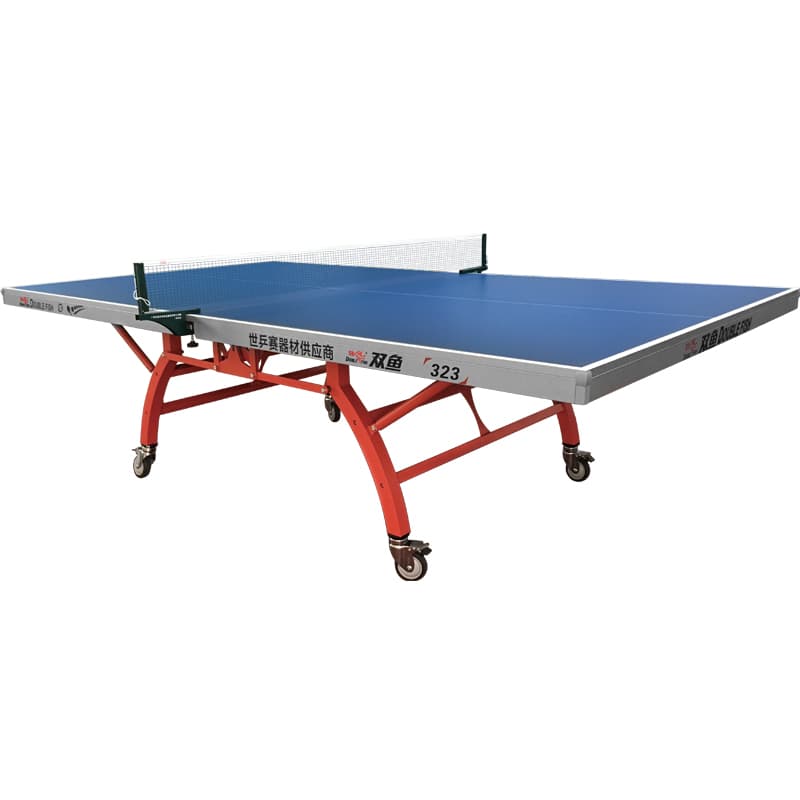
The wrong ping pong table usually looks fine on a product page. The expensive mistake is buying by brand or sticker price alone, then living with dead bounce, a top that feels flimsy, a footprint that eats the room, or a frame that wobbles after a season of use. Double Fish’s 2026 buying guide cuts straight through that noise, and it does so at a moment when the table tennis market is growing from USD 139.3 million in 2025 to a projected USD 177.2 million by 2032, a 3.5% CAGR.
Start with the space, not the spec sheet
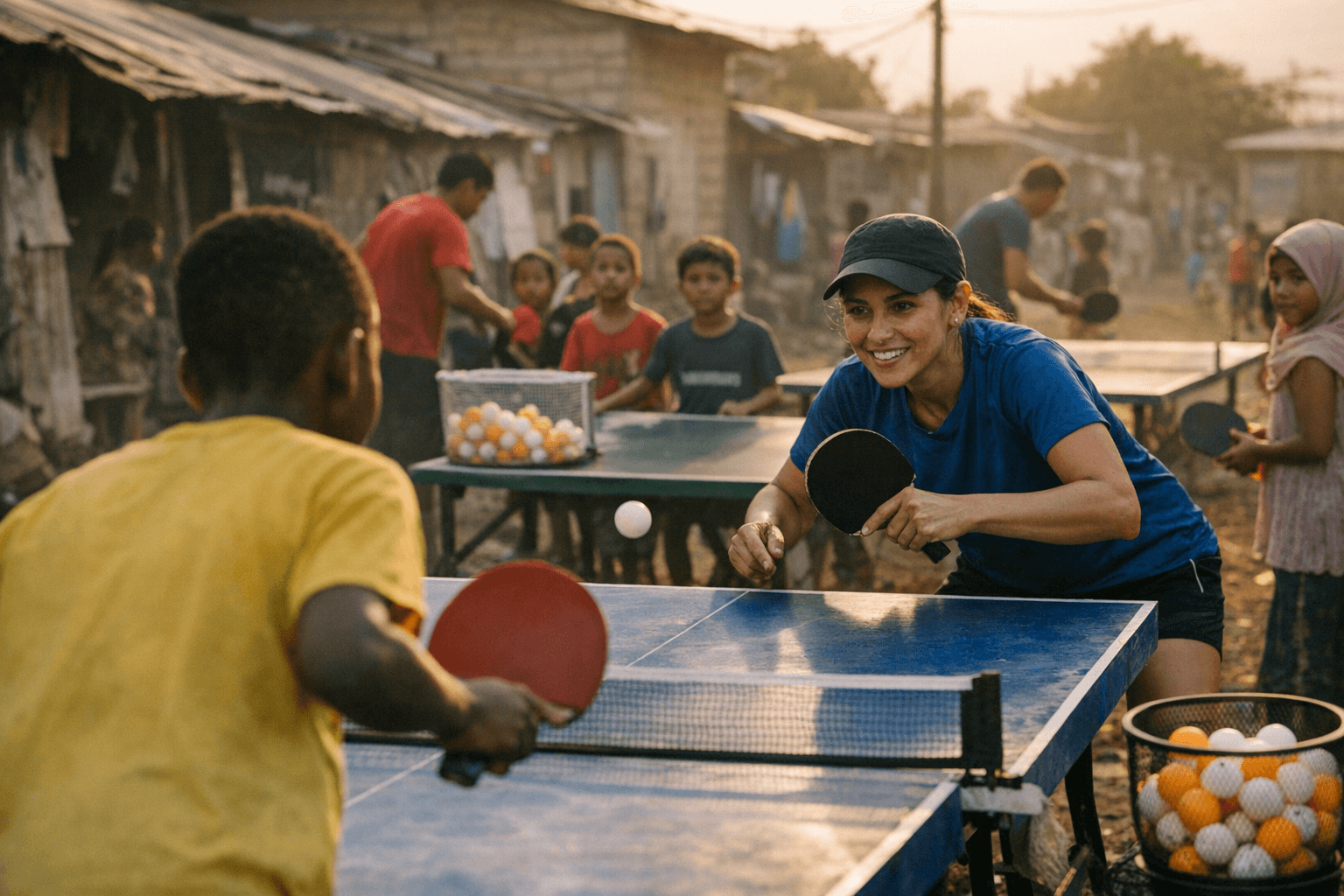
The first filter is simple: measure the room. A table that technically fits can still ruin the experience if you cannot move comfortably around it, retrieve balls cleanly, or fold it away without a wrestling match. That matters just as much for a basement setup as it does for a school gym, community center, hospital activity room, wellness center, or business lounge, because the same table has to work in very different spaces.
For casual home players, the storage footprint often matters more than tournament-grade bounce. A recreational table can be the right call if family play, the occasional match, and easy folding are the real goals. If the room is tight, a table that stores cleanly and rolls without drama will get used more than a premium model that becomes permanent furniture.
Match the table to how you actually play
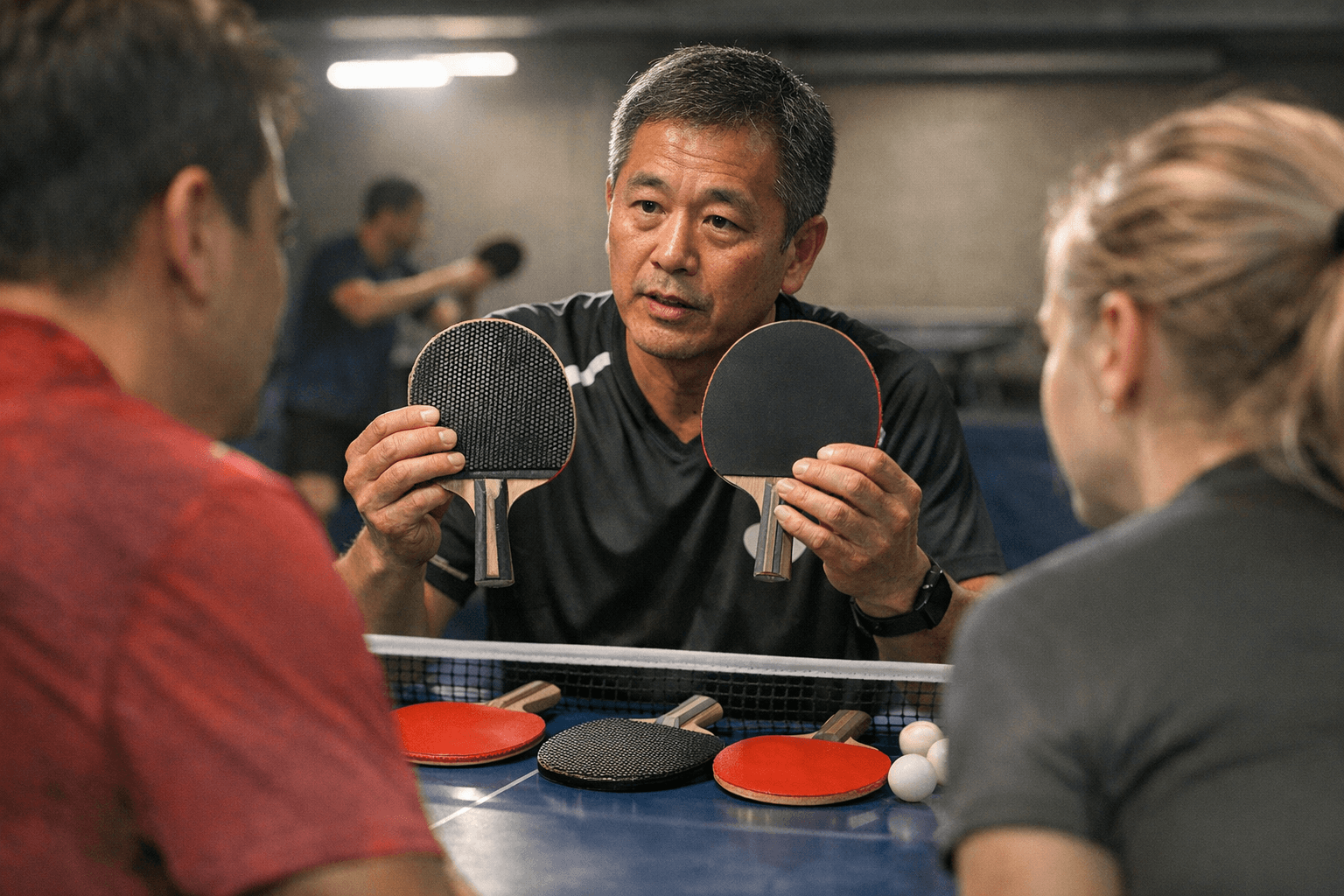
Double Fish draws a clear line between family use and serious training. That is the right way to think about it, because a table that feels perfectly fine for casual rallies can fall short once the pace, spin, and repetition pick up. Club regulars usually notice the gap first: inconsistent bounce makes drills unreliable, and training sessions lose value when one half of the table plays differently from the other.
For that middle group, the buying mistake is chasing looks or a famous name instead of consistency. You want a surface that gives the same response point after point, plus a frame that stays steady when the pace rises. If you play several times a week, durability stops being a bonus and starts being the reason the table survives the year.
The 22 mm rule is the number to remember
One of the most useful details in the guide is the thickness threshold: a top of 22 mm or more is recommended for serious play because it improves bounce quality. That single number tells you a lot about where a table belongs in the sport. It is the difference between something that is fun for rallies and something that starts to support proper training habits.
That benchmark also lines up with high-level equipment practice. Cornilleau’s ITTF-approved 610 competition table, for example, is built around a 22 mm top and is approved for international competitions. If you are shopping for a serious competitor, that kind of specification matters more than a glossy finish or a bold logo. Bounce consistency is the product.
Indoor and outdoor tables are not interchangeable
Another place buyers waste money is treating all tables as if they can live anywhere. Indoor tables need to stay dry. Outdoor tables need to handle weather exposure without warping, swelling, or breaking down early. That sounds obvious until a good-looking indoor model gets parked in the wrong garage, patio, or shared space and starts to deteriorate.
For casual home players, this is where realism saves money. If the table will live indoors, there is no reason to pay for weather resistance you will never use. If it is going outdoors, durability is not a nice-to-have, it is the whole point. The right choice depends on the environment as much as the player.
Safety and stability matter more than people think
The guide also pushes buyers toward strong frames and secure locking mechanisms, and that advice is worth taking seriously. A steady table is not just about better rallies. It is about confidence when you open and fold the table, move it between rooms, or use it around kids, students, or a crowded club floor.
This is especially important for institutions. Schools, community centers, hospitals, wellness centers, and businesses need tables that can be used by different people with different skill levels and different levels of care. In those settings, a shaky frame or a weak lock becomes a maintenance headache fast.
What the three buyer groups should prioritize
For casual home players, the best table is usually the one that fits the room, folds easily, and survives regular family use without requiring tournament-level investment. Recreation is the point, so storage footprint, simple setup, and decent durability matter more than chasing elite bounce.
Club regulars sit in the middle. For that group, bounce consistency, sturdier construction, and a thicker top start to matter because training quality depends on them. A table that behaves predictably session after session is worth more than a cheaper model that saves money up front but costs practice quality later.
Serious competitors need the least compromise. A 22 mm or thicker top, strong stability, and a surface built for reliable bounce are the baseline. If the table is meant to support real prep for sanctioned play, then the closer it gets to ITTF-approved competition standards, the less guesswork there is in practice.
Why 2026 makes this purchase feel bigger
The buying decision has extra weight this year because table tennis is entering its centenary year. The International Table Tennis Federation was founded in 1926, now has 227 member associations, governs more than thirty million competitive players worldwide, and sanctions around 120 international tournaments each year. Table tennis is also an Olympic and Paralympic sport, so equipment choices connect all the way from the home table to elite competition.
The calendar underlines that point. The 2026 World Team Table Tennis Championships Finals are scheduled for London from April 28 to May 10, 2026, a homecoming to the city where the first World Championships were held in 1926. The sport’s history is not just a nice backdrop here. It is a reminder that a serious table is not an impulse buy, but part of a performance culture that keeps getting bigger.
The participation rebound explains the demand
The post-pandemic numbers back that up. Table Tennis Australia recorded a 47% increase in participation in 2022 and crossed 200,000 participants for the first time. Table Tennis England reported 373,300 adults playing at least twice a month from November 2021 to November 2022, up from 222,800 the year before. Those numbers show why the market is broadening beyond clubs and into community, social, and wellness settings.
That wider base is also why the old “any table will do” mentality keeps costing buyers money. When more people are playing more often, the differences between recreational, club, and competition tables become impossible to ignore.
The smartest 2026 purchase is the one that matches your space, your level, and your use case. Once those three things are clear, the rest of the decision gets much easier, and the table you buy is far more likely to be the one you actually keep using.
Know something we missed? Have a correction or additional information?
Submit a Tip