European and Korean Youth Table Tennis Stars Unite for Havířov Training Camp
Korean youth players rarely know where they stand internationally. A Havířov training camp just gave ten of them eight-plus days to find out.
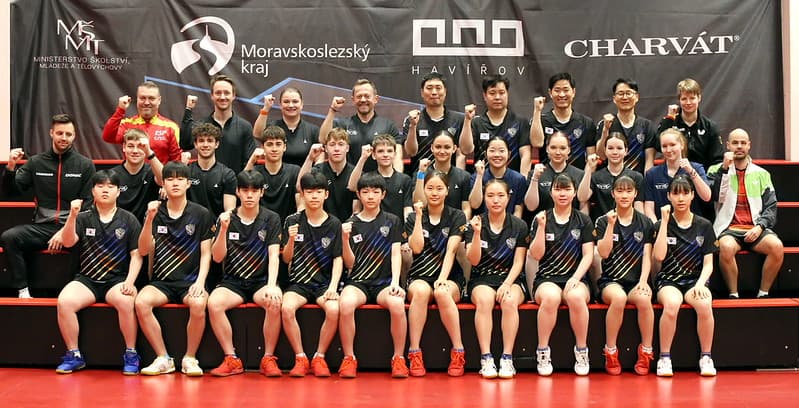
Ten Korean youth players arrived at the Czech National Training Center in Havířov in late March knowing they carried a problem most elite juniors never openly acknowledge: training daily alongside the same domestic opponents makes it nearly impossible to benchmark yourself against the wider world. The ETTU Eurospins camp, which ran through early April, was built to fix exactly that.
The second edition of the cross-continental programme brought together national youth prospects aged 13 to 16 from multiple European federations alongside the ten-player Korean delegation selected by the Korean Table Tennis Association. Korean Table Tennis Association Secretary General Kim Minseok described the Havířov facility as "excellent," citing the hall's lighting, surface quality, and the hospitality extended to the visiting group. Kim's observation about Korean youth development carried more weight than standard praise: at home, young Korean players train together so consistently against familiar opponents that gauging true international standing becomes genuinely difficult. The Eurospins structure was, for them, a rare corrective.
The camp ran eight to ten days, a format the ETTU deliberately extended to allow tactical work to develop beyond the surface adjustments that come with shorter exposure events. The first edition had been staged on Jeju Island, South Korea, in December 2025, making Havířov the second stop in what is becoming a structured bilateral exchange between two of the sport's developmental powerhouses.
The timing was not accidental. The ETTU frames the Eurospins programme as a targeted talent-development pathway in the lead-up to the 2026 ITTF centenary World Team Championships in London, using these mixed-region camps to accelerate competitive readiness faster than isolated domestic training allows. For the European players in the room, the value was observational as much as competitive: watching Korean youth go through their preparation routines up close offers a quality of insight no scouting report replicates.
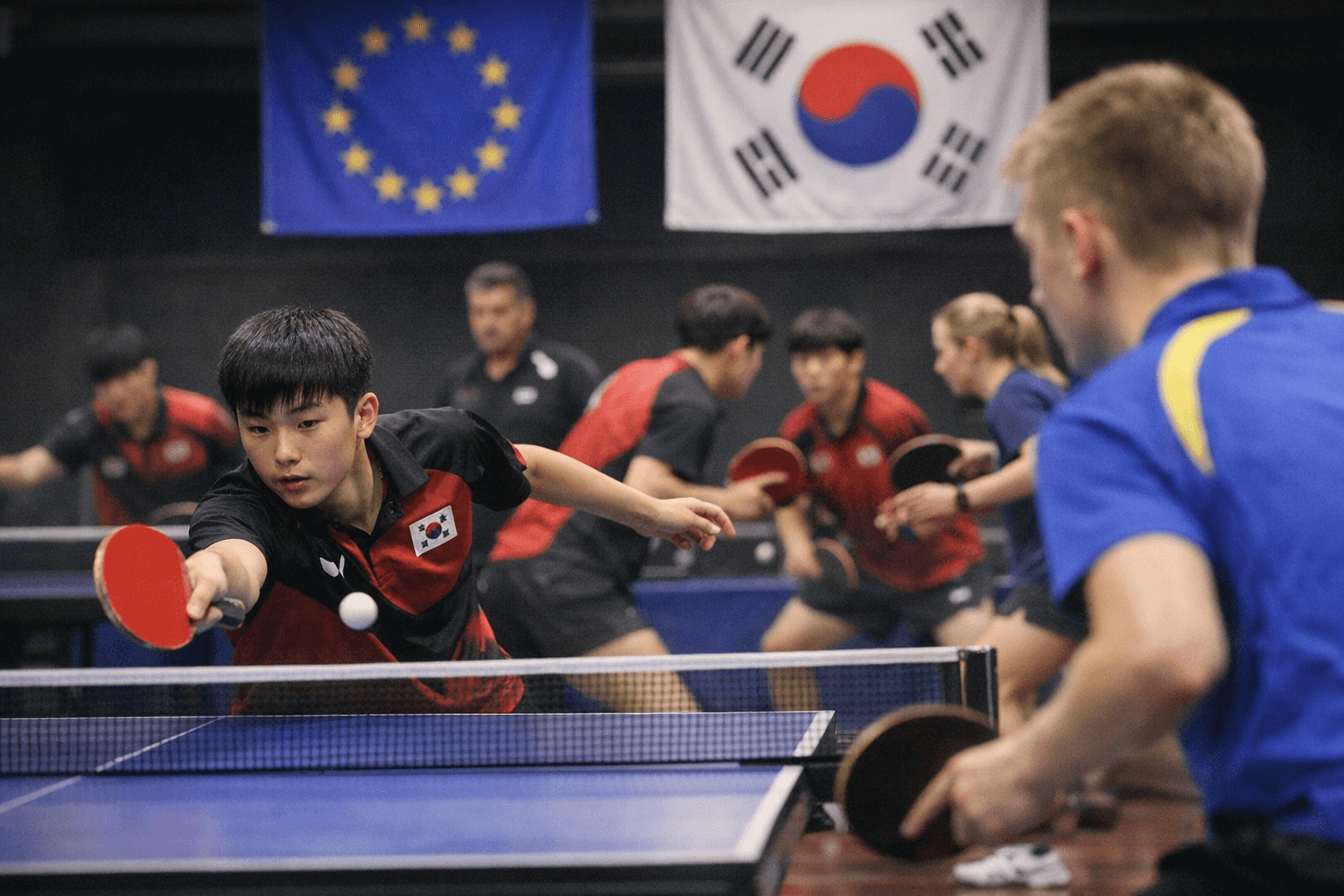
The benefits were reciprocal. European coaches brought different tactical approaches and footwork emphases; the Korean delegation brought technical intensity and a precision-first training culture. Eight-plus days gave both sides enough time to adapt, absorb, and push back rather than simply coexist.
The Havířov facility itself drew specific attention for a reason. When players are grinding through high-volume multi-ball sessions daily, the gap between adequate and genuinely excellent lighting and surface conditions shows up in the quality of repetition work. The Czech National Training Center, by Kim's account, cleared that bar.
If the Jeju edition established that the concept worked, Havířov confirmed it travels. For national federation coaches tracking the 13-to-16 age group as the next generation of senior contenders, the Eurospins model now has two data points: extended, internationally mixed camps, tied to competitive calendars, held at facilities that match the ambitions of the players inside them.
Know something we missed? Have a correction or additional information?
Submit a Tip