Coach Hodges Urges Players to Stay Close for Better Table Tennis Results
Hall of Famer Larry Hodges says one positioning habit — staying within arm's length of the table — is costing club players more points than any technique flaw.
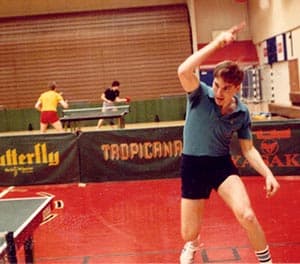
There's a positioning mistake that happens at every club, every week, at nearly every level below the elite: players drift too far from the table, then scramble to recover, then lose the point. Larry Hodges, USATT Certified National Coach, U.S. Table Tennis Hall of Fame member, and professional coach at the Maryland Table Tennis Center, distilled the fix into a single actionable phrase in his April 6 Tip of the Week on TableTennisCoaching.com: "try to stay within arm's length of the table." Simple to state, easy to forget mid-rally, and high-leverage enough that he built an entire training framework around it.
Hodges has published over 2,100 articles on table tennis, authored more than ten books including the widely respected *Table Tennis Tactics for Thinkers*, and logged over 600 tips across his coaching blog. When someone with that kind of output zeroes in on proximity as a weekly tip, it's worth paying close attention.
Why Position Beats Technique Every Time
The argument Hodges makes is biomechanical and tactical at once. When you keep a compact starting position near the table, you cut the distance you need to travel to handle a fast short push or a quick counter. More importantly, staying close keeps your shoulders and hips in the stable, balanced configuration you need to generate controlled topspin rather than lunging, off-balance blocks. The chain reaction of drifting back is easy to miss in real time: you step back slightly, your base widens, your timing window shrinks, and suddenly a ball that should be a comfortable backhand drive turns into an emergency dig.
For beginners and intermediate players specifically, Hodges argues this is the most underappreciated source of lost points. It's not poor technique that's costing most club players those rallies; it's inefficient recovery after each shot. The distinction matters because positioning is a faster fix than rebuilding a stroke.
The Three-Part Training Progression
Hodges structures his tip around a concrete, sequenced approach to drilling the habit. Each phase builds on the last and can be embedded directly into a club session without special equipment or extensive setup time.
1. Multiball footwork drills inside arm's length. The first phase uses multiball feeds to forehand and backhand alternately, with the specific constraint that all contact must happen within arm's length of the table.
This isn't about shot quality yet; it's about reinforcing the starting position as a default. Players who haven't done this drill often discover they've been camped a full step further back than they realized.
2. Timed reaction drills with a two-second return window. The second phase introduces a time constraint: players must return each fed ball within two seconds without stepping back.
This creates productive pressure that makes the proximity rule concrete rather than abstract. When stepping back costs you the drill, you stop stepping back.
3. Match-simulation exercises with penalties for drifting. The third phase brings the habit into live-point context by building in consequences for abandoning the starting position during exchanges.
Coaches can use simple point adjustments or ball-replay penalties to flag when a player has drifted beyond the target zone. The goal is to replicate in-match conditions closely enough that the habit carries over.

The Pitfalls Coaches Need to Watch
Hodges flags two specific failure modes that coaches should anticipate and address immediately. The first is over-committing on the backswing. When players reach for a wide ball, the natural instinct is a big windup; the problem is it pulls them further from the table and disrupts their recovery path. The second is failing to regain the starting position after playing a wide ball. Getting to the wide ball is only half the job; the other half is snapping back to the compact position before the next shot arrives. Both errors compound quickly in fast rallies.
For coaches running club training sessions, Hodges offers corrective cues designed to be delivered in the moment without interrupting the flow of practice. The emphasis is on quick, targeted feedback rather than stopping the drill to explain mechanics from scratch, which matters enormously in a club environment where floor time is limited.
Making It Work in Club and Camp Settings
The April 6 tip is explicitly practical for coaches working under time pressure. Hodges connects the drill progression to multiball themes he used during a recent spring break camp, which means these aren't hypothetical exercises; they've already been field-tested in a real training environment. For coaches running youth sessions or adult evening classes, he specifically invites adaptation of the drills to fit different age groups and skill levels.
That flexibility matters because the spring competition calendar is unforgiving. With regional opens and spring camps stacking up, players and coaches rarely have weeks to overhaul a training system. A focus on proximate positioning and short-distance footwork yields measurable performance gains quickly, which is exactly what's needed when competition is imminent.
The Bigger Picture
Hodges has been writing tips and coaching American table tennis players for decades, first as editor of USATT publications, then as a coach who built a reputation at the Maryland Table Tennis Center, and throughout as one of the most prolific voices in U.S. table tennis coaching. His Tip of the Week series, updated regularly on TableTennisCoaching.com, is a running record of that experience distilled into deployable practice.
The stay-close principle won't win you a match on its own, but it creates the conditions for everything else to work. Reaction time improves. Footwork becomes economical instead of frantic. Short rallies, which decide more points at the club level than most players track, become winnable rather than reactive emergencies. That's a lot of competitive return for one positional habit, and it's exactly the kind of high-leverage, low-cost adjustment that separates coaches who develop players fast from those who grind through the same technique notes session after session.
Know something we missed? Have a correction or additional information?
Submit a Tip