Tin-Tin Ho eyes table tennis boom, and English title history in Nottingham
Tin-Tin Ho is chasing a record eighth English title in Nottingham while fronting a bigger test: can London 2026 make table tennis feel like a major British sport?
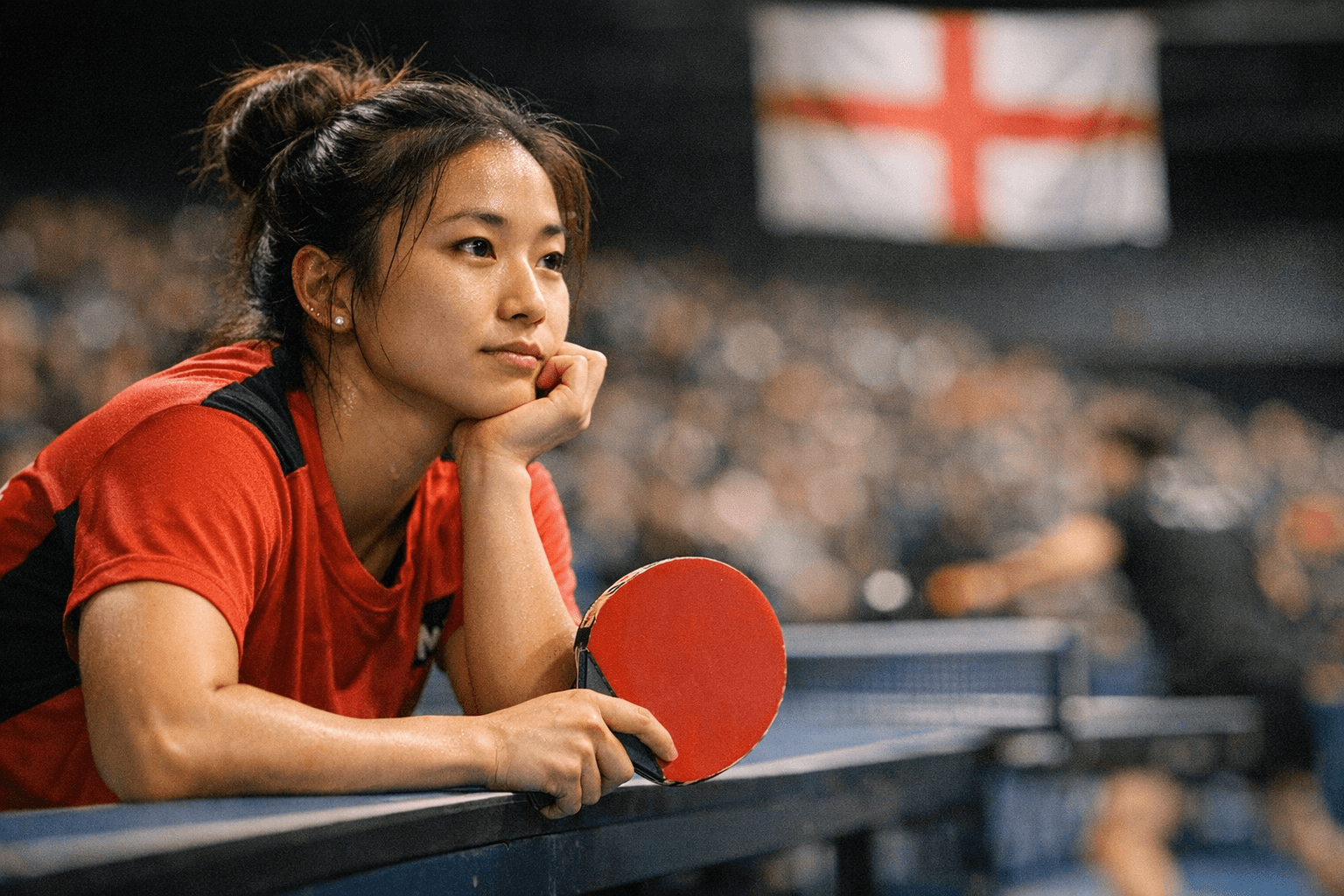
Tin-Tin Ho is the cleanest face table tennis has in England
Tin-Tin Ho gives the sport something it too often lacks in Britain: a player casual viewers can recognize, remember and follow. In an Observer profile, she talks about taking up the game early and wanting table tennis to sit in the same mainstream space as darts and snooker, which is exactly the right ambition for a sport that already has the speed, skill and accessibility to hook people if it is packaged properly. A CGTN Europe feature pushes that appeal further, showing Ho in full flow with pro techniques and blindfolded play challenges, the kind of visual trick that makes people stop scrolling and realise how fine the margins are at elite level.
Nottingham is where her own history gets personal
By March 2026, Ho was level on seven English women’s singles titles. That put her one win away from a record eighth title at the English National Championships in Nottingham, and that is the sort of clean, easy-to-follow storyline table tennis needs more often. It is not abstract development talk or vague potential: it is a named player, in a named city, trying to break a specific record that gives fans a reason to care before the first ball is even struck.
That matters because Ho is already established as England’s No 1 and as a player whose career has carried proper weight on the big stages. She won Commonwealth mixed doubles silver with Liam Pitchford at Glasgow 2014, added another mixed doubles silver at Gold Coast 2018 alongside women’s team bronze, and also competed at Birmingham 2022. Team GB says she became the first British woman since Atlanta 1996 to qualify for an Olympic singles table tennis event at Tokyo 2020, which tells you she is not just a domestic standard-bearer, but one of the most important English players of the modern era.
Why table tennis still has not broken through like darts or snooker
The frustrating thing is that the sport already has the raw materials for a wider audience. It is fast, cheap to play, and easy to understand at the most basic level, yet it still has not converted that into the cultural grip that darts and snooker enjoy in Britain. The gap is not about quality on the table. It is about how the sport is sold: who the viewer is invited to follow, how the broadcast frames pressure points, and whether the atmosphere feels like an event rather than a stream of points.
Ho is useful here because she is both a top performer and a bridge to the public. The game needs more of that kind of face, plus better star-making around the rest of the field. Table tennis can look astonishing on a livestream, but if the viewer never gets a clear entry point, the speed becomes blur rather than drama. That is why the talk around London 2026 matters beyond the results sheet: it is a chance to present the sport with a stronger identity, a louder home crowd and a more obvious ladder for new fans to climb.
The participation base is there too, which makes the challenge even more interesting. Table Tennis England says about 388,700 adults in England play at least twice a month, roughly 0.8% of the adult population, and that figure is up 11% from the previous Active Lives report. In other words, the sport is not short of players. What it still needs is a sharper route from the club hall to the screen and from the screen back to the club hall.
London 2026 is the biggest live test in years
The ITTF World Team Table Tennis Championships Finals London 2026 run from 28 April to 10 May 2026, and the symbolism is impossible to miss. The event marks 100 years since the inaugural world championships were held in England in 1926, so London is not just hosting a tournament, it is staging a centenary celebration of the sport’s own history. Across 13 days, 64 men’s teams and 64 women’s teams will compete at the Copper Box Arena and OVO Arena Wembley, giving the home event proper scale rather than a token showcase.
For England, the build-up has been deliberate. Table Tennis England named an eight-player squad on 22 March 2026, then completed the 10-strong line-up with wildcards Joseph Hunter and Alyssa Nguyen on 26 March. The wider group includes Tom Jarvis, Paul Drinkhall, Sam Walker, Connor Green and Jill Parker, and the women go into the home championships with three teenagers in the broader squad. That mix tells its own story: Ho at the top, youth underneath, and a clear chance to turn a home Worlds into a development moment rather than a one-off headline.
There is also real demand behind the scenes. Table Tennis England says day passes for London 2026 have already sold out, while some finals sessions are running low. That is encouraging, but it is not the same as a breakthrough. A sold-out day pass proves appetite. A breakthrough means people can name the players, understand the stakes and leave with a reason to come back.
What would actually move the sport forward
The next step is not mysterious. It is the stuff the bigger racket-and-bat sports have spent years getting right, and table tennis can borrow the same logic without losing its own identity:
- Build around recognisable faces. Ho is the obvious one in England, but the sport needs a wider cast that viewers can track from tournament to tournament, not just from one finals weekend to the next.
- Package the broadcast around moments, not mechanics. The audience does not need a lesson in every grip change, but it does need to know why a rally, a serve pattern or a match point suddenly changes the whole night.
- Make the arena feel like a place people have to be. The best nights in darts and snooker are not just watched, they are felt. Table tennis can generate that same urgency if the production leans into crowd noise, rivalry and national colour.
- Turn London 2026 into a stepping stone, not a peak. With a centenary setting, a home team, and Ho chasing her own Nottingham record in the same season, the sport has enough storylines to keep new eyes interested if the follow-through is strong.
That is the real significance of Ho’s season. If she wins in Nottingham and England use the Worlds in London to present table tennis as a sport with stars, history and pressure, the game can start closing the gap with Britain’s better-known live sports. If not, it risks proving, once again, that having the speed and skill is not the same as having the spotlight.
Know something we missed? Have a correction or additional information?
Submit a Tip