WTT Contender Taiyuan 2026 Brings Live Streaming to Global Fans
World No. 82 Luka Mladenovic's live-streamed upset of top-seeded Xiang Peng at Taiyuan's $100K Contender is club-level coaching gold hiding in plain sight.
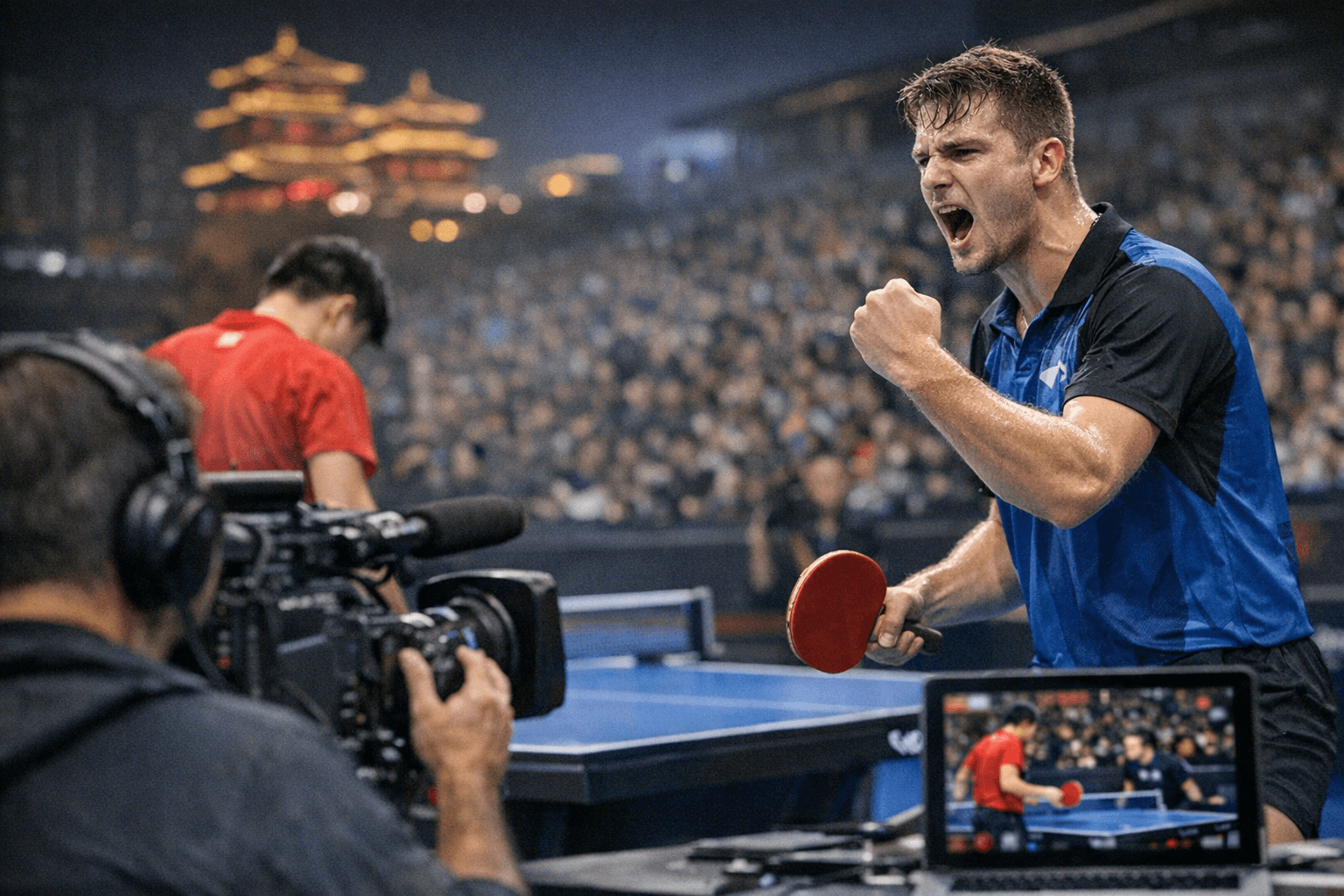
Table tennis has always had a training footage problem. Elite-level technique exists at every Contender event, but for decades most of that footage never left the arena. WTT's live streaming model, fully deployed at Taiyuan this week, is systematically closing that gap, and the April 9 men's singles round of 32 showed exactly why it matters.
Luka Mladenovic, Luxembourg's world No. 82, knocked out top-seeded Xiang Peng of China on Day 3 of the WTT Contender Taiyuan 2026, the eighth event of the 2026 WTT Series, held April 7 through 12 at the Taiyuan Binhe Sports Center. The $100,000 prize pool draws a legitimate competitive field, including Kanak Jha, Honoka Hashimoto, and Sabine Winter, none of whom you typically find archived on YouTube with production quality high enough to freeze-frame. Now you do.
WTT streamed every qualifying session, group stage, and main-draw match through the official YouTube channel and cross-referenced each result in a live match centre on worldtabletennis.com, where box-score-style breakdowns accompanied the video. That combination is the core of what makes these streams useful beyond passive viewing.
Three things worth pulling up on replay with a specific drill in mind. The first is the Mladenovic-Xiang Peng match itself. A world No. 82 beating a home-country top seed at a Chinese venue doesn't happen on power alone. Scrub through the point-by-point breakdown in the match centre alongside the video and watch how Mladenovic's serve selection shifted across sets. Map the serve locations to the responses they drew and you have a receive-pressure sequence worth rehearsing at your next club session against any left-side heavy server.
The second is mixed doubles, where WTT ran eight concurrent R16 matches across five tables on the morning of April 9. Pairs like Sakai and Takamori (Japan) facing Chen and Qin (China) provide unusually clear footage of cross-table receive positioning, since mixed doubles forces a narrower receive stance than singles. Watch where the non-receiving partner stands during a short push to the backhand, and then replicate that recovery footwork pattern in shadow drills.
Third, the women's draw has featured at least one defensive specialist (a chopper) advancing past higher-ranked Japanese opponents, something the match centre confirms but raw score lines obscure. Pull the match video, count how many points the attacker won on the first opening topspin versus a re-looped ball, and you will immediately see where impatient attack falls apart against long-pip defense. That ratio is the drill: in practice, set a rule that you cannot go for a winner until the third opening against chop, and track how your conversion rate shifts.
None of this required a ticket to Taiyuan. The on-demand replay playlists are timestamped and sessioned, meaning you can skip directly to a specific table without sitting through four hours of footage. That infrastructure is what separates WTT's current streaming model from a simple broadcast feed, and for club players who have historically had to take coaching cues on faith, the Taiyuan archive is now a reference library worth working through before weekend practice.
Know something we missed? Have a correction or additional information?
Submit a Tip