3Beans 3DS emulator boots home menu in early low-level progress
3Beans is already booting the 3DS home menu and cartridge games, but it is still fully interpreted and slow. Its low-level path could pay off later in accuracy and preservation.
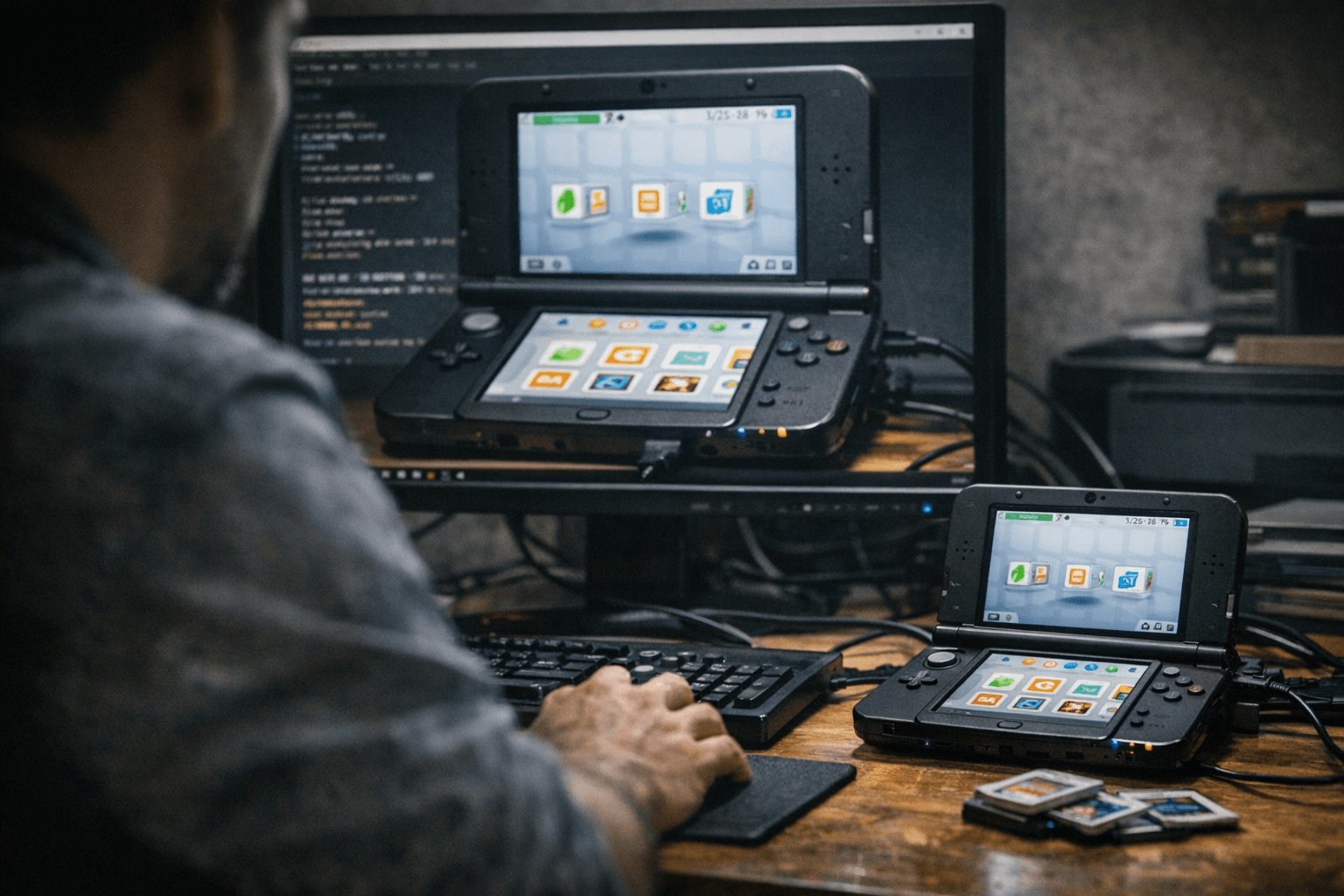
3Beans is already getting the 3DS home menu on screen and loading cartridge-based games, but the emulator’s bet on low-level accuracy means it is still nowhere near everyday use. The April 14 build showed a project that is trying to behave like real hardware first, then worry about speed later.
That approach is the whole point. Hydr8gon’s project describes 3Beans as a low-level 3DS emulator that runs the entire operating system as if it were on actual hardware. Right now, the CPUs are still fully interpreted, while the GPU side includes both software and hardware rendering. That makes the build portable across Windows, macOS, and Linux through automatically provided GitHub Actions builds, but it also keeps performance well below what most people would expect from a usable 3DS emulator.
The practical tradeoff is easy to see in the release notes. The April 14 update added fixes for HLE ADPCM decoding, HLE DSP clamping, and final volume adjustments. Those are small sounding changes, but audio is one of the fastest ways to expose an immature emulator. A game can boot cleanly and still feel broken if sound is clipped, unstable, or out of sync, so this kind of work matters even when the headline feature is simply reaching the home menu.
3Beans is also strict about what it needs from a real console. The documentation says it requires dumped files from an old or new Nintendo 3DS system, with boot9.bin, boot11.bin, and nand.bin needed at minimum. It also expects encrypted cartridge dumps, unlike higher-level emulators that usually want decrypted ones. The project recommends an Old 3DS for the best performance and stability, which is another reminder that this is still a build for testing, not for casual play.
That slower, more exact route may be the more interesting bet in the long run. Nintendo ended online play and other online-communication features for Nintendo 3DS and Wii U software on April 8, 2024, leaving offline features intact but pushing more of the platform’s living history toward preservation tools and emulation. In that landscape, a project like 3Beans is valuable even before it becomes fast, because low-level work can feed better documentation, fewer hacks, and stronger long-term accuracy. It also lands in a post-Citra moment where Azahar, built from PabloMK7’s Citra fork and Lime3DS, is trying to become the main platform for future 3DS development.
The update cadence shows how early this project still is. Retro Replay tracked related 3Beans changes on April 9, April 10, April 14, and April 15, 2026, with notes ranging from HLE resampling and basic HLE PCM playback to OGL dirty-tracking improvements and synchronized HLE DSP initialization. That kind of subsystem-by-subsystem progress is not flashy, but for 3DS emulation it is exactly the sort of groundwork that can eventually turn a proof of concept into something much more complete.
This article was produced by Prism’s automated news system from verified source data, official records, and press releases, then run through automated quality and moderation checks before publishing. The system is built and supervised by the people who set the standards it runs under. Read our full AI policy.
Did this article answer your question?