CLIR report frames emulation as a preservation tool for old games
CLIR’s new guide says a ROM is only the start. Real preservation means metadata, inputs, firmware, and behavior, not just a file that boots today.
CLIR Publication 194, published in July 2025, draws a sharp line: a game that launches in RetroArch tonight is not automatically a preserved game. If old software is going to survive, it needs more than a dump. You need the context around it, from metadata and dependencies to the way the original machine behaved under load.
What CLIR is actually saying
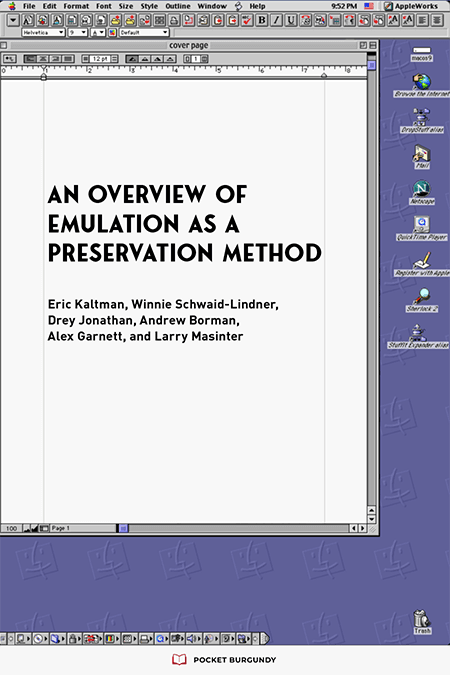
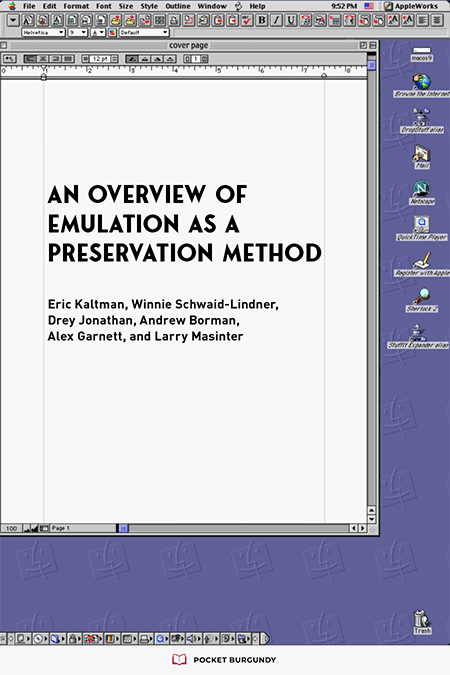
*An Overview of Emulation as a Preservation Method* is aimed at cultural heritage professionals. Eric Kaltman, Winnie Schwaid-Lindner, Drey Jonathan, Andrew Borman, Alex Garnett, and Larry Masinter co-authored the report. It comes out of the library and archives world, where the question is not “can I run this game now?” but “can someone still experience this software decades from now?”
That shift changes how emulation gets framed. Emulation is a computer’s ability to imitate another computer or software program on a newer machine. Emulation is valuable because original hardware ages, components fail, and media formats disappear. A working emulator can recreate the old environment in software after the original box is gone, which is why archivists keep returning to it as one of the few scalable ways to keep interactive works usable.
Why a ROM is not the whole object
The report’s most useful idea for collectors is simple: preserving a file is not the same as preserving an experience. A disk image or cartridge dump may capture the program bits, but it does not automatically capture the behavior that made the game what it was. Timing, controller input, save behavior, firmware expectations, peripheral support, and other dependencies all shape the experience a player actually remembers.
That is where concepts like authenticity and significant properties come in. In archival terms, the goal is not to freeze every byte into amber and call it done. The goal is to preserve the parts of the software that matter to its meaning and use, which is why metadata has to sit beside the image itself. The 2012 literature review *Metadata and the Digital Preservation of Video Games* emphasized that thorough metadata application is required to preserve both hardware and software context.
Older preservation literature made the same case. The 2001 OCLC and RLG preservation-metadata white paper was built around identifying best practices for the long-term retention of digital objects. In 2009, *Before It’s Too Late: A Digital Game Preservation White Paper* was already warning that relatively few programs existed to preserve games for future generations. The CLIR report lands in the same lane, but with the emulator scene now mature enough that the missing pieces are easier to name.
How this changes the way you dump and catalog
If you archive games, the CLIR framework should change your workflow. A clean dump is the starting point, not the finish line. The collection record needs enough detail that another person can reproduce the original behavior, not just verify that a file exists.
That means treating these as preservation assets, not optional notes:
- Exact platform and hardware revision
- Firmware or BIOS dependencies
- Input method, from original pad layouts to specialty controllers
- Save format and memory card behavior
- Version history, region variant, and revision number
- Known timing quirks, copy protection, or peripheral requirements
- Any metadata that ties the file to its physical source and play context
If a title only boots with a particular BIOS, light gun map, or controller pack, that dependency belongs in the record. If a revision changes the way the game handles saves or input latency, that belongs too.
Why the preservation community keeps pushing emulation
SPN’s *Emulation Encounters* followed three small teams of information professionals as they implemented emulation in a museum, a university research library, and a university research archive and technology lab.
SPN’s 2024 to 2026 goals focus on community engagement, infrastructure support, and knowledge generation for long-term access. Emulation is not a magic button, and it is not the same thing as virtualization, a port, a recompilation, or a remaster. Those tools can all help, but they solve different problems. Emulation is the one that tries to preserve the original operating environment closely enough that the software still behaves like itself.
In July 2023, the Video Game History Foundation and SPN reported that 87% of classic video games released in the United States are not currently available on modern platforms. Playing a title today is convenient; preserving it so it still exists in a usable form tomorrow takes the boring, meticulous work of documenting what the game was, how it ran, and what it needed to behave correctly.
In its 2020 presentation on game preservation, the Library of Congress listed about 7,000 video game titles, 2,000 CD-ROMs, 5,000 console titles, about 100 magnetic-media items, about 3,000 strategy guides, about 1,100 periodicals, and 30 gaming platforms.
This article was produced by Prism’s automated news system from verified source data, official records, and press releases, then run through automated quality and moderation checks before publishing. The system is built and supervised by the people who set the standards it runs under. Read our full AI policy.
Did this article answer your question?